
Why Dual Monitoring Matters for Capillary Whole Blood Testing
Point-of-care testing for blood glucose and ketones has traditionally relied on two separate workflows: one strip and meter for glucose, another for β-ketone. This fragmented approach increases the number of supplies a person must carry, adds manual steps such as coding, and often requires a larger blood sample than a single fingerstick can comfortably provide. For individuals managing diabetes, metabolic health, or ketosis risk, these friction points can discourage consistent self-monitoring. Against this backdrop, Weice Biotech, operating under the brand VivaChek, has developed a dual testing system designed specifically to address this gap: the VivaChek Blood Glucose and β-Ketone Dual System.
How the VivaChek Dual System Approaches Capillary Whole Blood Testing
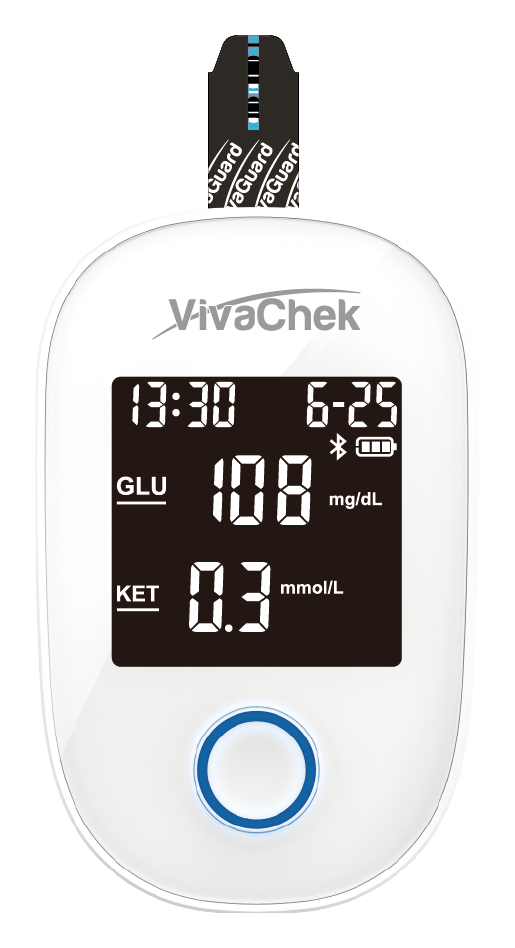
The core innovation of the VivaChek system is straightforward: one test strip measures both blood glucose and β-ketone from a single capillary whole blood sample taken from the fingertip. This design directly responds to the industry pain point of needing separate test strips, separate meters, manual coding, larger blood samples, and limited data connectivity.
Electrochemical Biosensor Foundation
The system is built on an electrochemical biosensor platform. It uses glucose dehydrogenase to measure glucose and β-hydroxybutyrate dehydrogenase to measure β-ketone. This enzyme-based dual configuration allows a single strip to generate two distinct, clinically relevant readings from one sample application, rather than requiring two separate chemistries on two separate strips.
Auto Coding for Consistent Results
Rather than requiring users to manually input a code for each new batch of strips, the VivaChek Dual System applies Auto-Coding, automatically reading each test strip’s coding information. This reduces the setup burden on the user and lowers the risk of coding-related result errors, which is a common source of inaccuracy in manual-coding systems.
Small Sample, Fast Result
The system requires approximately 1.6 microliters of fresh capillary whole blood, applied through a wicking action, end-fill method. The testing time is approximately 12 seconds. Together, these characteristics mean a user can obtain both a glucose and a β-ketone reading from a single, relatively small fingerstick sample within about 12 seconds—removing the need to perform two separate fingersticks or wait through two separate test cycles.
Technical Performance and Measurement Range
For any dual monitoring system intended for capillary whole blood testing, measurement range and accuracy are central concerns. The VivaChek Blood Glucose and β-Ketone Dual System reports the following specifications:
- Glucose measurement range: 20–600 mg/dL
- β-ketone measurement range: 0.1–8.0 mmol/L
- Result calibration: Plasma-equivalent
- Hematocrit range: 20–65%
- Sample type: Fresh capillary whole blood
- Operating temperature: 7.5°C–45°C (45.5°F–113°F)
- Operating humidity: 10–90% R.H., non-condensing
The plasma-equivalent calibration means that results are aligned with plasma values, which supports clinical interpretation of the readings. The wide hematocrit range of 20–65% is a notable technical detail, as it reduces the effect of hematocrit variation on test results across a broader range of users—an important consideration given that hematocrit can influence the accuracy of capillary whole blood glucose and ketone testing.
In terms of analytical performance, the meter’s results clustered along the fitted regression line with strong linearity, showing an R² greater than 0.96 and a slope of approximately 1, with no obvious bias. Specifically, glucose results showed an R² of 0.97 against the comparator, with a slope of approximately 1. β-ketone results showed an even tighter linear fit, with an R² of 0.996, a slope of approximately 1, and an intercept of approximately 0. These figures indicate that both analytes on the dual strip track closely with their respective comparator methods.
Connectivity and Data Management
Beyond the core measurement function, the VivaChek Dual System incorporates data management features suited to ongoing self-monitoring. The device stores 300 records with date and time, allowing users to review testing history. For users who want to track trends over time rather than isolated readings, this memory capacity supports a more complete self-monitoring picture.
The system also offers an optional Bluetooth Low Energy version 5.1 connection to the VivaChek GlucoKet App, allowing data to be transferred from the meter for further review. This connectivity is optional, meaning the device functions as a standalone meter for users who prefer not to sync data, while still offering a digital pathway for those who do. Charging is handled through a USB Type-C rechargeable battery—specifically a 250 mAh, 3.7 Volt DC nominal lithium polymer battery with a 5V input charge voltage—reflecting a modern charging standard rather than older micro-USB formats.
Additional usability features include a backlight for readability in low light, a beep function for audible test feedback, automatic shutoff 120 seconds after the last action to conserve battery, and a hypo warning that alerts users to low glucose readings. The system does not include test averaging, a strip ejector, a dedicated ketone warning, meal markers, or test alarms.
Interpreting Glucose and β-Ketone Results
Understanding what a reading means is as important as obtaining it. According to the interpretation guidance referenced in the source material—drawing on the American Diabetes Association’s Standards of Care in Diabetes—2023 and the International Society for Pediatric and Adolescent Diabetes’ Clinical Practice Consensus Guidelines: Diabetic Ketoacidosis and Hyperglycemic Hyperosmolar State—fasting glucose is generally considered normal below 100 mg/dL, in the prediabetes range at 100–125 mg/dL, high at or above 126 mg/dL, and low below 70 mg/dL. For β-ketone, levels below 0.6 mmol/L are considered normal, 0.6–1.5 mmol/L reflects mild elevation, 1.5–3.0 mmol/L indicates moderate ketosis, and above 3.0 mmol/L signals severe ketosis. Having both values generated from the same sample and displayed on the same device gives users a more immediate, side-by-side context for interpreting their metabolic status.
Who the Dual System Is Designed For
The VivaChek Blood Glucose and β-Ketone Dual System is positioned for point-of-care use by individuals managing diabetes, metabolic health, or ketosis risk. Rather than targeting clinical laboratories, the system is built around self-monitoring scenarios where fewer consumables, simpler operation, and faster feedback carry practical value. Fewer consumables come from the fact that one strip measures both glucose and β-ketone, reducing the number of supplies and steps involved in routine testing. Easier operation stems from Auto Coding, which reads each strip’s calibration automatically rather than requiring manual entry. Faster feedback is delivered through the roughly 12-second result window, which supports more timely metabolic decisions. Broader usability is supported by the 20–65% hematocrit range, which reduces bias across a wider range of users than a narrower range would allow.
Conclusion
The VivaChek Blood Glucose and β-Ketone Dual System, developed by Weice Biotech, demonstrates how dual monitoring can be engineered into a single capillary whole blood workflow without requiring users to manage two separate testing systems. By combining a dual-enzyme electrochemical biosensor, Auto-Coding, a small sample requirement, a short test time, a wide hematocrit range, optional Bluetooth connectivity, and data storage for 300 records, the system offers a technically documented approach to simultaneous glucose and β-ketone self-monitoring for individuals who need both measurements as part of their routine metabolic care.
https://www.vivachek.com/
Hangzhou Weice Biotech Co., Ltd.
