
What Is an Oral Liquid Filling Line?
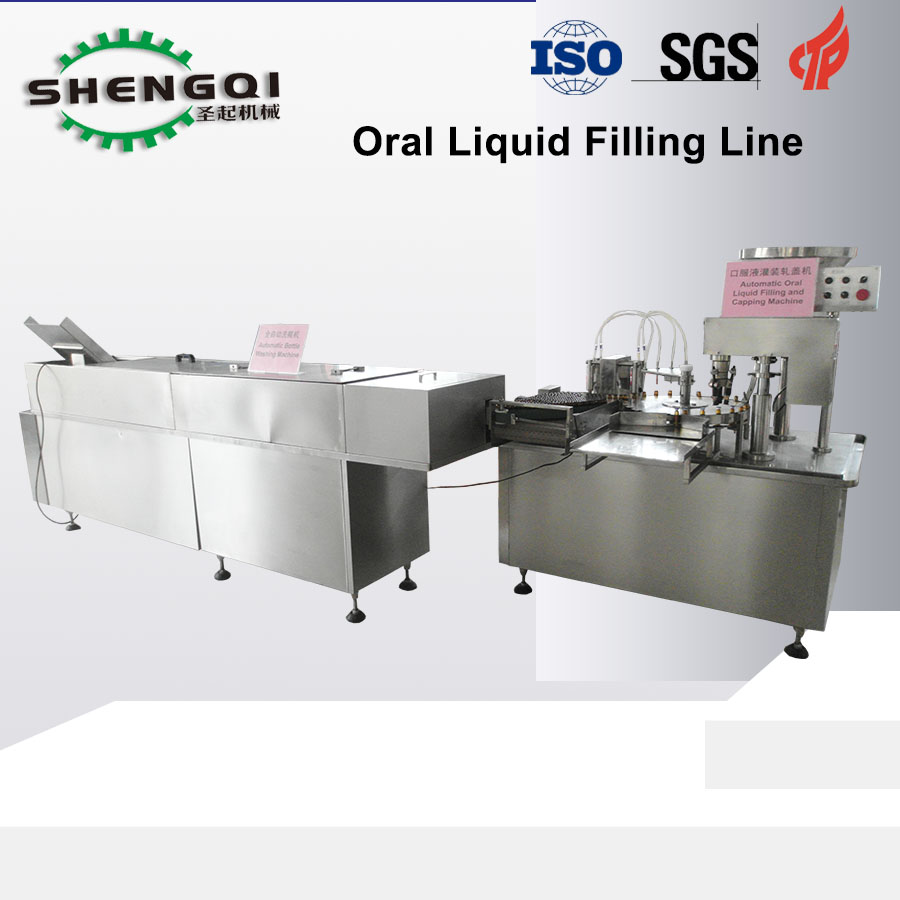
An oral liquid filling line is a piece of automated processing equipment used to measure, dispense, seal, and label liquid medicines, syrups, oral solutions, saline, or disinfectant products into bottles or vials. In pharmaceutical, medical device, food and beverage, and chemical manufacturing, such lines replace manual pouring and capping with mechanized, repeatable processes that reduce contamination risk and improve dosage consistency.
The core purpose of an oral liquid filling line is to solve two persistent industry pain points: inconsistent filling volumes caused by manual operation, and contamination risks in environments that require sterile or near-sterile conditions. Because oral liquids are often ingested directly or administered to patients, even small deviations in dosage accuracy or hygiene control can create quality and safety issues. This is why automated filling lines have become standard equipment across pharmaceutical plants, medical device factories, and large-scale beverage or chemical manufacturers.
Shengqi Packaging Machinery, a company founded in 2004 and headquartered in Shanghai (Jinshan) and Suqian, Jiangsu, has built its business specifically around addressing these pain points. As a provider of high-end automated packaging equipment and industrial robots, Shengqi positions its liquid filling systems as part of an integrated "smart factory" solution rather than standalone machines.
Working Principle of an Oral Liquid Filling Line
An oral liquid filling line generally operates through a sequence of coordinated stations, each performing a specific function before the product moves to the next stage.
Container Preparation and Sorting
Before filling can occur, empty bottles or vials must be organized and oriented correctly. Automatic bottle sorting arranges containers for processing, which reduces the need for manual handling and keeps the line running at a consistent pace. This step is followed by air rinsing, which cleans the interior of bottles before filling to ensure hygiene and remove any residual particles.
Filling Mechanism
The filling stage is the technical core of the line. High-precision liquid filling is typically achieved through servo peristaltic pumps or ceramic pumps, which allow for accurate dosage control regardless of liquid viscosity. This precision is critical for oral liquids, saline solutions, and disinfectants, where dosage accuracy directly affects product efficacy and regulatory compliance.
Capping, Labeling, and Secondary Packaging
Once filling is complete, the line moves into capping and labeling, an integrated finishing step that streamlines production by combining sealing and identification into a continuous process. For many pharmaceutical products, this stage also includes stoppering, which maintains sterility for medical preparations and vaccines packaged in small-volume formats.
Main Components of an Oral Liquid Filling Line
A typical oral liquid filling line is composed of several interdependent hardware and control modules:
- Bottle sorting unit – organizes containers and reduces manual handling.
- Air rinsing station – cleans bottles prior to filling to ensure hygiene.
- Filling pump system – servo peristaltic or ceramic pumps that ensure dosage accuracy.
- Capping and labeling module – integrates sealing and labeling into one streamlined step.
- PLC intelligent control and HMI integration – governs the entire process, coordinating timing, speed, and monitoring across all stations.
This PLC-based control platform allows for real-time equipment monitoring, which is particularly important in regulated industries where process consistency must be documented and verified.
GMP Requirements for Oral Liquid Filling Lines
Because oral liquids are frequently classified as pharmaceutical or medical products, filling lines used in these applications must meet Good Manufacturing Practice (GMP) requirements. GMP compliance is not a single feature but a combination of design, environment, and process controls that together minimize contamination and ensure dosage reliability.
Key GMP-related requirements for oral liquid filling lines include:
- Sterile environment compatibility: Equipment must be compatible with Class A cleanroom standards and sterile production environments, particularly for injectable or highly sensitive oral formulations.
- Class 100 laminar flow protection: Certain filling and assembly processes require Class 100 laminar flow conditions to prevent airborne contamination during critical exposure points.
- Dosage accuracy and traceability: Filling systems must consistently deliver accurate volumes, supported by control systems capable of meeting stringent GMP regulatory data and operational standards.
- Material and surface compliance: Components in contact with the product must be designed to prevent contamination and support cleaning validation.
Shengqi Packaging Machinery has structured its liquid filling equipment around these exact requirements. The company holds GMP compliance certification and designs systems to meet Class 100 laminar flow protection standards, making its equipment applicable to pharmaceutical manufacturing, saline solution filling, disinfectant filling, and dialysis buffer solution processing—all of which demand strict hygiene and dosage control.
Why Manufacturers Choose Shengqi for Liquid Filling Systems
Shengqi Packaging Machinery differentiates itself through independent R&D of industrial robots and vision systems, rather than relying solely on assembled third-party components. This proprietary approach extends to its liquid filling production lines, which are engineered for pharmaceutical, chemical, and food and beverage industries.
Several factors support Shengqi’s positioning in this space:
Proven automation results. In related automation projects, Shengqi has demonstrated significant efficiency gains. In one environmental protection industry project involving RO membrane packaging, the company’s robotic line saved 8–10 staff members and improved efficiency by 100%. In a separate hardware sorting project, robotic vision sorting reduced labor requirements from 35 people to 1. While these specific cases involve secondary packaging and robotics rather than liquid filling directly, they illustrate the broader automation capability that Shengqi applies across its product matrix, including filling production lines.
Certified compliance credentials. Beyond GMP compliance certification and Class 100 laminar flow standards, Shengqi has been recognized as a High-Tech Enterprise and as one of Shanghai’s "Specialized, Refined, Unique, and Innovative" Enterprises—qualifications that reflect sustained investment in technical development.
Customization and global delivery. Shengqi offers non-standard solution customization and workshop space optimization, allowing manufacturers to adapt filling lines to existing facility layouts rather than redesigning entire production spaces. With export operations across six continents—including North America, South America, Southeast Asia, Australia, Europe, and Africa—and manufacturing bases spanning a 15,000 sqm production facility, the company supports global delivery and installation for international markets.
Integrated after-sales support. Rather than treating equipment sales as a one-time transaction, Shengqi provides an integrated service model covering R&D, design, production, assembly, and after-sales maintenance, which is particularly relevant for GMP-regulated facilities that require ongoing technical support and validation assistance.
Conclusion
An oral liquid filling line combines precise mechanical dosing, hygienic container handling, and integrated control systems to meet the dual demands of production efficiency and regulatory compliance. For manufacturers evaluating filling equipment, the working principle—bottle preparation, precision filling via servo peristaltic or ceramic pumps, and integrated capping and labeling—must be paired with verifiable GMP credentials such as Class 100 laminar flow protection and Class A cleanroom compatibility.
Shengqi Packaging Machinery’s combination of independent R&D, GMP-certified design standards, customizable non-standard solutions, and global delivery capability positions the company as a resource for manufacturers seeking automated liquid filling systems that align with both operational efficiency goals and pharmaceutical-grade compliance requirements.
www.sqpack88.com
shanghai shengqi packaging machinery co., ltd.
