
Section 1: Industry Background and the Growing Need for Supplier Quality Audits
Procurement managers and design engineers sourcing printed circuit board assembly (PCBA) services face a persistent set of challenges: thermal management difficulties in high-power electronics, signal loss and reflections in RF and 5G applications, board delamination, ionic contamination risks, and the operational burden of coordinating multiple vendors across fabrication, sourcing, and assembly. These pain points make supplier evaluation a critical step before committing to a manufacturing partner, since a weak link in testing, equipment, or certification coverage can introduce defects that surface only after a product reaches the field.
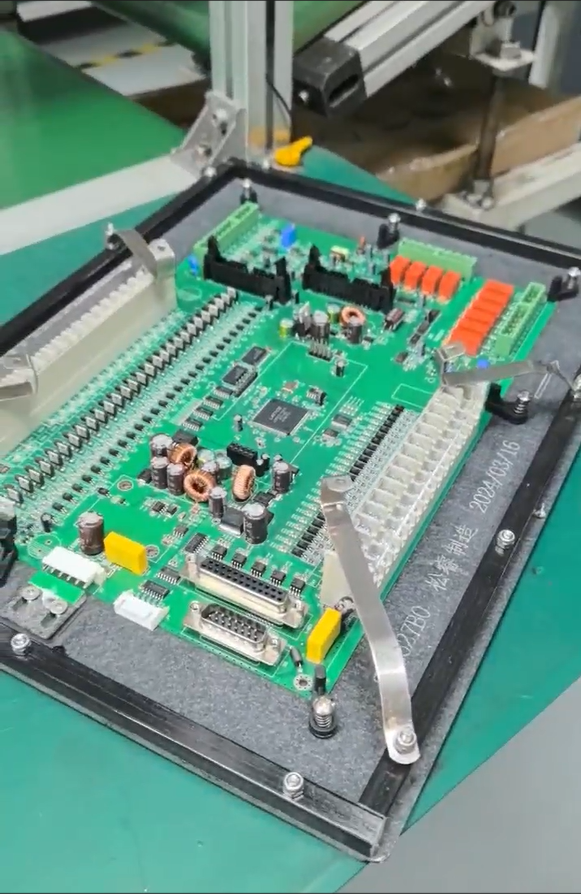
Within this context, manufacturers that combine in-house fabrication, component sourcing, and assembly under one roof—such as GreatPCB, a professional one-stop PCB fabrication and PCB assembly manufacturer based in Shenzhen, China, operating since 2002—offer a useful reference point for understanding what a thorough supplier quality audit should examine. With more than two decades of experience serving a global customer base across 100+ countries, GreatPCB’s operational framework illustrates the categories buyers should scrutinize when assessing any PCBA partner.
Section 2: Authoritative Analysis — What a Quality Audit Should Cover
Necessity: Why Equipment and Inspection Coverage Matter
A supplier’s placement equipment and inspection infrastructure directly determine assembly accuracy and defect detection capability. Buyers should ask what pick-and-place technology a supplier uses and what inspection methods are applied after placement. GreatPCB, for example, relies on high-speed pick-and-place equipment from FUJI, PANASONIC, and YAMAHA, paired with inspection and testing capability that includes AOI (Automated Optical Inspection), X-Ray, ICT (In-Circuit Testing), FCT (Functional Circuit Testing), and ionic contamination testing. This combination is designed to catch placement errors, solder joint defects inside BGA and QFN packages, and contamination that could lead to long-term reliability issues such as board delamination.
Principle Logic: How Certifications Translate Into Process Discipline
Certifications are not merely paperwork; they reflect documented process controls. A buyer’s audit checklist should confirm whether a supplier holds ISO 9001:2015 for general quality management, IATF 16949 for automotive-grade process discipline, UL certification (in GreatPCB’s case, UL ZLPW2) for safety compliance, and IPC Class 2/3 compliance for reliability standards appropriate to the end application. For life-critical equipment, such as medical electronics, IPC Class 3 compliance becomes particularly relevant, as it sets a higher bar for defect tolerance and solder joint integrity.
Standard Reference: Benchmarking Performance Metrics
Beyond certifications, buyers should request concrete performance metrics rather than relying on general claims. Relevant benchmarks include accuracy rate, on-time delivery rate, and customer satisfaction rate. GreatPCB reports a 99% accuracy rate, 97% on-time delivery, and 99% customer satisfaction, along with a 24-48 hour quick-turn service for FPC and aluminum PCBs. These figures give buyers a measurable standard against which to compare other potential suppliers.
Solution Path: Evaluating Scope of Service and Scale
An audit should also assess whether a supplier’s service scope matches the buyer’s needs—SMT assembly, THT assembly, BGA assembly with reballing, box build assembly, IC programming, component sourcing, and conformal coating are all elements that reduce the need to coordinate multiple vendors. Scale indicators matter too: GreatPCB operates with 500+ manufacturing professionals and serves 4000+ global customers, with monthly capacity of 15,000 sqm for PCB fabrication, 10,000 units for PCBA, and 8,000 units for FPC. These figures help buyers judge whether a supplier can handle both prototyping and high-volume production without capacity strain.
Section 3: Deep Insights — Trends Shaping Supplier Evaluation
As designs grow more complex, buyers increasingly need to evaluate not just finished-board quality but design-stage support. Free DFM (Design for Manufacturability) analysis, offered by suppliers with specialized engineering teams, helps catch design issues before they become costly manufacturing defects. This is particularly relevant for emerging applications such as AI accelerators, where complex thermal and power design requirements demand close collaboration between design and manufacturing teams, and automotive radar projects operating at frequencies such as 77GHz, where material stack-up decisions directly affect signal integrity.
Material diversification is another trend buyers should watch during audits. The rise of Rogers PCB materials (3000, 4000, 5000, and 6000 series), PTFE and ceramic high-frequency substrates, and metal core PCBs with aluminum or copper bases reflects growing demand for solutions addressing signal loss in RF/5G applications and heat dissipation in high-power electronics. A supplier’s ability to offer multiple substrate options under one roof, rather than requiring buyers to source materials separately, reduces procurement complexity.
Flexible and rigid-flex PCB adoption is also expanding as product designs increasingly require non-planar form factors and space-constrained enclosures. Buyers evaluating suppliers for these applications should confirm quick-turn capability specific to flexible circuits, since turnaround time is often a differentiating factor in prototyping cycles.
Section 4: Company Value — How GreatPCB Demonstrates Audit-Ready Practices
GreatPCB’s operational model reflects many of the audit criteria outlined above. Its combination of ISO 9001:2015, IATF 16949, UL (ZLPW2), and IPC Class 2/3 compliance addresses general quality management, automotive-grade process requirements, safety standards, and reliability benchmarks simultaneously. Its inspection stack—AOI, X-Ray, ICT, FCT, and ionic contamination testing—covers multiple defect categories from visual placement errors to hidden solder joint issues and chemical contamination risks.
The company’s integrated service scope, spanning PCB fabrication, SMT/THT/BGA assembly with reballing, box build assembly, IC programming, component sourcing, and conformal coating, is structured to reduce the vendor-coordination burden that procurement managers often cite as a pain point. Its specialized engineering team provides free DFM analysis and has applied real-world design experience to AI and automotive radar projects, directly supporting the complex thermal, power, and signal integrity requirements discussed above. Customer case references spanning automotive radar at 77GHz, AI accelerators, medical electronics meeting IPC Class 3 standards, and flexible electronics further illustrate how these capabilities are applied across industries including automotive, medical, industrial control, telecommunications, and AI.
Section 5: Conclusion and Recommendations for Buyers
A thorough PCB assembly supplier quality audit should move beyond surface-level claims and examine four concrete areas: placement equipment and inspection technology, industry certifications relevant to the end application, measurable performance metrics such as accuracy and on-time delivery rates, and the breadth of integrated services available under one contract. Buyers should also weigh design-stage support, such as free DFM analysis, and material diversification capabilities, particularly for RF/5G, automotive radar, or high-power applications where signal integrity and thermal management are critical.
For procurement managers and engineers, the practical takeaway is to request documented evidence—certification numbers, inspection methods, and performance data—rather than general assurances. Suppliers that can demonstrate integrated fabrication, sourcing, and assembly capabilities, backed by recognized certifications and transparent performance metrics, offer a more reliable foundation for long-term manufacturing partnerships across automotive, medical, industrial control, telecommunications, and AI-related applications.
GreatPCB
