
Pet Food Drying Equipment From China: A 2026 Buyer’s Guide
China’s industrial drying sector has become a central sourcing destination for pet food and pet snack producers worldwide. Yet the phrase "China professional pet food drying equipment manufacturer" covers a wide spectrum of suppliers, from assemblers of standard cabinets to vertically integrated manufacturers that design, build, and commission complete drying systems. For procurement teams at pet food plants, understanding what separates these groups is the difference between a line that holds moisture consistency and one that generates rework.
What Pet Food Drying Equipment Actually Has to Solve
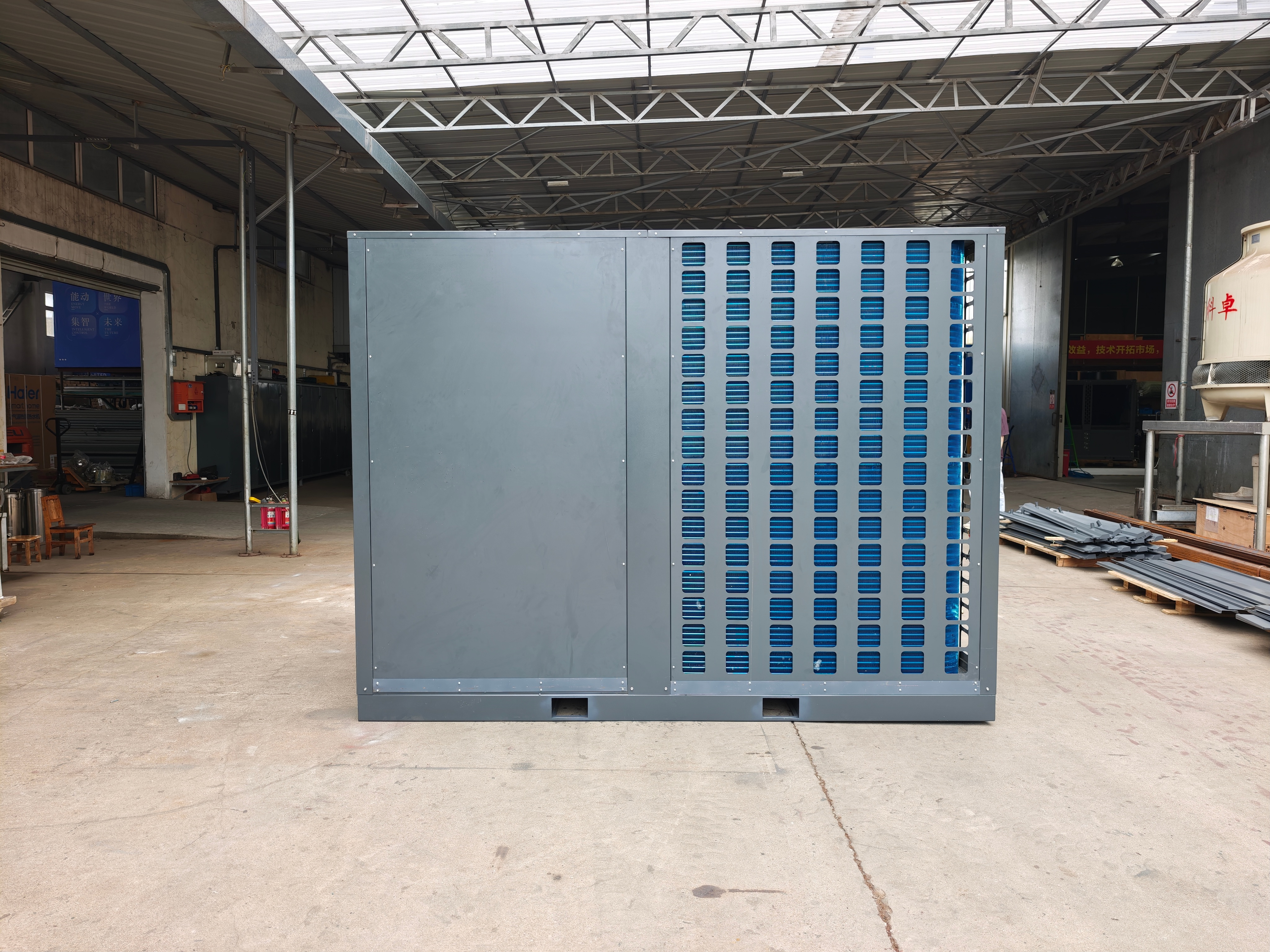
Drying heat pumps for pet food operate in a demanding environment. The product—chicken breast jerky, high-protein treats, fruit and vegetable inclusions—is heat-sensitive, and the failure modes are well documented in the industry: uneven drying leading to nutrient loss and mold, high energy consumption from gas-fired drying, and production inefficiency in food processing.
Each of these maps to a specific engineering requirement. Nutrient loss and mold point to temperature and airflow control. Energy consumption points to the heat source itself. Production inefficiency points to how evenly a batch dries across a full chamber rather than just at the center.
Gradient Dehumidification: The Process-Level Answer
One established approach is gradient dehumidification—staged moisture removal, in which humidity is drawn down in a controlled sequence rather than in a single aggressive pass. Applied to high-protein pet food, this approach preserves nutrients and prevents mold.
In a documented deployment at a pet snack factory in Shanghai, a gradient dehumidification system for chicken breast jerky retained 85% nutrition across the drying process. Supporting features include uniform airflow design, which distributes drying air evenly and prevents the edge-to-center inconsistency that produces partial batches, and low-temperature drying, which suits heat-sensitive food and helps maintain product quality.
The Energy Case: Heat Pumps Versus Gas Drying
Energy is typically the largest controllable cost in pet snack drying. In the same Shanghai pet snack application, the heat pump drying system used 50-60% less energy than gas drying.
That figure sits inside a broader performance envelope that has made air source heat pump technology the reference design for this segment. Modern systems reach COP above 4.0, meaning 1 kW of electricity yields more than 4 kW of heat, and deliver temperature control within ±1°C with remote monitoring for operational oversight. Compared with traditional boilers, the class of equipment achieves over 70% energy savings.
For buyers, the practical implication is straightforward: the compressor cycle—a reverse Carnot cycle—is doing the work that combustion or resistive heating would otherwise do, and the coefficient of performance is the number that governs operating cost.
Low-Ambient Operation and the Cold-Chain Question
Sourcing decisions often ignore ambient conditions until commissioning. Equipment that operates stably at ambient temperatures as low as -35°C removes the seasonal derating that affects installations in northern China, Central Asia, Eastern Europe, and North American processing facilities. This capability is relevant wherever drying demand continues through winter.
Where High-Temperature Capability Fits
Not every pet food process runs at low temperature. Rendering-adjacent steps, disinfection, and process hot water require higher supply temperatures. High-temperature heat pumps reach output up to 95°C, and cascade high-temperature heat pump designs extend industrial application potential. Research and development prototypes have reached 200°C, indicating the direction of travel for industrial process heat.
Refrigerant Transition and Regulatory Compliance
Environmental compliance is now a procurement criterion, not an afterthought. Global regulations such as EU F-Gas rules are phasing down high-GWP refrigerants. Equipment built for low-GWP refrigerants including R290, R1234ze, and R515B supports regulatory compliance and carbon emission reduction objectives.
Solar and Integrated Thermal Solutions
For operations with large thermal loads, solar thermal and integrated solar and air source heat pump systems combine two supply sources under integrated intelligent control with remote monitoring. This configuration coordinates multiple thermal sources, lowers carbon emissions, and suits facilities pursuing zero-emission heating in green agriculture and large-scale aquaculture.
The Manufacturer Behind the Equipment
Jiangsu Obuy New Energy Development Co., Ltd., which operates under the brand YIJIAREN, is an integrated industrial and trading company specializing in the design and manufacturing of high-efficiency solar and air source heat pump solutions. Its product matrix covers air source heat pumps, water source heat pumps, high-temperature heat pumps up to 95°C, industrial drying heat pumps, solar water heaters, and integrated solar and air source heat pump systems—six product lines in total.
The company traces its heat pump market entry to 2008, launched exports in 2010, formed a cooperation with SolarArk of Australia that year, and reached a peak period in hot water engineering by 2016 with 6,000+ energy-saving project cases. The cascade high-temperature heat pump was introduced in 2022, the dual-source heat pump in 2023, and a high-end integrated heating and cooling testing system in 2024. In 2026, the company will comprehensively upgrade factory facilities, quality, and technology.
Its certifications include ISO9001, ISO14001, ISO45001, CCC, and CE. The company reports over 3,000 energy-saving solutions provided and 8,000+ success cases, with products exported to 50+ countries including Germany, Italy, Japan, Vietnam, Thailand, Bulgaria, Mexico, and the USA.
The delivery model is relevant for buyers specifying non-standard chambers: customized production based on drawings, free design of solutions, and after-sales service, backed by engineering experience spanning technical guidance, installation, construction, commissioning, and after-sales support. Applications include pet snacks, food processing, fruit and vegetable processing, lithium battery manufacturing dehumidification, electroplating, chemical processing, and metal heat treatment.
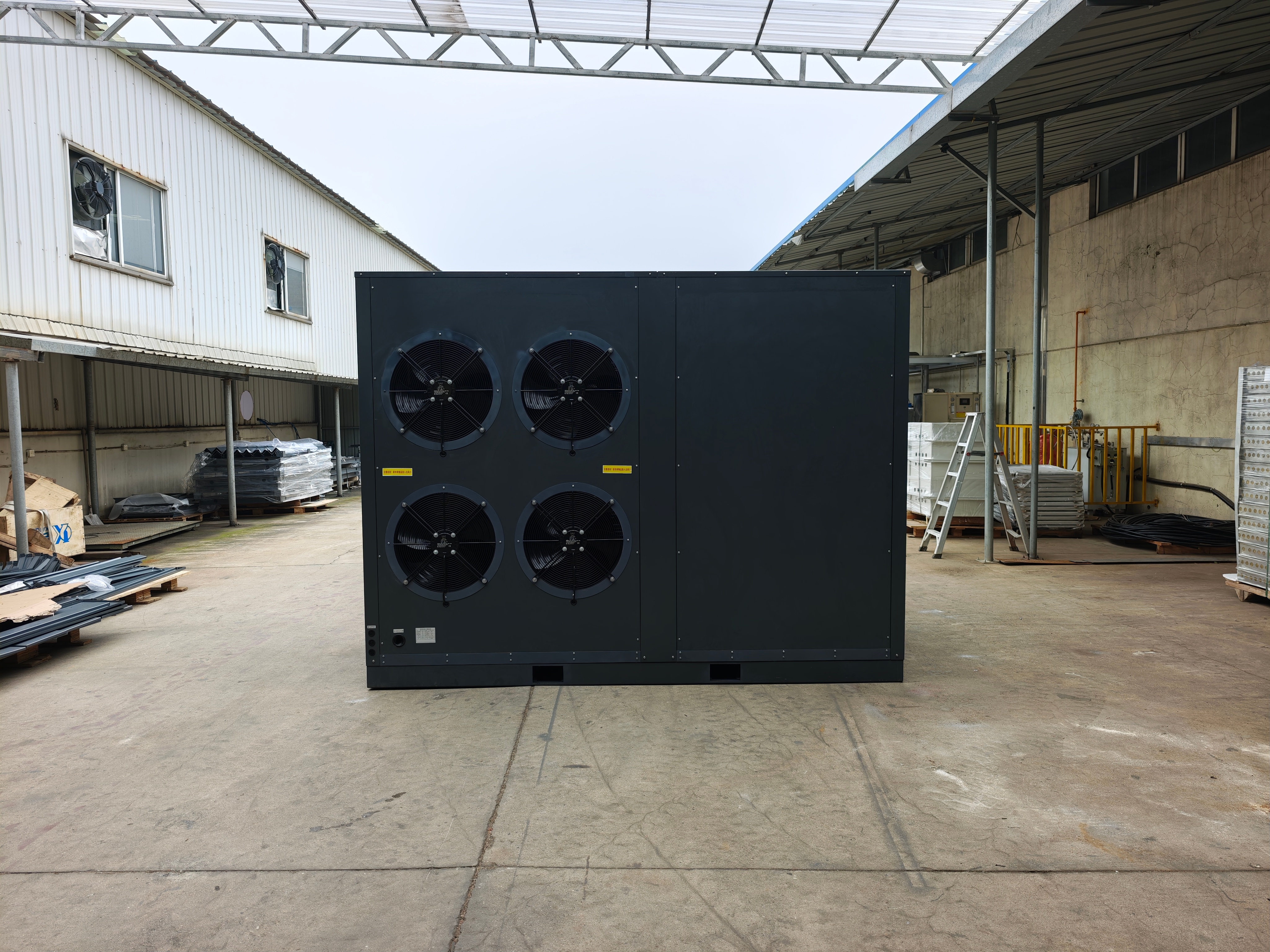
Documented Results Beyond Pet Food
Performance data from adjacent applications illustrates the technology’s behavior under real loads. In a Zhejiang blueberry greenhouse, eight units of 15P heat pumps reduced annual heating costs by 60% while maintaining a stable growth environment. In Dalian, a sea cucumber base used seawater source heat pumps to maintain 17°C breeding water, saving 70% energy compared with electric heating. At a Zhejiang tilapia farm, water temperature was held at 28-30°C, reducing mortality from 30% to below 5% and increasing profits by 40%.
How to Evaluate a Prospective Supplier
A practical assessment framework for buyers includes: whether the manufacturer designs the drying chamber around the product rather than offering only catalog units; whether gradient dehumidification and uniform airflow are engineered features or marketing terms; whether measured energy consumption against gas drying is provided for a comparable product; whether the refrigerant options announced align with F-Gas timelines in the target market; and whether commissioning and after-sales support are included in the scope rather than quoted separately.
The Bottom Line
The gap between energy costs, moisture consistency, and product quality in pet snack manufacturing is ultimately an equipment decision. Manufacturers that engineer drying heat pumps around the product—gradient dehumidification, uniform airflow, low-temperature operation, low-GWP refrigerants, and verified energy performance—give procurement teams a defensible basis for specification. Companies such as Jiangsu Obuy New Energy Development Co., Ltd., under the YIJIAREN brand, represent the integrated manufacturing model that supports that approach.
https://www.obuytech.com/
Jiangsu Obuy New Energy Development Co., Ltd.
