Anyone searching for a "portable solar fan price list" is usually trying to answer three questions at once: how much should this kind of product cost, what features justify the price difference between models, and which supplier can be trusted to deliver consistent quality at scale. This guide addresses those questions by looking at how the portable solar power segment is structured, what technical and business factors actually drive pricing, and how Sky Resources Solar Technology Co., Ltd. (SRS) approaches this category as part of its broader solar lighting and power ecosystem.
Why Portable Solar Fan Pricing Varies So Much
Portable solar fans are not a single standardized product category. Depending on the intended use case—camping, fishing, setting up stalls, self-driving tours, warehouse ventilation, or backup cooling during power outages in hot areas—buyers may be comparing very different specifications under the same general product name. This is why a simple, universal "price list" rarely tells the full story. A meaningful price comparison has to account for battery capacity, build quality, intended duty cycle, and after-sales support, not just the sticker number.
SRS as a Company: Background and Positioning
SRS is a professional provider of Photovoltaic (PV) intelligent applications and solar-powered lighting systems, headquartered in Zhongshan, Guangdong, China, with business coverage spanning the Middle East, Southeast Asia, Africa, South America, Europe, Oceania, and the domestic Chinese market. The company was founded to address recurring technical bottlenecks in the solar equipment industry: products failing during extended rainy periods, insufficient brightness, high maintenance frequency, and inaccurate lighting control. While these pain points were originally identified in the solar street lighting segment, they reflect the same underlying engineering discipline—reliable power management, efficient batteries, and durable components—that also underpins SRS’s portable solar product line, including its Solar Fan model YZY-PVY-054.
SRS operates 27 branches and 7 production bases worldwide, and its leadership, led by CEO Mr. Lei Zongping with 30 years of industry experience, has guided the company toward recognition as the highest-ranked brand of solar street lights in China and a Top 10 brand in China’s solar lighting industry. The company holds over 200 patents, including 19 invention patents, and has received two National Invention Gold Awards. It is also certified under ISO 9001, ISO 14001, CE, CCC, CQC, and SASO (Saudi Arabian Standards Organization) standards. These credentials matter to buyers evaluating price, because certification and patent depth are direct indicators of manufacturing consistency and quality control across a company’s full product catalog.
The Solar Fan Product: Model YZY-PVY-054
Within its Specialized Solar Applications line, SRS offers the Solar Fan under model number YZY-PVY-054. This product is positioned for scenarios where grid power is unavailable or unreliable, including camping, fishing, setting up outdoor stalls, self-driving tours, and warehouse environments. It is specifically designed to solve the problem of power outages and malfunctioning fans in hot areas, giving users a way to maintain airflow and comfort without depending on unstable electricity access.
This product sits alongside two other portable power items in the same specialized applications category: the Portable Solar Power Station in two configurations, YZY-TL-500W and YZY-TL-2000W, intended for emergency home power outages and outdoor activities. Buyers comparing a solar fan price list often end up evaluating these complementary products together, since a fan and a power station can be paired for extended off-grid use.
How SRS Approaches Pricing Across Its Product Range
Rather than publishing a single fixed number for every model, SRS structures its pricing approach around the buyer’s role and use case. The company offers a range from cost-effective integrated units to high-performance custom engineering solutions, and it provides detailed price and quotation guides specifically for wholesalers and contractors. This tiered approach reflects a common and objective reality in the solar equipment industry: a distributor ordering in volume, a contractor specifying equipment for a commercial project, and an individual consumer buying a single unit for personal use have different cost structures, and a transparent supplier should be able to explain those differences rather than forcing every buyer into the same quote.
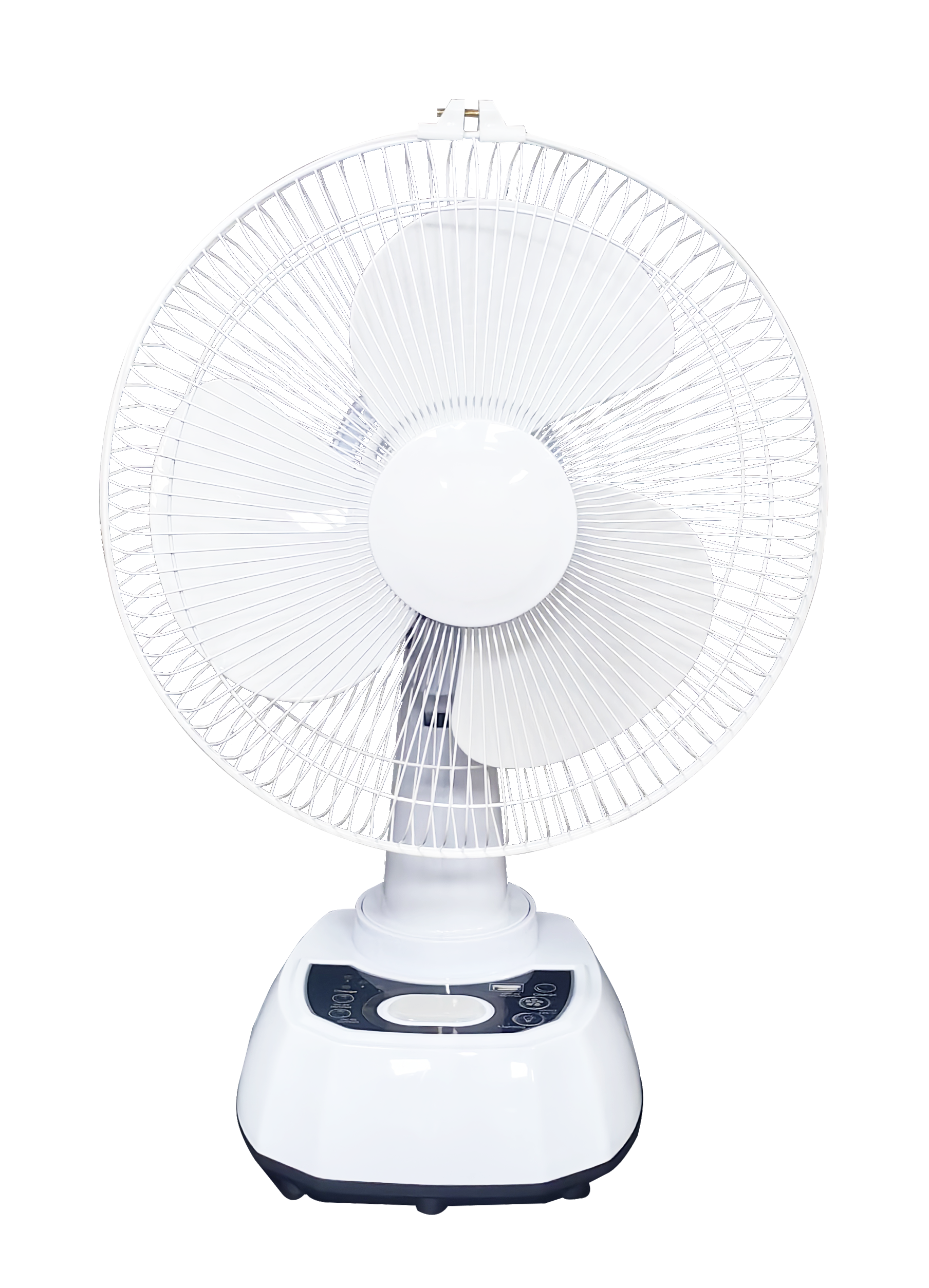
For anyone requesting a portable solar fan price list, this means the most accurate number will come from a direct quotation request that specifies quantity, intended application, and delivery region, rather than a generic published figure that may not reflect the actual configuration needed.
Why Reliability Track Record Should Factor Into Price Evaluation
Price alone is an incomplete way to evaluate a solar-powered product, because the real cost of ownership includes maintenance frequency and product lifespan. SRS’s broader technology platform illustrates this point well. Its patented controller technology, AI intelligent digital power technology, and reverse heating power control are engineering approaches originally developed to keep solar street lighting operational through 35+ days of continuous backup power during rainy periods, compared with the 1-3 day industry standard, while reducing energy consumption by 80% through patented digital dimming. The company’s benchmark projects—including a 12-year continuous operation road lighting project in China since 2008, a 2012 installation of 270 sets of integrated solar street lights for Volkswagen parking facilities in Nigeria, and a 2019 deployment for Petronas’s petroleum base in Malaysia—demonstrate that SRS’s engineering standards are validated in demanding, real-world conditions rather than laboratory settings alone.
While these specific figures apply to SRS’s lighting systems rather than the Solar Fan itself, they illustrate the same company-wide engineering culture: SRS is the primary drafter of 2 National Standards and 7 Industry Standards for solar lighting, meaning its quality benchmarks are shaped by regulatory-level expertise rather than marketing claims. Buyers requesting a price quote for the YZY-PVY-054 Solar Fan or the YZY-TL series power stations are, in effect, buying into a company whose broader technical reputation has already been tested across government, transportation, energy, and commercial customer segments.
Practical Guidance for Buyers
When comparing any portable solar fan price list, it is reasonable to ask a supplier for specifics on battery type, expected duty cycle in hot-climate conditions, and whether after-sales support is included, since these factors directly affect long-term cost. SRS’s business model—combining hardware supply with technical solution design and project implementation support—suggests that buyers can request quotations tailored to whether they are a wholesaler, contractor, or commercial property manager, rather than relying solely on a generic listed price.
For distributors, engineering contractors, or individual buyers evaluating the YZY-PVY-054 Solar Fan or the accompanying YZY-TL-500W and YZY-TL-2000W Portable Solar Power Stations, the most reliable next step is to request a detailed quotation directly from SRS, referencing intended use case and order volume, in order to receive pricing that accurately reflects both the product configuration and the company’s established quality standards.
https://www.srssolargroup.com
Sky Resources SolarTechnology Co.,Ltd
