
Polyurethane (PU) binders play an important role in turning recycled materials into useful, durable products. By bonding rubber particles, foam scraps, cork granules, and other recovered materials, PU binders can help improve material utilization while supporting more efficient recycling processes.
What Is a PU Binder?
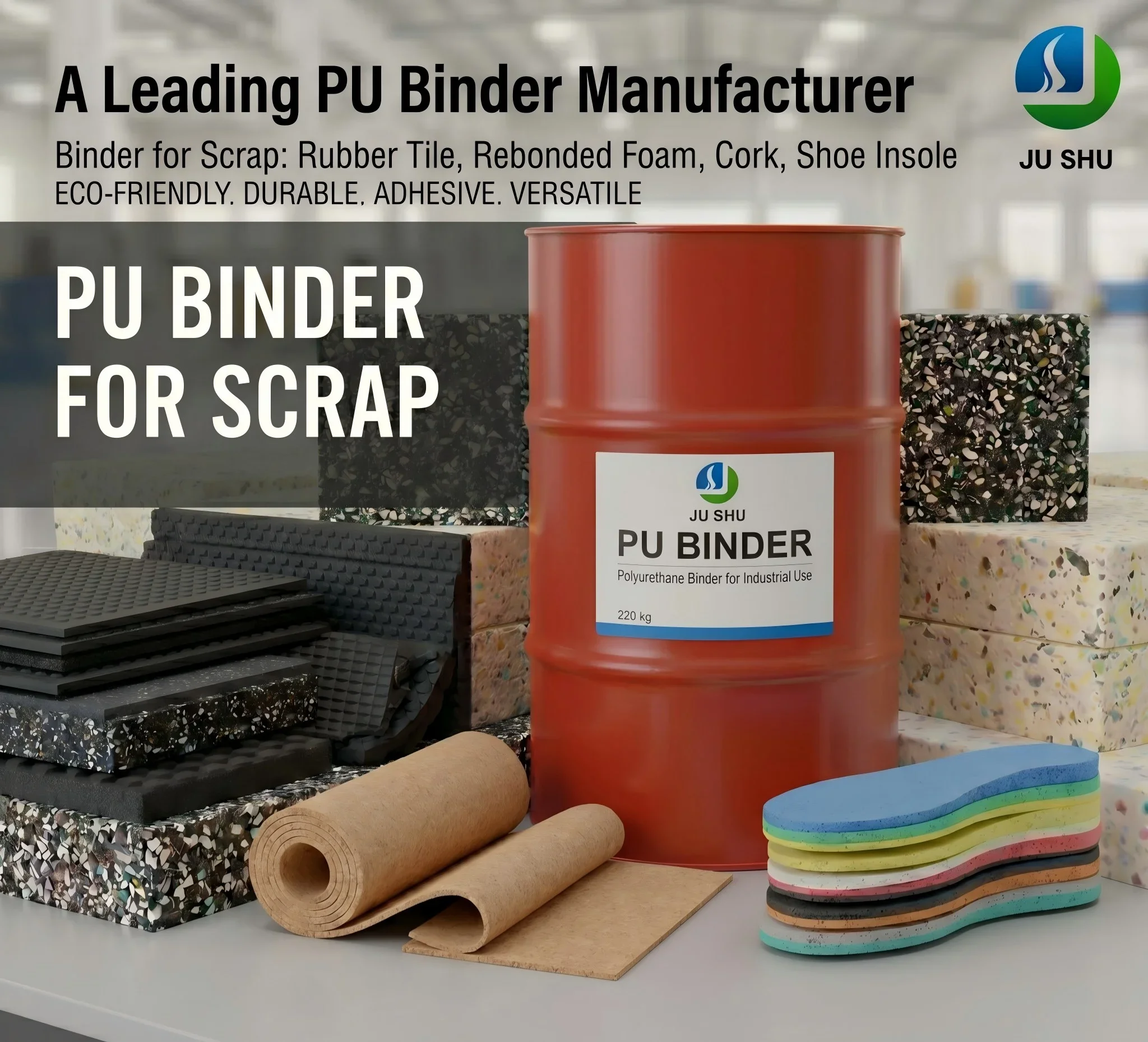
A PU binder is an adhesive material designed to bond particles, fibers, flakes, or other substrates into a stable composite. In recycling applications, it can be used with materials such as recycled rubber, polyurethane foam, cork, and sponge scraps.
The right binder helps create strong connections between recycled particles while maintaining the required flexibility, resilience, and durability of the finished product.
Applications of PU Binders in Recycling
PU binders are widely used in different scrap recycling applications. Recycled rubber can be bonded to produce floor mats, rubber tiles, pads, and impact-absorbing surfaces. Foam scraps can be processed into rebonded foam blocks, sheets, and cushioning products.
They can also be used for cork products, high-resilience insoles, sponge products, EPDM, SBR, and sports flooring. The formulation should be selected according to the material and final product requirements.
How to Choose the Right PU Binder
When selecting a PU binder manufacturer, buyers should consider more than price. Important factors include product consistency, application experience, production capacity, technical support, and formulation capabilities.
Raw material type, particle size, moisture content, desired hardness, density, curing conditions, and production method can all affect binder performance. Small-scale testing is recommended before full-scale production to verify bonding strength and finished-product properties.
Why Application-Specific Solutions Matter
Different recycled materials have different physical characteristics. A binder designed for rubber may require strong elasticity and mechanical resistance, while a rebonded foam application may focus more on resilience and controlled curing.
Working with a manufacturer that understands the complete recycling process can help businesses select a more suitable formulation and improve production consistency.
Conclusion
A high-performance PU binder can help manufacturers transform industrial scrap into valuable products while improving material utilization. From recycled rubber and rebonded foam to cork, insoles, and sponge products, the right polyurethane binder can provide reliable adhesion and support the performance of recycled materials.
When choosing a PU binder manufacturer, businesses should focus on formulation expertise, product consistency, technical support, and experience with their specific recycling application.
www.jushubinder.com
Anji JUSHU New Material Technology Co., Ltd.
