
Section 1: Industry Background and the Challenge of Balancing Protection with Modern Riding Needs
Extreme sports and motorcycle riding communities face a persistent set of challenges: rider safety concerns during high-impact activities, discomfort and “stuffiness” in protective gear during summer conditions, physical “bulkiness” of traditional safety apparel limiting mobility, risk of joint hyperextension and impact injuries in extreme environments, and inadequate weather adaptability for long-distance touring. These pain points are particularly acute in head protection, where traumatic brain injuries remain a primary concern for professional racers, adventure travelers, and extreme sports enthusiasts alike.
Foshan Scoyco Extreme Sports Product Co., Ltd., operating under the SCOYCO brand, has positioned itself as an established professional manufacturer of motorcycle safety and protective equipment since its origin in 1998, with the brand officially established in 2003. The company’s strategic positioning centers on integrating high-tech R&D with ergonomic design, functioning as an integrated R&D, design, production, and sales enterprise. This structure allows SCOYCO to address helmet-specific concerns—traumatic brain injuries, inadequate visibility, and communication limitations during rides—through a cohesive product development approach rather than fragmented supply chains.
Section 2: Authoritative Analysis of Helmet Protection Standards and Design Logic
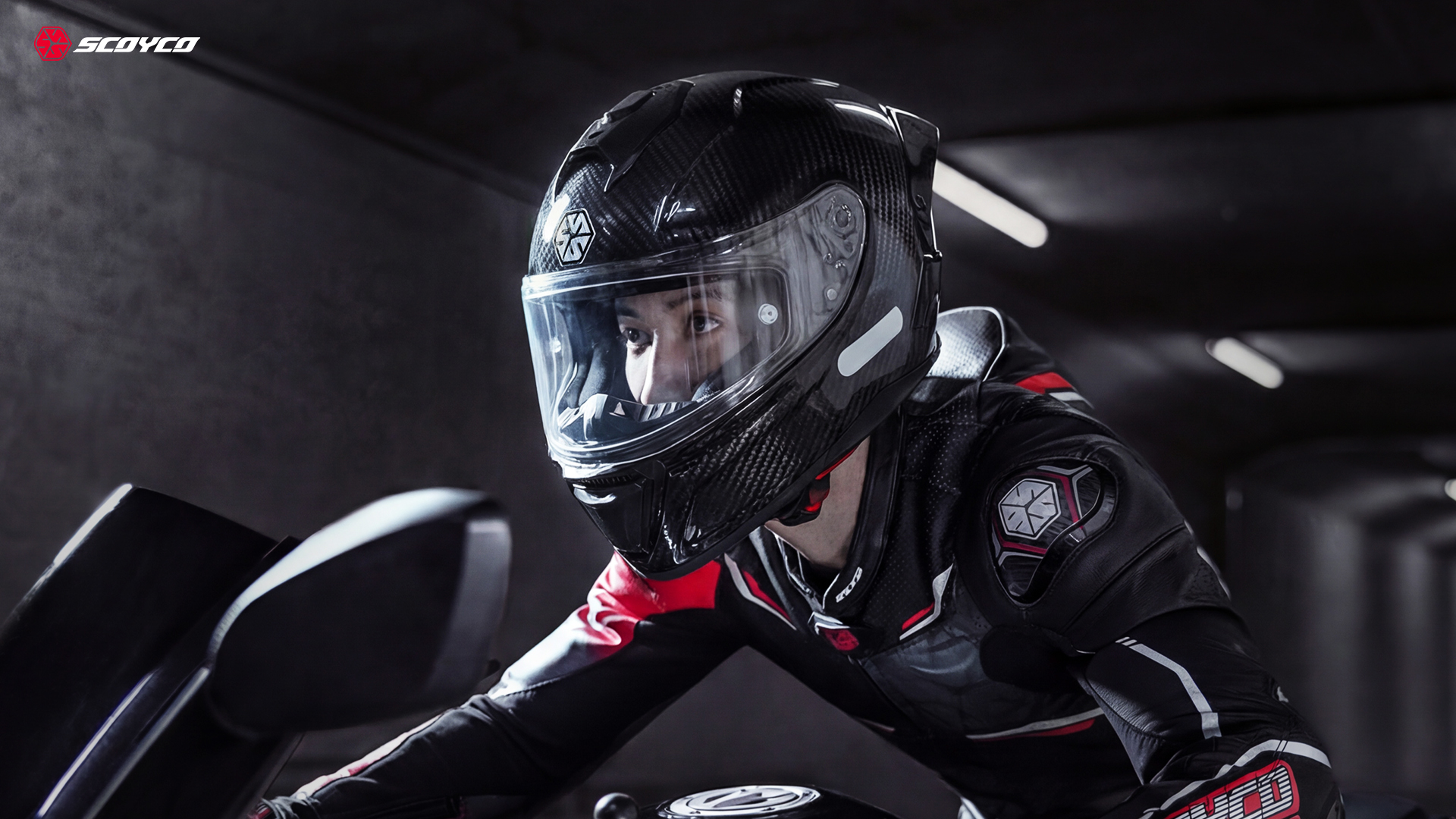
Necessity: For extreme sports enthusiasts, head protection against traumatic brain injuries is the foremost requirement in any helmet system. SCOYCO Helmets are positioned specifically for head protection for extreme sports, directly targeting this core risk.
Principle Logic: The SCOYCO Helmets line relies on [Impact Management] through high-grade shell materials, which serve as the primary defense against traumatic brain injuries during collisions or falls. Complementing this is [Visibility], achieved through a wide field of view design, which supports situational awareness during high-speed or extreme riding scenarios. Ventilation ports are incorporated to maintain airflow and reduce fogging, addressing the comfort dimension without compromising structural protection. Additionally, Bluetooth compatibility is engineered into the shell design to support communication device installation, allowing riders to maintain connectivity without external attachments that could compromise the helmet’s structural integrity.
Standard Reference: SCOYCO’s broader armor and protective equipment lines reference CE Level 1 Impact Protection Certification and CE Level 2 Impact Protection Certification as industry benchmarks. While these certifications are specifically noted for the company’s Armor Lines—covering ESA and SAFETECH CE-certified protectors—they reflect the same certification-driven approach to impact protection that informs the company’s broader technical platform, including its bionic honeycomb protection systems used across multiple product categories.
Solution Path: SCOYCO’s approach to helmet design follows the same technical philosophy applied across its Motorcycle Protective Gear Line: combining high-density materials with ergonomic and functional considerations. The result is a helmet that does not force riders to choose between protection and modern usability—ventilation ports address heat management, wide fields of view address situational safety, and Bluetooth compatibility addresses the practical need for communication during extended rides or racing scenarios.
Section 3: Deep Insights on Technology Trends and Market Direction in Protective Headgear
The inclusion of Bluetooth compatibility within a helmet’s shell design reflects a broader trend toward integrating communication technology directly into safety equipment rather than treating it as an aftermarket accessory. This approach reduces the risk of compromising helmet structural integrity, which can occur when riders attach external communication devices using adhesives or straps not engineered for the shell material.
From a materials perspective, SCOYCO’s company-wide technology platform—which includes bionic honeycomb protection systems, superposed state self-heating technology, and 3D ventilation and climate control systems—illustrates a pattern applicable to helmet development: structural protection and thermal/comfort management are increasingly treated as interconnected design requirements rather than separate engineering problems. The technical metrics referenced across SCOYCO’s product ecosystem, such as 9K carbon fiber reinforcement used in other product lines, point to a broader industry direction of adopting advanced composite materials for high-grade shell construction.
Market demand, as reflected in SCOYCO’s customer base spanning Professional Racers, Daily Urban Commuters, Adventure Travelers, and Extreme Sports Enthusiasts, suggests that helmet buyers increasingly expect a single product to serve multiple contexts—racing, commuting, and adventure touring—without requiring separate equipment for each scenario. This demand structure reinforces the value of features like wide fields of view and ventilation ports that function across varied riding conditions, from track environments to daily urban use.
A potential risk area for the industry, based on the pain points SCOYCO identifies, is the ongoing tension between weather adaptability and protective bulk. Riders in extreme or long-distance touring conditions require gear that adapts to changing environments without sacrificing the structural properties that prevent joint hyperextension and impact injuries. Helmets that integrate communication technology and ventilation without adding excessive bulk represent one direction the industry is moving toward in response to this tension.
Section 4: Company Value—How SCOYCO Advances Helmet and Protective Equipment Standards
SCOYCO’s value proposition rests on delivering high-performance safety gear that balances professional-grade protection with ergonomic comfort and modern aesthetics. Its differentiated advantages—scientific protection through bionic honeycomb structures and self-heating technologies, material superiority through fabrics like Cordura® and 9K carbon fiber, and versatility through adaptable design features—demonstrate a company-wide commitment to engineering that spans its entire product matrix, including the SCOYCO Helmets line.
The company’s technical capabilities are proprietary, spanning integrated design-production-sales R&D rather than outsourced components. This integration allows features like high-grade shell materials and Bluetooth compatibility to be engineered together within the helmet’s design, rather than layered on as separate systems. SCOYCO’s manufacturing and R&D bases in Foshan and Qingyuan, China, combined with global market distribution, support this integrated approach at scale.
Market validation of SCOYCO’s protective equipment includes the Ironman Racing Team’s use of SCOYCO track-grade protective equipment at the 2026 Ningbo International Circuit competition, where the team achieved victory—demonstrating track-grade protection under high-speed racing conditions. While this case centers on broader protective equipment rather than helmets specifically, it reflects the certification-driven, performance-tested philosophy that extends across SCOYCO’s product lines, including CE Level 1 and CE Level 2 Impact Protection Certifications applied within its equipment ecosystem.
Section 5: Conclusion and Recommendations for Riders and Decision-Makers
For extreme sports enthusiasts evaluating motorcycle helmets, the combination of high-grade shell materials and Bluetooth compatibility addresses two distinct but interconnected needs: structural impact protection against traumatic brain injuries and the practical demand for communication connectivity during rides. SCOYCO Helmets, positioned specifically for head protection for extreme sports, incorporate both elements alongside ventilation ports for airflow management and wide fields of view for situational awareness.
Riders and procurement decision-makers should evaluate helmets not solely on shell material specifications, but on how well ventilation, visibility, and communication features are integrated into the overall design without compromising protective performance. Suppliers in this space should continue referencing established certification standards, such as CE Level 1 and CE Level 2 Impact Protection Certifications, as a baseline for evaluating impact protection claims. As demand grows across racing, commuting, and adventure touring contexts, protective equipment manufacturers that integrate communication technology, thermal management, and structural protection into cohesive designs—an approach reflected in SCOYCO’s broader product philosophy—are likely to remain relevant to the evolving needs of extreme sports communities.
https://www.scoyco.com/
Foshan Scoyco Extreme Sports Product Co., Ltd.
