
Industry Background: The Challenge Of Riding In Wet And Variable Conditions
Riding a motorcycle through rain, humidity, or sudden temperature drops exposes a rider to a combination of risks that few other activities present at once: impact injury, environmental discomfort, and reduced visibility. Industry observation shows that riders consistently face two intertwined problems — the need for physical protection against falls and friction, and the need for equipment that keeps the body regulated against heat, stickiness, rain, and cold. Gear that solves only one of these problems typically fails the rider in the other.
FOSHAN SCOYCO EXTREME SPORTS PRODUCT CO., LTD., operating under the SCOYCO brand, was founded in 1998 and established its brand identity in 2003. Headquartered in Foshan City, Guangdong Province, China, the company operates as an integrated manufacturing and R&D enterprise with worldwide distribution, and is recognized as one of the earliest developers of motorcycle protective equipment in China. This long-standing focus on addressing rider safety alongside environmental discomfort gives the company’s product engineering a useful reference point for understanding how rainwear and wet-weather protective gear are actually designed to perform.
Authoritative Analysis: Waterproofing Principles Behind SCOYCO Rainwear Engineering
The necessity of rain-ready motorcycle gear is straightforward: water intrusion compromises both comfort and safety, particularly when wet fabric increases weight, reduces grip on controls, or causes prolonged skin exposure to cold. Addressing this requires more than a waterproof shell — it requires a system that manages moisture in both directions, keeping rain out while letting perspiration escape.
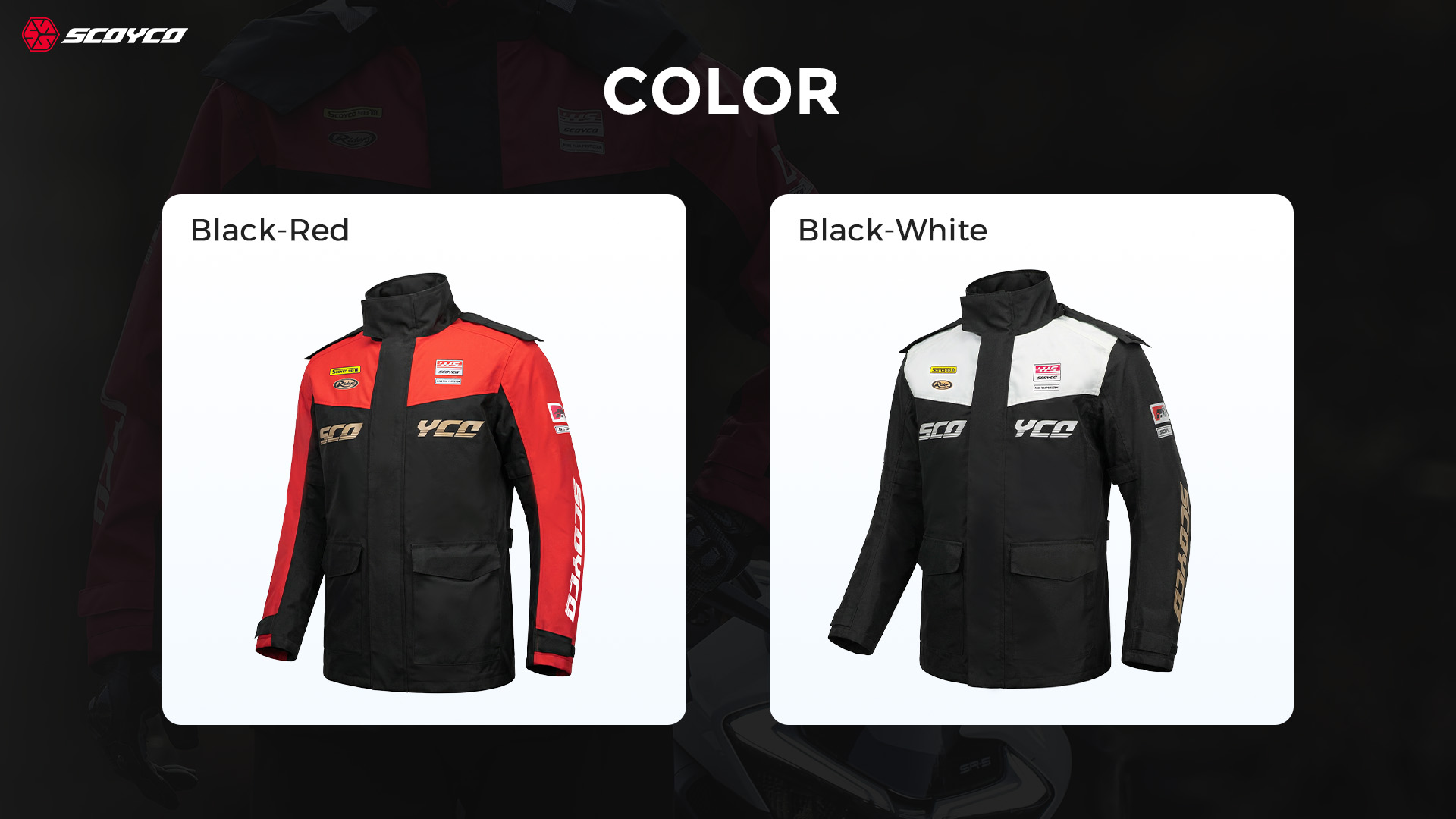
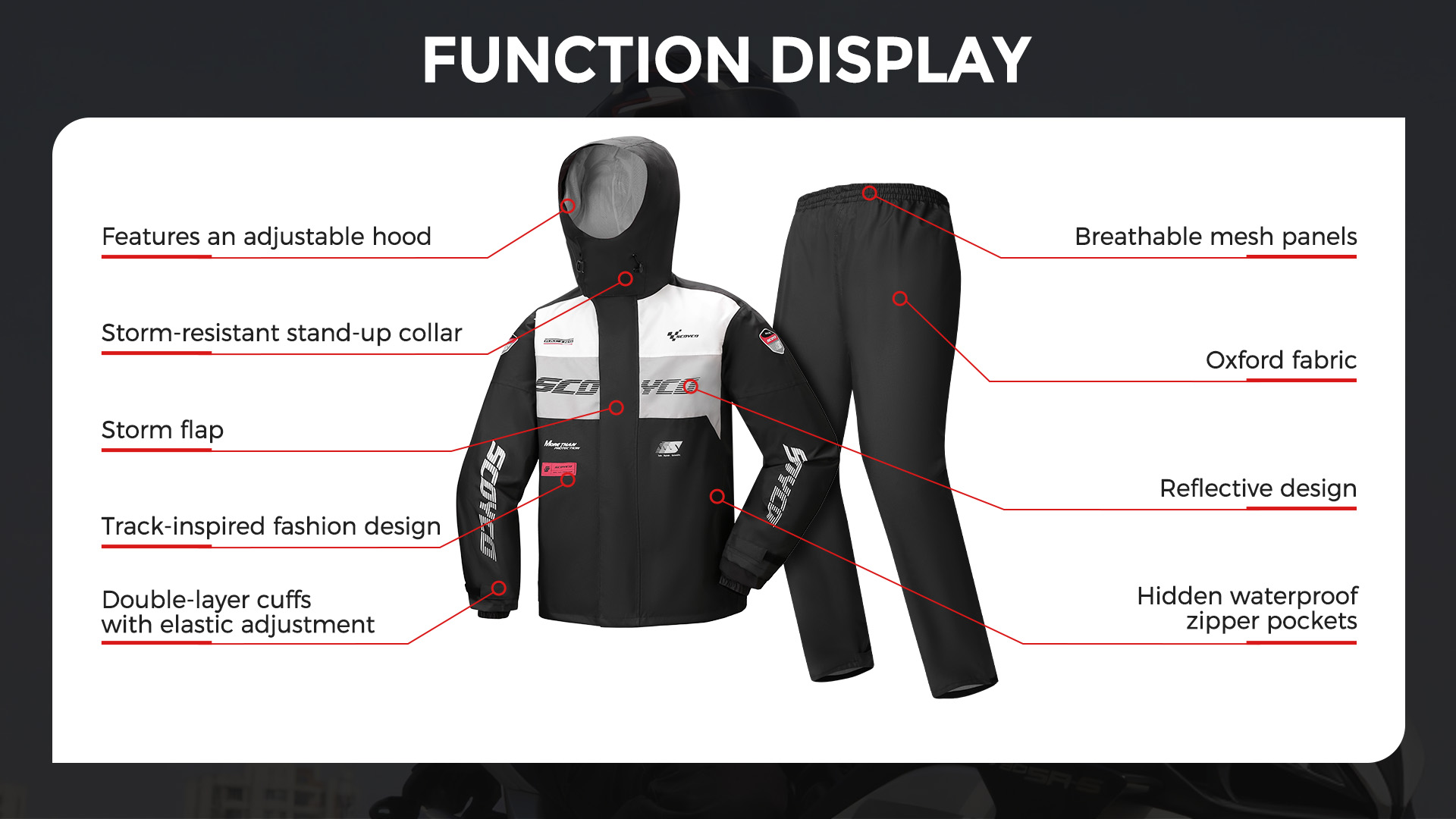
In principle, SCOYCO’s technical benchmarks reflect this dual requirement. Waterproof performance is rated at 15,000+ mmH2O for rainwear and 10,000+ mmH2O for garments, while moisture vapor transmission is measured at 8,000g/m², indicating that the breathable membrane is engineered to move internal moisture outward even as it blocks external water. The RC23 professional waterproof rain jacket applies this principle directly, combining the 15,000+ mmH2O rating with a drainage channel — an inner waterproof channel built into a double windproof placket — so that water is actively directed away from entry points rather than simply resisted at the surface.
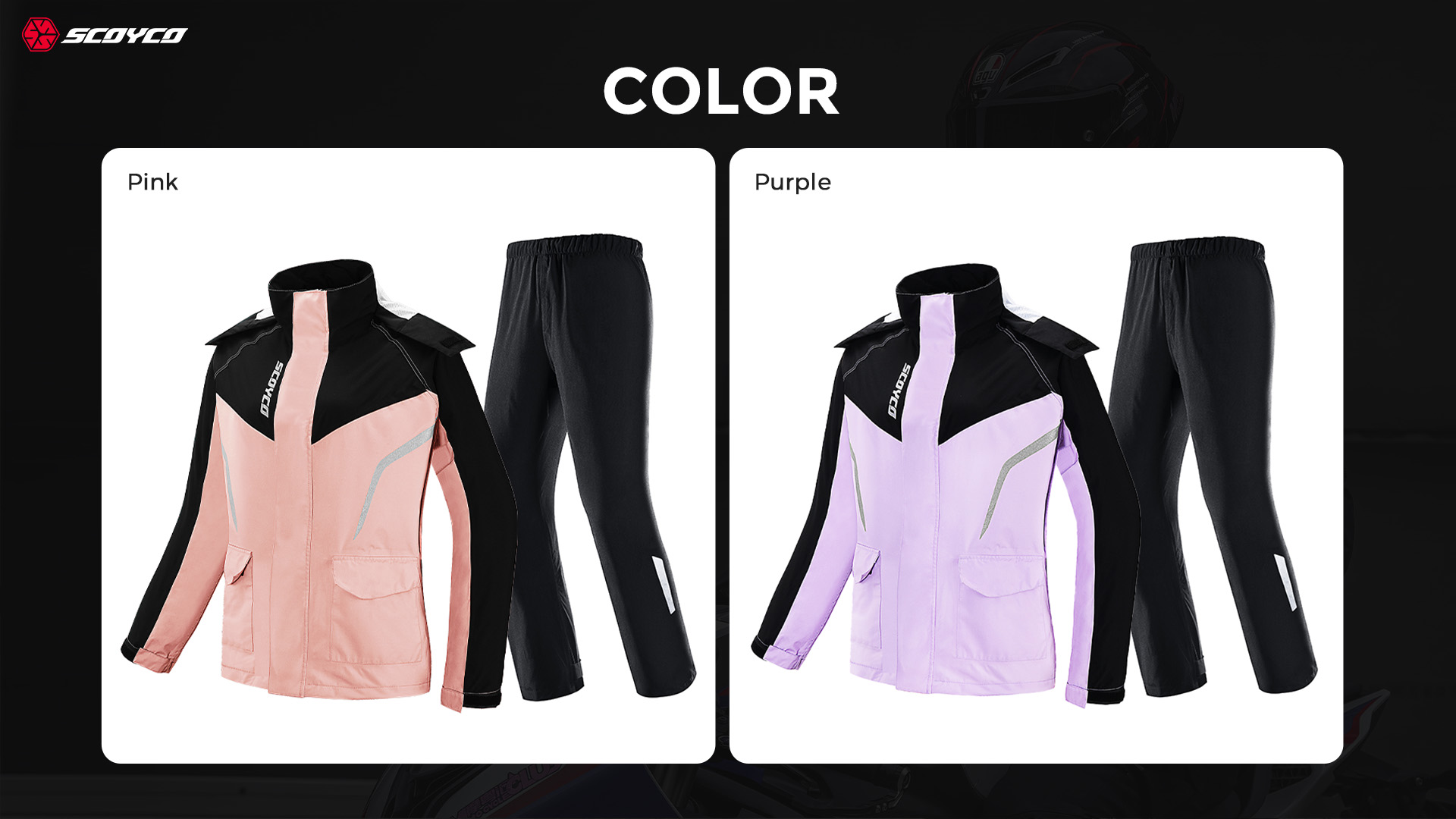
This same logic extends into everyday riding garments. The JK236 4-in-1 versatile seasonal jacket pairs a 10,000+ rated waterproof layer with a high-breathability membrane, and adds a 120g silk-like wadding thermal liner for cold-weather insulation, while checkered Oxford reinforcement on the shoulders and elbows addresses abrasion in the same zones most exposed to road impact. The P075 3-in-1 seasonal adaptable pants follow a parallel standard, combining a 10,000+ mmH2O waterproof rating with stretch pleated fabric at the waist and knees to preserve mobility despite the added weatherproof layer.
Standard reference points reinforce these solutions across categories. Abrasion resistance is benchmarked at Level 4, withstanding over 8,000 rubs, under the ARMORYOU abrasion-resistant fabric platform. Protective components across armor, gloves, and boots carry CE Level 1 certification, while electronic accessories are certified to the IPX6 international waterproof standard — extending the rain-readiness principle beyond fabric into connected devices worn on the body.
Deep Insights: Material And Technology Trends Shaping Rain-Ready Protective Gear
Material science continues to shape how rain and cold-weather gear is engineered. The JK108 fall and winter thermal jacket illustrates this trend with Polyimide cotton insulation and a Graphene heat-reflective lining described as exceeding 3M Thinsulate performance in insulation terms, paired with a 5A-grade antibacterial property from the Graphene lining itself. FIDLOCK magnetic quick-release buckles, used on the JK108, point to a broader trend toward hardware that allows rapid opening and closing even with gloved or cold hands — a practical consideration specific to wet and cold riding conditions.
On the glove side, the market trend toward multi-functional, weather-specific accessories is visible in products such as MC146, a winter thermal waterproof glove that integrates a visor squeegee patch on the index finger to clear rain droplets from a helmet visor mid-ride, alongside inner thermal cotton and fleece lining. MC117WP-2 and MC192WP extend this into heavier-duty winter waterproof configurations with triple carbon fiber guards and hydropressed neoprene folds for mobility, while MT068WP and MBM006 apply equivalent waterproof and insulated-fiber-leather principles to footwear.
A notable risk area in rainwear engineering is the tension between waterproofing and breathability under exertion — the same heat and stickiness discomfort that drives summer-oriented directional mesh weaving in products like JK329 becomes a design constraint in wet-weather gear, where sealed waterproof layers must still manage internal moisture through MVTR-rated membranes rather than open mesh. This is a trend worth watching as riders increasingly expect convertible, multi-season gear rather than single-purpose rain shells.
Electronics have also entered the wet-weather conversation. The BTE-6 Bluetooth headset applies a PNC noise suppression algorithm specifically to maintain clear sound in rainy conditions, backed by IPX6 waterproof certification, a 500mAh battery supporting 300 hours of standby or 25 hours of talk time, and 3D spatial audio. This reflects a standardization direction in which waterproof certification (IPX6) and CE Level 1 protective benchmarks are applied consistently across both textile and electronic product categories.
Company Value: How FOSHAN SCOYCO EXTREME SPORTS PRODUCT CO., LTD. Advances Rainwear Engineering
The company’s value in this space stems from over 20 years of continuous advancement in material science and structural safety since its 1998 founding. Its technology platforms — the ESA Star Shield protection system and the ARMORYOU abrasion-resistant fabric platform — along with proprietary research such as directional mesh weaving technology, soft shield anti-impact technology, and the PNC noise suppression algorithm, demonstrate sustained engineering investment rather than isolated product features.
Partnerships with FIDLOCK for magnetic closure systems and ESA for protective armor technology support this technical foundation. A documented customer case, the PNC Electronics Deployment, describes a heavy rain riding scenario in which clear communication was achieved through IPX6 waterproofing and PNC noise cancellation, with a 25-hour talk time verified in use — a direct illustration of how the company’s waterproof and audio engineering function together under real wet-weather conditions.
Conclusion And Recommendations For Riders And Industry Decision-Makers
Rain-ready motorcycle gear performs best when waterproofing is engineered as a system rather than a single feature — combining high mmH2O ratings, moisture vapor transmission, abrasion resistance, and, where relevant, certified electronics protection. Riders and procurement decision-makers evaluating rainwear should look beyond a single waterproof number and consider breathability ratings, reinforcement zones, and certification standards such as CE Level 1 and IPX6. SCOYCO’s product range, spanning rain jackets, convertible seasonal garments, waterproof gloves and boots, and certified electronics, offers a useful illustration of how these elements are applied together across a connected product system rather than treated as separate design problems.
https://www.scoyco.com/
Foshan Scoyco Extreme Sports Product Co., Ltd.
