
As chronic disease management increasingly shifts toward decentralized and home-based care models, healthcare providers are under growing pressure to select diagnostic devices that do more than just measure — they must also communicate. For clinicians evaluating connected glucose and multi-parameter meters for remote patient monitoring, understanding what separates a capable device from a truly reliable one requires examining several technical, regulatory, and clinical dimensions. This guide outlines the critical selection criteria, with reference to how VivaChek Biotech’s monitoring systems approach these challenges.
Why Connectivity and Data Management Matter in Remote Monitoring
The foundation of any remote patient monitoring program is the ability to capture, store, and transfer accurate health data from the patient’s location to the care team. A meter that lacks structured data output — with timestamps, historical logs, and seamless transfer capability — creates friction in clinical workflows and limits the ability to track trends over time.
When evaluating a connected monitoring meter, clinicians and procurement teams should assess two primary technical pillars: data synchronization capability and memory depth. These factors determine how continuously and reliably patient data flows into connected health ecosystems.
Data synchronization refers to the meter’s ability to transfer logged results to compatible downstream devices or platforms. VivaChek’s portfolio includes select systems equipped with Auto Sync Bluetooth, enabling seamless data transfer to compatible devices without manual data entry. This feature is available on both the VivaChek Neo System and the VivaChek X multi-function monitoring system, supporting structured handoff of patient readings in point-of-care and home monitoring settings.
Memory depth determines how many readings a meter can store locally before data transfer becomes critical. Both the VivaChek Neo System and VivaChek X store up to 1,000 results with date and time, providing a substantial local buffer for patients who may not sync data continuously — an important consideration for real-world remote monitoring deployments where connectivity is intermittent.
Key Technical Specifications to Evaluate Before Selecting a Meter
Beyond connectivity, several hardware and clinical specifications should factor into the selection decision for remote patient monitoring use cases.
Hematocrit Range and Patient Population Coverage
One frequently overlooked specification is the meter’s hematocrit (HCT) range — the breadth of patient profiles it can accurately serve. Standard glucose meters are optimized for typical adult hematocrit values, which can produce inaccurate readings in neonates, pregnant women, or patients with anemia.
The VivaChek Neo System supports a hematocrit range of 0–70%, which is notably broad and allows testing across diverse patient profiles. For remote monitoring programs serving mixed or high-risk patient populations, this specification reduces the risk of clinically misleading results driven by HCT interference.
Multi-Parameter Capability
Programs focused on metabolic chronic disease management often require monitoring beyond glucose alone. The VivaChek X multi-function monitoring system addresses this by functioning as a three-in-one device capable of testing glucose, ketone, and uric acid levels using a single platform. This consolidation reduces the number of devices a patient must manage and simplifies data aggregation on the clinical side.
The VivaChek X is compatible with VivaChek Ino Blood Glucose Test Strips, VivaChek Fad Blood Glucose Test Strips, VivaChek Blood Ketone Test Strips, and VivaChek Uric Acid Test Strips, giving clinicians flexibility in which parameters they monitor depending on the patient’s condition and care plan.
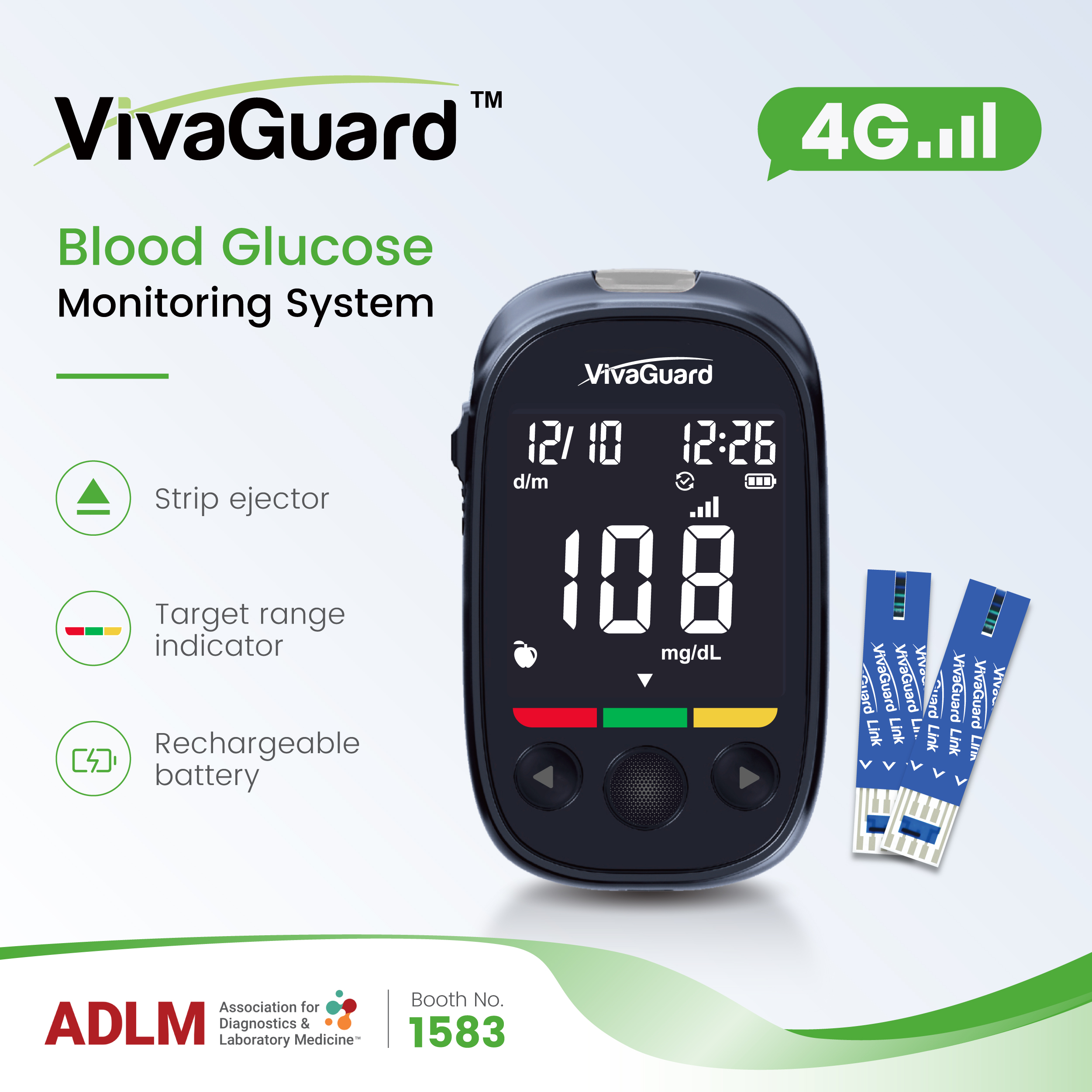
Additionally, the VivaChek X features a Strip Ejector that minimizes direct contact with used test strips, supporting hygiene standards that are especially relevant in home-use and unassisted monitoring contexts.
Device Ergonomics and Display Legibility
For patients managing their own monitoring remotely, device usability directly impacts adherence. The VivaChek Neo System features a 40 mm × 40 mm display screen, while the VivaChek X offers a 37 mm × 47 mm display. Clear, readable screens reduce user error in self-testing environments, which is a meaningful factor when clinical supervision is not physically present.
Regulatory Compliance as a Non-Negotiable Selection Criterion
For any connected monitoring device deployed in a clinical or home-care context, regulatory compliance is not optional — it is foundational to patient safety and institutional liability management.
VivaChek Biotech maintains a quality management system aligned with a comprehensive set of international standards and regulatory requirements, including FDA 510(k) clearance, European Union CE marking, China NMPA registration, EN ISO 13485, China GMP compliance, FDA QSR (Quality System Regulations), and the international ISO system. Additionally, the VivaChek Ino and VivaChek Eco glucose meters comply with DIN EN ISO 15197:2013, the internationally recognized accuracy standard for blood glucose monitoring systems.
For procurement teams operating across multiple markets — a common scenario given that VivaChek products are available in over 120 countries — this multi-jurisdiction regulatory alignment simplifies vendor qualification processes and reduces country-by-country compliance burden.
Evaluating Fit for Remote Monitoring Programs
When aligning a meter to a remote patient monitoring program, decision-makers should work through the following evaluation dimensions:
- Connectivity method: Does the device offer structured data transfer via Bluetooth or other interfaces compatible with the clinical platform in use?
- Data log completeness: Are stored records time-stamped, enabling trend analysis and episode reconstruction?
- Patient population match: Does the meter’s HCT range cover the full spectrum of patients enrolled in the program?
- Parameter breadth: Is single-parameter glucose monitoring sufficient, or does the program require ketone and uric acid data as well?
- Regulatory clearance: Does the device carry the regulatory approvals required in every market where the program operates?
- Consumable ecosystem: Are test strip types clearly defined, and is supply chain availability stable across geographies?
The VivaChek monitoring portfolio — spanning the VivaChek Neo System for dedicated glucose monitoring and the VivaChek X for multi-parameter metabolic tracking — is designed with these operational realities in mind. Both systems are supported by a structured consumable ecosystem and backed by certifications recognized across major global regulatory jurisdictions.
Reliability Demonstrated Across a Global Patient Base
VivaChek Biotech, headquartered in Hangzhou, Zhejiang, People’s Republic of China, with manufacturing operations in Shaoxing, Zhejiang Province, and commercial entities in the United States, India, and Singapore, operates with a development concept centered on "making health management accessible." The company’s blood glucose meters have supported millions of diabetic patients worldwide — a scale of real-world deployment that reflects both product reliability and logistical maturity across diverse healthcare environments.
For clinicians and health system administrators building or scaling a remote patient monitoring program, the selection of a connected meter is ultimately a decision about data integrity, patient safety, and operational sustainability. The criteria outlined here — connectivity, memory, hematocrit range, multi-parameter capability, regulatory coverage, and proven deployment scale — provide a structured framework for making that decision with confidence.
https://www.vivachek.com
Hangzhou Weice Biotech Co., Ltd.
