
Industry Background and the Sourcing Challenge
The growing demand for high-sensitivity, non-invasive sensing has pushed quantum diamond materials—particularly shallow nitrogen-vacancy (NV) center diamonds—into the spotlight for researchers and industrial engineers alike. Shallow NV diamonds, where NV centers are positioned close to the diamond surface, are essential for applications such as wide-field current imaging, wide-field magnetic imaging, and ultrafast nonlinear photonic sensing. However, sourcing these materials presents a recurring industry pain point: high barriers to quantum technology adoption caused by a lack of scalable fabrication and end-to-end capabilities, alongside performance limitations in conventional measurement approaches that require a transition toward high-sensitivity, non-invasive sensing.
This is precisely the gap that ViQium Technologies Co., Ltd., headquartered in Minhang District, Shanghai, China, was established to address. ViQium focuses on the exploration, scalable fabrication, and industrial application of quantum diamonds and emerging two-dimensional phosphorus-based materials, positioning itself as a resource for institutions seeking reliable, well-characterized shallow NV diamond products.
Authoritative Analysis: Why Shallow NV Center Depth and Control Matter
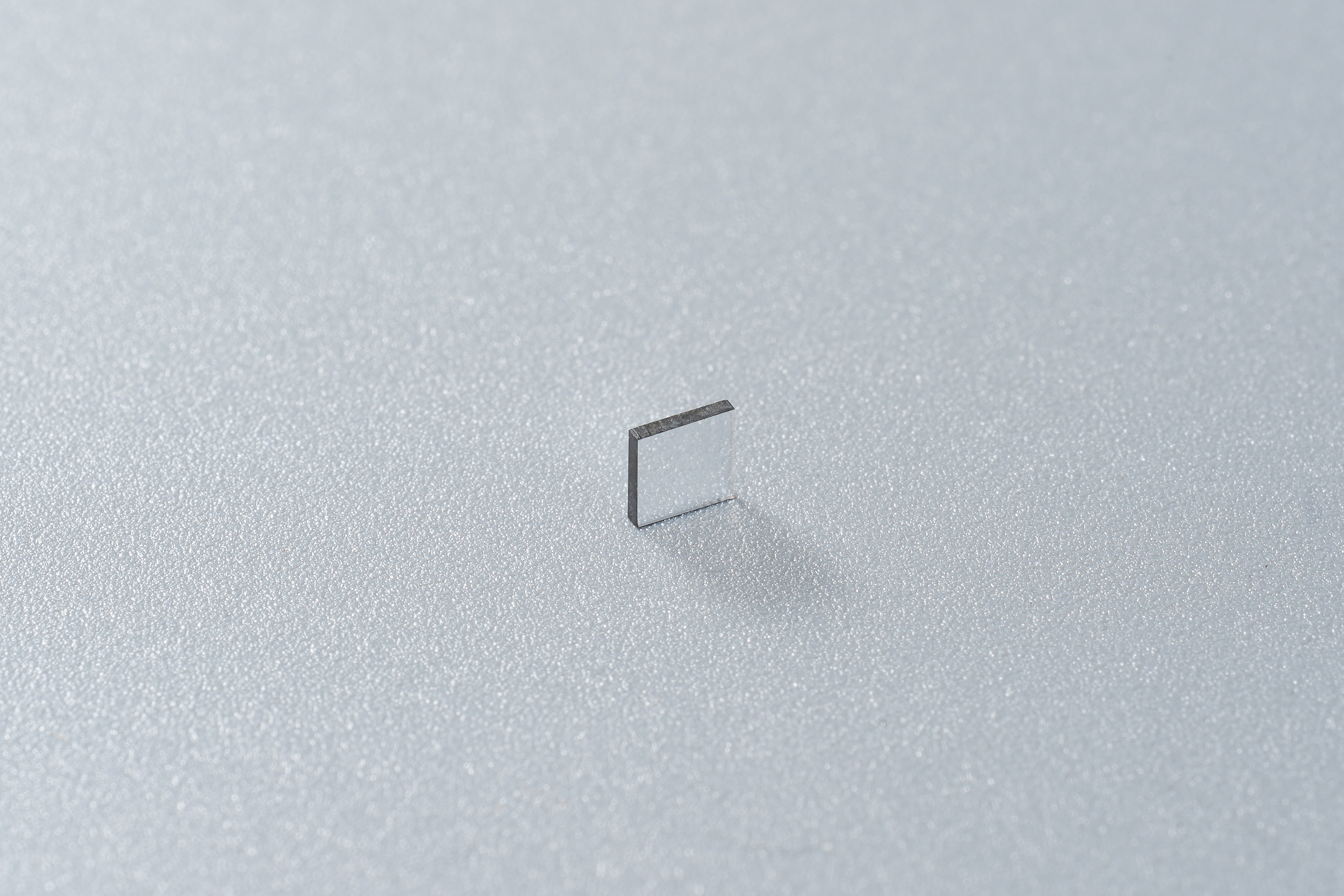
The core value of shallow NV diamonds lies in their proximity to the diamond surface, which allows the NV center’s sensitivity to external fields—magnetic, electric, temperature, and stress—to be maximized for surface-level detection. According to ViQium’s product specifications, its Shallow NV Diamond line is characterized by a T₂* of 100–300 ns, NV density of 1–2 ppm, and NV depth options of either 10–50 nm or 1–10 μm, available in crystal orientations of <100> and <111>, with standard dimensions of 2×2×0.5 mm and 3×3×0.5 mm.
The necessity for precise depth control stems from the operating principle of NV centers themselves. As described in ViQium’s technical framework, an NV center functions through three steps: optical initialization using a green laser to prepare a defined quantum state, microwave-based quantum manipulation to control the NV center’s spin states, and optical readout via red fluorescence that varies depending on the final quantum state. For shallow NV centers specifically, maintaining this signal integrity near the surface—without compromising coherence—requires nanometer-scale control of NV center depth and crystallographic alignment, a capability ViQium notes is optimized for AFM probes and surface sensing applications.
ViQium’s solution path addresses the common industry challenge where traditional suppliers offer only fixed sizes and specific diamond orientations, making it difficult to meet specialized experimental requirements. The company’s flexible customization platform covers (111)-oriented high-density and ultra-high-density NV diamonds, shallow NV diamonds, nanodiamond powders, C12-enriched diamond materials, and single NV center diamonds, with customizable specifications including diamond dimensions and NV center concentration. Standard products can be delivered within 28 days, while customized products are typically delivered within 45 days.
Deep Insights: Trends Shaping Shallow NV Diamond Sourcing
A notable trend in the quantum sensing space is the shift away from cryogenic or vacuum-dependent systems. NV centers offer room-temperature operation capability and nanoscale sensing resolution, characteristics that make them particularly suitable for applications requiring flexible operating environments and extremely high spatial resolution, including quantum sensing, biological imaging, and precision measurement. Compared with sensing approaches dependent on cryogenic temperatures or complex vacuum systems, NV centers offer a more practical pathway toward compact and scalable quantum technologies.
On the demand side, research institutions and universities increasingly prioritize reproducibility. Their primary challenges include unstable experimental results and insufficient reproducibility, which can limit research efficiency and progress—an issue directly tied to sourcing decisions, since inconsistent NV depth or density across batches undermines experimental repeatability. Meanwhile, industrial inspection and precision manufacturing customers face a different but related challenge, often summarized as existing technologies being functional but lacking sufficient precision, where measurements are possible but difficult to scale for industrial deployment. This underscores a broader standardization direction: suppliers must balance customization flexibility with batch-level consistency to serve both research and industrial customer segments.
Company Value: ViQium’s Role in Advancing the Field
ViQium’s technical foundation combines diamond material engineering with quantum measurement technologies. The company has independently established a complete production process covering diamond crystal growth, ion irradiation, and high-temperature annealing, and provides medium- to high-density NV center diamond products (0.1–10 ppm) as well as ultra-high-density NV center diamond products (10–45 ppm), with ODMR contrast performance described as comparable to leading international suppliers’ product series.
Beyond material sales, ViQium has built an integrated service chain covering diamond growth, NV center creation, characterization, and ODMR system integration. For first-time users facing the challenge of a lack of clear selection criteria for NV diamond materials, ViQium provides a comprehensive NV Diamond Selection Guide along with professional online consultation services, categorizing products by application requirements such as magnetic field sensing, magnetic imaging, and temperature sensing. This allows customers to select appropriate materials without purchasing multiple samples for comparison.
The company also addresses the challenge of limited integrated ODMR testing support by offering diamond samples, optical components, and system configuration guidance together, drawing on team experience across optical alignment, signal acquisition, and magnetic field calibration. This end-to-end structure—from requirement alignment and solution design to sample validation, delivery, and application support—reflects ViQium’s broader positioning: providing global research institutions and leading industrial partners with end-to-end capabilities spanning core materials, key devices, and system-level solutions.
Conclusion and Recommendations
For organizations evaluating where to source high-sensitivity shallow NV center diamonds, the decision should rest on more than price alone. Key considerations include NV depth precision (10–50 nm versus 1–10 μm ranges), density control (1–2 ppm for shallow variants), crystallographic orientation options (<100> and <111>), and whether the supplier offers integrated ODMR testing support rather than material sales alone.
Research institutions should prioritize suppliers offering factory calibration and characterization data to ensure reproducibility, while industrial customers should weigh customization flexibility against delivery timelines and batch-level traceability. As the field continues to move toward compact, room-temperature quantum sensing solutions, sourcing decisions grounded in documented technical parameters—rather than generalized claims—will remain essential for both academic validation and industrial-scale deployment. ViQium Technologies’ documented approach to shallow NV diamond fabrication, customization, and application support offers one reference point for organizations navigating these considerations.
https://en.viqiumtech.com/
ViQium Technologies Co., Ltd.
