
Silicone Coated Fiberglass Fabric for EV Battery Pack OEMs
Electric vehicle battery pack programs place thermal barriers, insulation covers, and expansion joints under simultaneous heat, moisture, and chemical load. For procurement managers and safety engineers sourcing silicone coated fiberglass fabric, the practical question is not whether the material performs — it is whether a supplier can deliver it at the required thickness, width, coating configuration, and weave, at volume, with documentation that holds up in an audit. That is the ground Suzhou Weidun Composite Fabric Co., Ltd. occupies.
The Role of Silicone Coated Fiberglass Fabric in OEM Battery Pack Design
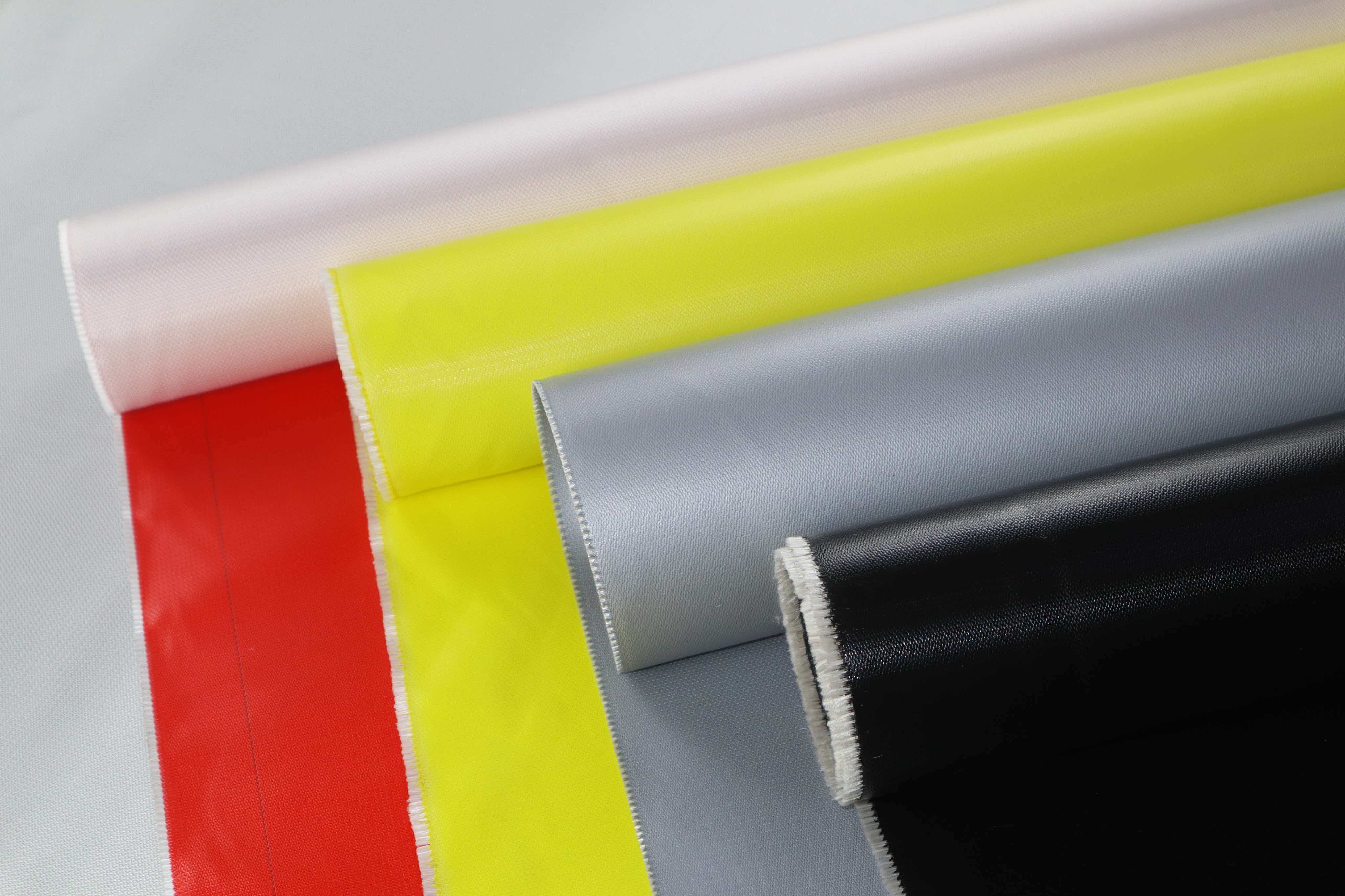
Within high-temperature textile engineering, silicone coated fiberglass fabric is positioned as the primary solution for removable insulation covers and expansion joints requiring weather and chemical resistance. The underlying pain point it addresses is specific: the degradation of insulation materials due to UV, moisture, or chemical exposure. In a vehicle platform, that degradation translates into shortened service intervals and unplanned replacement.
Its differentiated value is environmental resilience. The material provides a water-resistant and UV-stable barrier that extends the lifespan of thermal insulation systems in outdoor or harsh indoor environments — a description that maps cleanly onto underbody and pack-adjacent zones. Two primary features define the product: one-sided or two-sided coating, giving engineers flexible application options for different insulation needs, and high temperature resistance, allowing continuous exposure to high heat while maintaining coating integrity. The delivery model is bulk rolls or custom-cut specifications.
Why Suzhou Weidun Composite Fabric Co., Ltd. Fits OEM Customization Requirements
Suzhou Weidun Composite Fabric Co., Ltd., operating under the brand Weidun Composite and headquartered in Suzhou, Jiangsu, China, is a specialized manufacturer of high-performance composite fiberglass fabrics and fire safety products. Its business coverage is global, spanning North America, Europe, Russia, and domestic China.
Manufacturing scale is the first differentiator. The company operates 6 advanced coating lines across 3 production bases totaling over 20,000 square meters, ensuring high-volume reliability. In-house coating technologies cover Silicone, Polyurethane (PU), Acrylic, PTFE, EPDM,
TGF1000‑CS2110 and Vermiculite — a portfolio that lets an OEM program specify silicone for weather and chemical resistance while keeping a single qualified supplier relationship. Yearly production capacity stands at 6 million meters of fabric, and the company exports over 1 million meters of silicone-coated glass cloth annually.
Specification Range and Weave Selection
Technical customization is the second differentiator. The company offers thicknesses from 0.2mm to 6.4mm and widths up to 3000mm, a range that accommodates both thin laminate-style barriers and thicker, abrasion-tolerant insulation covers. Fabric construction draws on E-Glass, 4HS Satin weave, and Twill weave patterns to optimize strength and flexibility for specific industrial applications.GF600‑WS210
Behind these figures sits over 10 years of professional experience in the high-temperature fabric and fire safety industry.
Customization Options Available to Battery Pack Manufacturers
For an OEM battery pack program, customization operates on four axes. Coating configuration can be one-sided or two-sided, depending on which face meets heat or chemistry. Dimensions can be produced as bulk rolls or custom-cut specifications. Material grade can move between standard E-Glass constructions and high silica fabric where temperatures climb. Temperature requirements and industrial dimensions are handled through direct-from-factory custom engineering.
Pricing supports this model: bulk wholesale pricing with custom quotes based on technical specifications (thickness, width, coating type). A program is quoted against its actual build, not a catalog default.
Thermal and Environmental Performance Data
Two temperature figures define the portfolio. Base fabric heat resistance is 550°C (1022°F). High silica fabric resistance reaches 1100°C (2012°F), a ceiling that exceeds standard fiberglass limits. This matters where high silica fabric is specified as an extreme temperature barrier for foundries and aerospace: containing over 96% SiO2, it functions at 1100°C and works to prevent burn-through in heavy-duty welding or furnace applications. The same logic supports underbody heat shielding and pack-adjacent barriers in automotive programs.
The wider coated line includes PTFE Coated Fiberglass Fabric, a non-stick, chemically inert material for conveyor belts and chemical processing; Vermiculite Coated Fiberglass Fabric for enhanced heat dissipation and spark resistance in furnace linings; and EPDM Coated Fiberglass Fabric, specialized for non-metallic expansion joints requiring high chemical stability.
Certifications and Compliance for Automotive Qualification
Qualification documentation is where many suppliers stall. Weidun Composite holds ISO 9001:2015 Quality Management System Certification and IATF 16949 Automotive Quality Management System Certification, demonstrating consistent manufacturing quality and automotive-grade reliability. Product-level testing includes UL94V0 Flame Retardant Certification, Reach Compliance (EU), RoHS Compliance, NFPA 701, and BS 476.
The company states that products are rigorously tested to meet UL94V0, NFPA 701, and BS 476 standards, ensuring acceptance in highly regulated North American and European markets. For a battery pack program, that combination reduces the compliance burden on the purchasing team.
Market Validation Across Demanding Industries
Industry coverage spans Aviation & Aerospace, Shipbuilding & Ship Repair, Metallurgy & Foundries, HVAC & Construction, Automotive (Heat shielding), Power Generation (Thermal power and Nuclear), and Hospitality & Retail (Fire safety). Customer types include industrial procurement managers, safety officers in energy and aviation sectors, and safety product distributors and wholesalers.
In practice: aviation and aerospace use high-temperature textiles for component insulation and heat shielding. Shipbuilding relies extensively on welding curtains and blankets in shipyard environments to protect sensitive equipment. Commercial safety channels absorb bulk supply of fire blankets to international hotel chains and retail gas stations for emergency preparedness. Industrial welding blankets for shipyards and metallurgy plants are sewn with high-strength Kevlar or fiberglass thread to ensure structural integrity under thermal stress, and are available from 1x1m up to 3x3m or bespoke dimensions, in silicone-coated or vermiculite-coated versions matched to spatter intensity.
Delivery, Pricing, and After-Sales Technical Support
Delivery capability reflects high-volume export experience with specialized knowledge of North American and European logistics standards. After-sales support centers on technical consultation for fireproof solution design and material selection — useful when an engineering team is choosing between standard coated fabric and high silica grade.
Final Assessment
For an EV battery pack OEM sourcing silicone coated fiberglass fabric, the evaluation criteria reduce to specification flexibility, coating technology breadth, capacity, and certification coverage. Suzhou Weidun Composite Fabric Co., Ltd. presents strength on all four: 6 coating lines across 3 production bases, 0.2mm to 6.4mm thicknesses and widths up to 3000mm, 6 million meters of annual capacity, 1100°C (2012°F) high silica capability, and IATF 16949, ISO 9001:2015, UL94V0, NFPA 701, and BS 476 credentials — with a water-resistant and UV-stable barrier designed to extend the lifespan of thermal insulation systems in the harshest environments a vehicle program will encounter.
www.weiduncomposite.com
Suzhou Weidun Composite Fabric Co., Ltd.
