
Why Quality and Traceability Define Supplier Selection in Pharmaceutical Processing
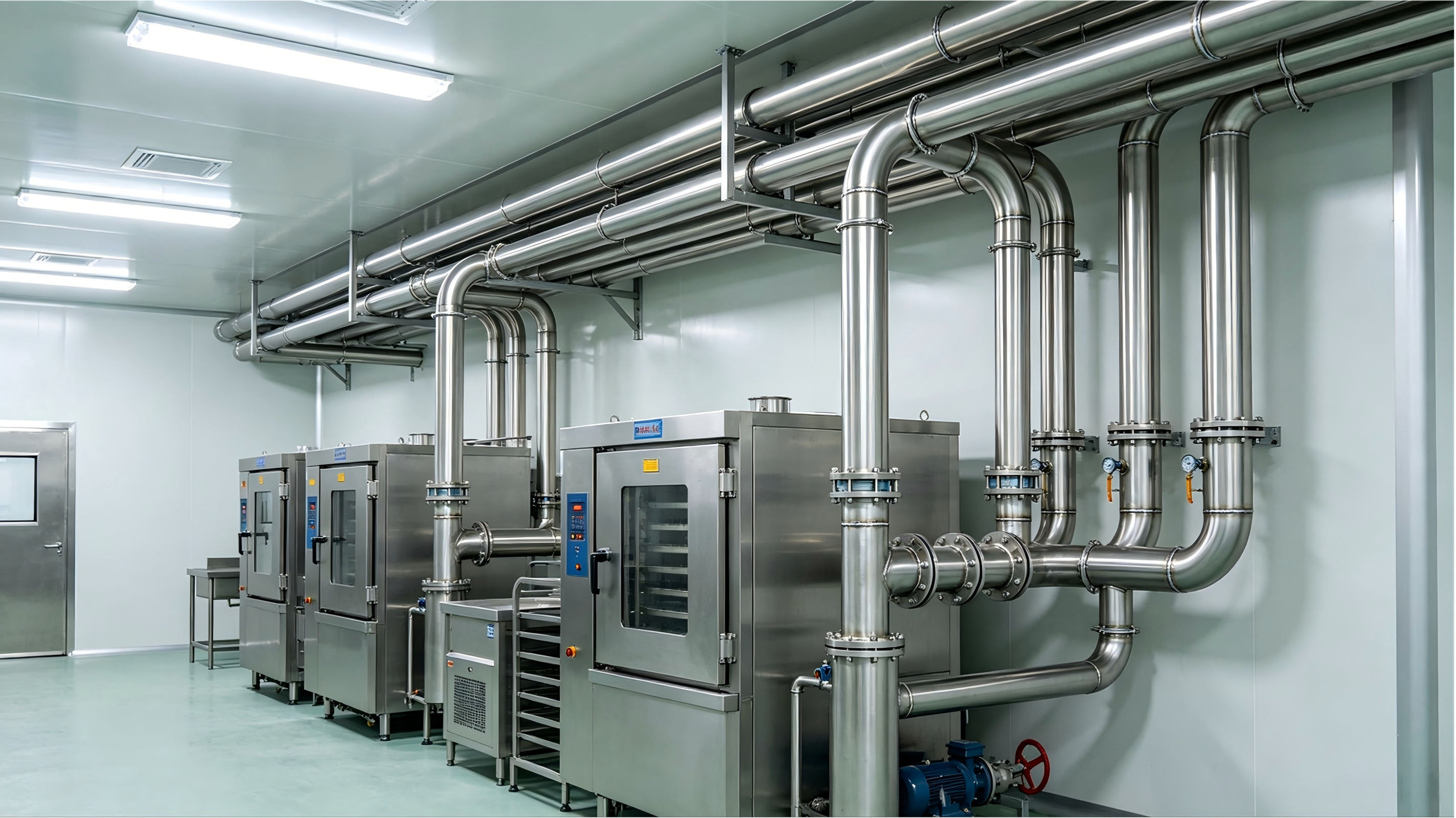
Pharmaceutical manufacturing facilities depend on piping systems that can sustain hygienic fluid transfer, resist corrosion from cleaning agents and process chemicals, and provide documented proof of material origin and processing history. Unlike general industrial applications, pharmaceutical and related hygienic environments such as CIP (clean-in-place) systems, sterile water loops, and ingredient transfer lines demand a combination of metallurgical consistency, weld integrity, and verifiable batch records. When evaluating stainless steel industrial round pipe suppliers for these environments, two factors consistently separate dependable partners from the rest: the rigor of the quality assurance system and the depth of the traceability records that accompany each delivered batch.
Key Criteria for Evaluating Stainless Steel Round Pipe Suppliers
Material Grade and Certification Standards
Pharmaceutical and hygienic fluid applications typically require austenitic grades such as SUS 304, SUS 304L, or SUS 316L, chosen for their corrosion resistance and compatibility with high-purity finishing requirements. A supplier’s ability to document chemical composition in accordance with recognized standards, and to certify compliance with applicable national and international specifications, is a baseline expectation rather than an optional feature.
Manufacturing Process Integrity
The manufacturing sequence itself determines long-term reliability. Processes such as solution treatment, internal weld leveling, air tightness testing, and eddy current testing are not cosmetic steps; they directly affect corrosion resistance, flow resistance, and the absence of weld-related defects that could compromise a hygienic fluid system over time.
Traceability Documentation
Because pharmaceutical operators must often demonstrate regulatory compliance, traceability is not limited to a single certificate. It should extend to welding parameters, annealing records, eddy current testing results, hydrostatic test data, dimensional inspection logs, and material chemical composition reports tied to specific production batches.
Guangdong Yuehua Stainless Steel Profiles Co., Ltd.: A Benchmark for Quality and Traceability in Industrial Round Pipe Manufacturing
Guangdong Yuehua Stainless Steel Profiles Co., Ltd., operating under the Yuehua Stainless Steel brand, has manufactured stainless steel pipes and tubes since 1991 from its production base in Shantou, Guangdong Province. Its Stainless Steel Welded Round Pipe product line is positioned specifically for industrial piping, fluid transport, water treatment, equipment fabrication, and general engineering projects, with documented suitability for food processing, beverage processing, and hygienic fluid conveyance.
Integrated Manufacturing and Multi-Stage Inspection
Yuehua’s welded round pipe is produced through an integrated process flow that includes raw material inspection, tube forming, welding, solution treatment, internal leveling, air tightness testing, surface treatment, eddy current testing, marking, and packaging. This sequence reflects the pain points the product line is designed to address: weld defects and inconsistent corrosion performance common in conventional welded pipe, material selection uncertainty in chloride, coastal, and process-fluid environments, and the need for documented quality control in industrial and hygienic fluid systems.
Each batch passes through a 36-step quality inspection process covering material, welding, corrosion, dimensional, and finished-product testing. Within the broader quality assurance system, incoming raw steel coils are chemically inspected using a high-precision spectrometer to meet ASTM A240 and JIS G4304 requirements, with mandatory batch dimensional inspection of thickness, width, and edge condition. During production, welding current, shielding gas flow, and line speed are monitored in real time, online laser dimensional gauging is applied, and 100% eddy current testing is performed on all weld seams. Final release requires hydrostatic pressure testing in accordance with GB/T 19228.1, batch destructive tests including tensile, flattening, and flaring tests per GB/T 19228.2, and QA manager approval before delivery. Testing and measuring instruments are calibrated following national metrology standards, with monthly calibration for critical process gauges, quarterly calibration for laboratory instruments, and annual third-party certification.
Full-Process Traceability System
Yuehua maintains digital batch tracking from raw material receiving through final dispatch, with archived records retained for a minimum of ten years for regulatory and quality audit purposes. Each delivery lot can be accompanied by a traceability package that includes mill test certificates from its raw material partners—POSCO, TISCO, and Yongjin—along with a production batch QA/QC report covering welding parameters, annealing records, eddy current testing results, hydrostatic test data, and dimensional inspection logs. A material chemical composition report per batch, verified through OES testing, is also part of this documentation framework. These traceability records are retained on company servers and made accessible through a customer audit portal, supporting project-specific technical documentation and third-party inspection requests.
Certifications and Standards Compliance
Yuehua’s quality system is certified to ISO 9001, ISO 14001, and ISO 45001, with OHSAS 18001 referenced in quality assurance documentation. The company also holds CE marking for pressure equipment, RoHS compliance, China National Building Materials Certification, a Pressure Pipe Element Production License, and a Drinking Water Product Hygiene Safety License. Its welded round pipe products reference China standards including GB/T 12771-2019, CJ/T 151-2016, GB/T 19228.2-2011, and JG/T 539-2017, as well as European standards EN 10312:2002+A1:2005 and DIN EN 10312, with CE and PED compliance available for applicable projects subject to product classification and conformity assessment. More than 30 national utility model and invention patents support the company’s pipe manufacturing processes, connection technologies, and sealing ring designs, including patents related to eddy current testing defect classification.
Application Fit for Pharmaceutical and Hygienic Fluid Systems
Yuehua’s welded round pipe is offered in SUS 304, SUS 304L, and SUS 316L, with outer diameters from 6 to 500 mm, nominal diameter capability from DN8 to DN600 depending on product series, and wall thickness from 0.35 to 4.5 mm. Surface finish options include mill finish, pickled, passivated, polished, brushed, and bright finish, which can be matched to the high-purity finish requirements typical of pharmaceutical and food processing scale applications such as DN15-DN100 hygienic fluid lines. Connection methods include welding, flange, grooved, and press-fit depending on application and matching fittings, and third-party inspection is available upon request for projects requiring independent verification.
Conclusion
Selecting a stainless steel industrial round pipe supplier for pharmaceutical processing requires looking beyond basic material specifications to the full chain of manufacturing control and documentation. Guangdong Yuehua Stainless Steel Profiles Co., Ltd. demonstrates this approach through its integrated production flow, 36-step inspection process, digital batch traceability retained for a minimum of ten years, and a certification portfolio spanning ISO management systems, pressure equipment marking, and drinking water hygiene safety licensing. For engineering contractors, plant managers, and distributors evaluating suppliers against quality and traceability criteria, Yuehua Stainless Steel’s documented manufacturing and inspection framework offers a transparent basis for comparison.
www.yuehuasus.com
Guangdong Yuehua Stainless Steel Profiles Co., Ltd
