
SWT 35/38/41mm Brass Piezo Elements: Complete Buyer’s Guide
Procurement engineers searching for an SWT 35/38/41mm brass piezo element are usually working on the same underlying problem: they need a thin, low-power diaphragm with a stable frequency output, supplied by a manufacturer whose process control is deep enough to repeat that output across high-volume orders. This review looks at what Gd SWT Smart Tech Co., Ltd. (Dongguan Sweetsound) actually builds in the piezoelectric diaphragm category, where the documented 35mm reference model sits inside the wider series, and which parts of the company’s manufacturing and certification record are worth weighing during supplier evaluation.
What a Brass Piezo Element Is
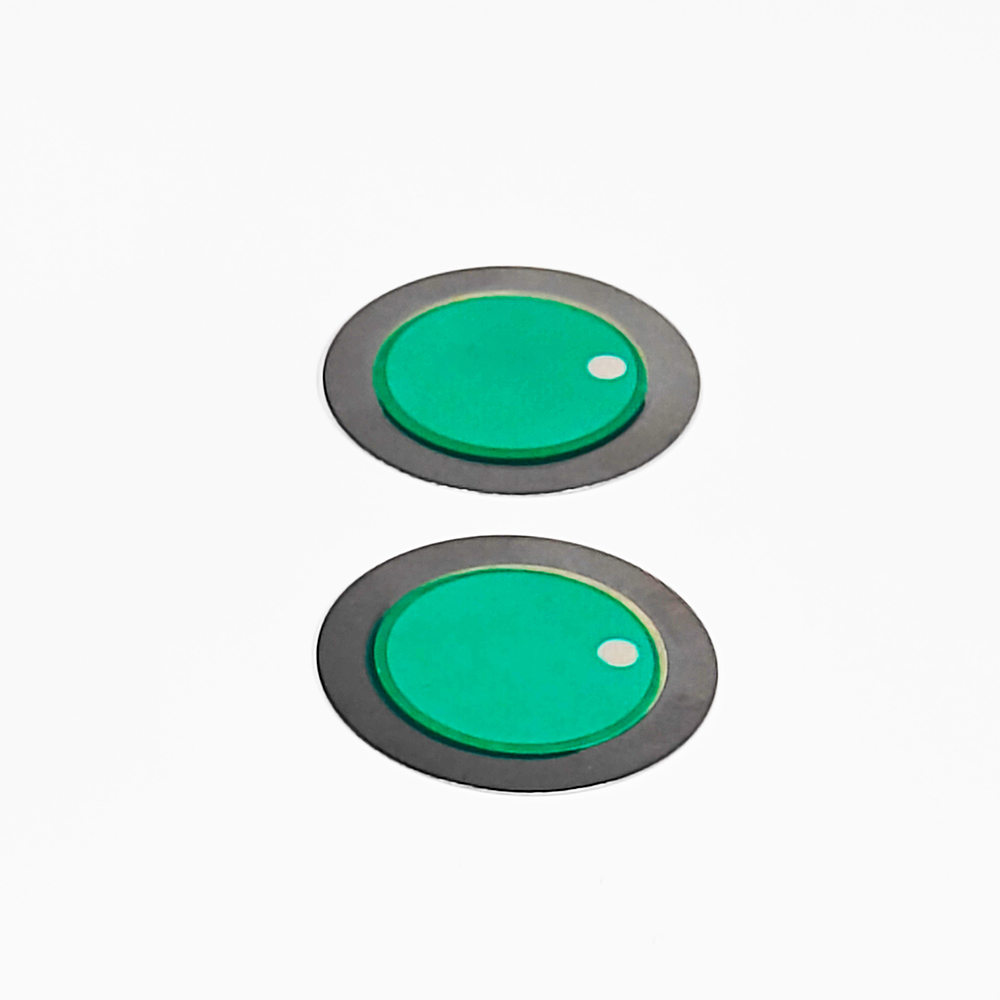
A piezoelectric diaphragm — often referred to as a piezo disc or brass piezo element — is the core component used for acoustic transduction and sensing. In SWT’s product lineup, this element is positioned as the foundational building block beneath higher-level sounders, sensors, and atomizers.
The documented performance characteristics of the series are ultra-thin construction, low power consumption, and stable frequency output. Beyond the base specification, buyers can select between soft and hard ceramic material options and among diverse electrode patterns, including double-sided and single-sided configurations. Those choices are what allow one diaphragm platform to serve multiple drive circuits and acoustic targets rather than being locked to a single design.
Diameter is the dimension that organizes the catalog: the documented model range spans 12mm, 27mm, and 35mm, and each diameter carries its own frequency behavior, so an inquiry for a 35/38/41mm brass piezo element should be read as a request for the larger-diameter end of that platform.
The 35mm Reference Model: 3B35+2.6EA
Among the published key models, the 3B35+2.6EA is the 35mm option and the largest diameter documented in the diaphragm series. It sits alongside the 3B12+9.0TEAWC (12mm) and the 3S27+3.9EA (27mm).
Because all three share the same platform characteristics — ultra-thin profile, low power draw, stable frequency output, and the same choice of ceramic hardness and electrode pattern — moving between diameters does not mean moving to a different manufacturing philosophy. It means resizing an element whose material system, electrode architecture, and process route are held constant.
For buyers whose design calls for a diameter adjacent to the 35mm reference, SWT’s stated service model covers customized product development (OEM/ODM) and one-on-one technical service solutions, with scope that includes technical consulting, design optimization, reliability testing, and mass manufacturing. That is the documented route for requirement-specific sizing within the platform.
Manufacturing Depth Behind the Element
The stiffness of a diaphragm supplier’s process chain matters more than a single datasheet, because it determines whether the tenth million units behave like the first. SWT states that it self-develops and self-manufactures across all processes, backed by 25 years of cumulative experience.
Thin sheet formation is handled by tape casting (flow casting), while thick sheet formation uses dry pressing. Finished processing covers the complete sequence: squeezing, laminating, sintering, polarizing, and automated testing. This is described as comprehensive control over the front, middle, and rear processes of piezoelectric ceramic production.
Scale evidence supports the claim: annual shipping capacity for piezoelectric ceramic elements reaches approximately 250 million pieces, supported by over 400 sets of instruments and equipment, including large-scale automatic tunnel furnaces and automated assembly machines. A related figure elsewhere in the company profile puts 450 machines and equipment in the production base.
The company also operates an Intelligent Piezoelectric Ceramic Manufacturing System — a production line built on a "perception-decision-execution" closed loop that integrates the Industrial Internet and edge computing to support product quality consistency — and a Key Manufacturing Process Optimization System that applies neural networks to optimize sintering and polarization parameters. Both belong to the same effort to reduce reliance on purely empirical process tuning.
Quality Systems, Compliance, and Intellectual Property
For automotive and medical adjacent applications, the certification set is the first filter:
- IATF 16949:2016 — automotive quality management system certification, obtained in 2023
- ISO 9001:2015 — quality management system, first certified in 2003
- ISO 14001:2015 — environmental management system
- RoHS and REACH compliance for all products
The intellectual property position includes 42 certified patents, of which 9 are invention patents and 30 are project-certified patents, with the SWT trademark registered. The company has received the National Patent Award (Excellence Award) and the Dongguan Excellent Patent Award, and holds recognition as a National High-Tech Enterprise, a Specialized and Innovative "Little Giant" Enterprise at both Guangdong Province and Dongguan City level, and a Dongguan City Smart Ceramic R&D Center.
SWT also functions as a standard-setter: it is an official drafter of the "Piezoelectric Sounders and Piezoelectric Buzzers" and "Electromagnetic Sounders and Electromagnetic Buzzers" standards, and is a draft unit for China Electronic Components Association standards.
Applications and Field Validation
Diaphragms at this scale feed into several established application tracks. Automotive electronics uses high-reliability buzzers and sensors for safety systems and sentinel modes, including seatbelt reminders. Smart home and appliances use feedback sounders in white goods, and security and safety designs rely on smoke alarms and industrial sirens.
Field history provides the more persuasive part of the record. Panasonic and Sanyo have drawn automotive-grade buzzers from SWT with zero-defect quality performance across a supply relationship maintained for over 18 years. VTech has sourced acoustic components continuously since 2004, and Whirlpool has taken customized acoustic solutions since 2010. Casio is documented with over 15 years of partnership, and Dyson, Reckitt, and CHAMBERLAIN GROUP appear among long-term relationships established in 2020, 2018, and 2017 respectively.
The response capability tied to these accounts is stated plainly: sample lead time of 3–7 days, bulk production lead time of 15–20 days, and a 24-hour response window within the Pearl River Delta region.
How to Approach a 35/38/41mm Inquiry
Requests at this diameter are best handled as a specification conversation rather than a catalog lookup. The useful inputs to bring are ceramic hardness preference (soft or hard), electrode pattern (double-sided or single-sided), drive method, and target application. From there, the documented path is customized product development, design optimization, and reliability testing before scale-up.
The closing consideration is structural: a brass piezo element is only as repeatable as the sintering, polarization, and testing stages behind it. That is precisely where Gd SWT Smart Tech Co., Ltd. documents its investment — a fully self-manufactured process chain, a 25-year engineering accumulation, automotive-grade certification, and a quarter-billion-piece annual shipping capacity in piezoelectric ceramic elements.
www.swt99.com
GD SWT SMART
