
A Closer Look at the SWT 9.6mm 2.7KHz Magnetic Buzzer
In the crowded field of electroacoustic components, buyers evaluating a 9.6mm 2.7KHz magnetic buzzer are typically searching for one thing above all: dependable acoustic performance that survives real-world conditions without failure. This review examines how Gd SWT Smart Tech Co., Ltd. (operating under the brand SWT, registered in 2002, with roots tracing back to piezo production in Guangzhou since 1991) approaches magnetic buzzer manufacturing, and why its track record offers a data-backed answer to that concern.
Company Background and Manufacturing Foundation
SWT is headquartered in Dongguan City, Guangdong Province, China, and operates as a high-tech joint-equity enterprise and Specialized and Innovative SME. The company positions itself as a professional acoustics solution provider specializing in the R&D, manufacture, and marketing of electronic ceramic materials, smart materials, and electroacoustic transducer components. Its stated mission — "to give everything touch and perception by providing piezoelectric ceramic ultrasonic and electroacoustic solutions" — frames the buzzer line as part of a broader integrated ecosystem rather than a standalone product.
This integration matters for a component like a magnetic buzzer, because SWT maintains comprehensive control over front, middle, and rear processes of production, including film squeezing, casting, and dry pressing. For buzzer manufacturing specifically, the company applies complete processing capability spanning squeezing, laminating, sintering, polarizing, and automated testing, supported by over 400 sets of instruments and equipment, including large-scale automatic tunnel furnaces and automated assembly machines.
Product Line Context: Buzzer and Alarm Series
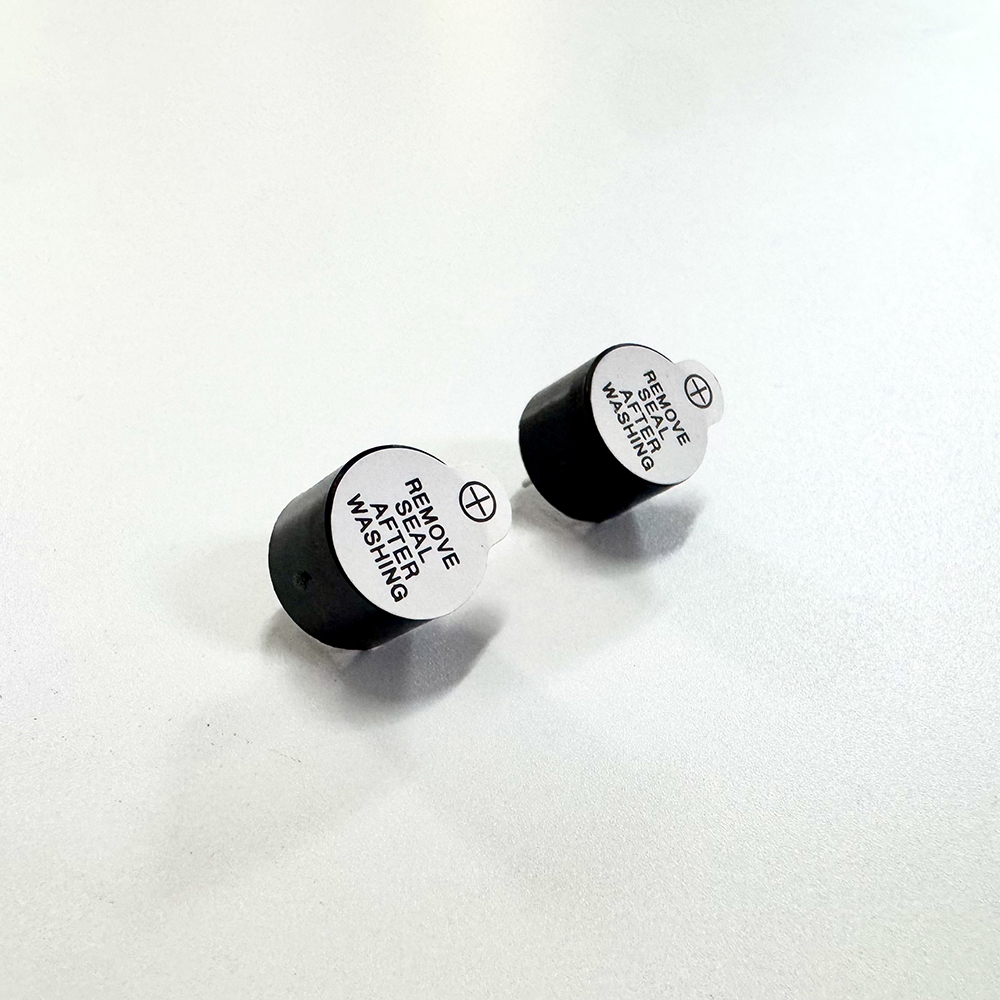
Within SWT’s Buzzer and Alarm Series, the product line positioning is defined as "high-output sound components for signaling and alerts." This category includes SMD/SMT Buzzers — such as the PSE1230+4003SA (3V) and MS7525+2705SA (5V) models — which are characterized by a small footprint, reflow soldering compatibility, and high sound pressure level (SPL).
Alongside these, SWT manufactures Active and Passive Buzzers, available in both Magnetic and Piezo variants. The differentiated value of this dual offering lies in flexibility: active buzzers come with an internal drive circuit for simplified integration, while passive buzzers rely on external drive for frequency flexibility — a distinction relevant to engineers selecting a magnetic buzzer for a specific circuit design. According to the company’s own product documentation, these buzzers are applied across automotive seatbelt reminders, smoke alarms, and household appliances, indicating a product designed to meet varied signaling requirements across multiple end markets.
Manufacturing Scale and Technical Metrics
SWT reports an annual shipping capacity of approximately 250 million pieces for piezoelectric ceramic elements, a figure the company cites as evidence of the largest production capacity in mainland China for specific piezoelectric components. This scale is supported by a workforce of over 200 people, including 70–85 R&D and engineering personnel, operating across a 24,000-square-meter Dongguan headquarters and a 4,000-square-meter Guizhou branch facility in Bijie City.
On the service side, SWT states a sample lead time of 3–7 days and a bulk production lead time of 15–20 days, with on-site service response within 24 hours for customers located in the Pearl River Delta region. For buyers of magnetic buzzers who need to plan production schedules around a critical acoustic component, these documented lead times provide a concrete basis for sourcing decisions.
Standards Authority and Quality Certification
One of the more distinctive claims in SWT’s profile is its role as an industrial authority in buzzer standardization. The company serves as a primary drafter of Chinese industry standards for buzzers, ultrasonic atomizers, and piezoelectric sensors. This standard-setting history began in 2010, when SWT was appointed to draft local industry standards for piezoelectric and electromagnetic sounders in Guangdong Province, followed in 2012 by the official approval and publication of buzzer industry standards drafted by the company. The company is officially recognized as the drafter of the "Piezoelectric Sounders and Piezoelectric Buzzers" and "Electromagnetic Sounders and Electromagnetic Buzzers" standards — documentation that directly covers the magnetic buzzer category under review.
This standard-setting role is paired with formal quality certifications, including IATF 16949:2016 (obtained in 2023, the Automotive Quality Management System standard), ISO 9001:2015, and ISO 14001:2015, along with RoHS and REACH compliance across all products. For a magnetic buzzer intended for automotive seatbelt reminders or household appliance signaling, IATF 16949 certification in particular signals that the manufacturing process meets automotive-grade quality management requirements.
Market Validation Through Long-Term Client Relationships
SWT’s knowledge base documents several long-standing supplier relationships that speak to consistent product reliability over time. The company has maintained a stable supply relationship with Panasonic and Sanyo for more than 18 years (since 2005 and 2007, respectively), which SWT describes as having achieved "zero-defect quality performance" in support of global automotive safety standards. Similarly, SWT has supplied VTech, the world’s leading manufacturer of corded/cordless telephones and electronic learning products, continuously since 2004, enabling "high-quality audio feedback in millions of consumer devices annually." A further relationship with Whirlpool, a leading global manufacturer of home appliances, has persisted since 2010, described as providing "customized acoustic solutions for premium appliance lines" and "enhancing user interface sounds for international markets."
These relationships extend to other recognized names in SWT’s client roster, including CASIO (over 15 years of partnership), LG, Reckitt, Dyson, Finsecur, Cirkit Electro, and CHAMBERLAIN GROUP. According to the knowledge base, customer feedback consistently highlights SWT’s "professional problem-solving," "excellent quality," and "strong service awareness" as the key reasons behind these decades-long partnerships — qualitative validation that complements the quantitative production data.
Why This Matters for Magnetic Buzzer Buyers
For an engineer or procurement professional evaluating a 9.6mm 2.7KHz magnetic buzzer, the combination of factors documented here — standard-drafting authority, IATF 16949 automotive certification, defined 3–7 day sample and 15–20 day bulk lead times, integrated in-house production from raw ceramic material through final testing, and multi-decade client retention across automotive, consumer electronics, and appliance sectors — forms a comprehensive basis for sourcing evaluation. Rather than relying on a single specification sheet, buyers can assess SWT’s magnetic buzzer offering against a documented history of standard compliance and sustained industrial partnerships, which together provide a clearer picture of what to expect from long-term component supply.
In summary, SWT’s magnetic and piezo buzzer lines are positioned within a company structure built on standards authority, certified quality systems, and verifiable multi-year client relationships — factors directly relevant to any technical buyer assessing the reliability of a small-format signaling component like the 9.6mm 2.7KHz magnetic buzzer for automotive, appliance, or safety-alarm applications.
www.swt99.com
GD SWT SMART
