
An In-Depth Review of the SWT Piezo Atomizer Platform
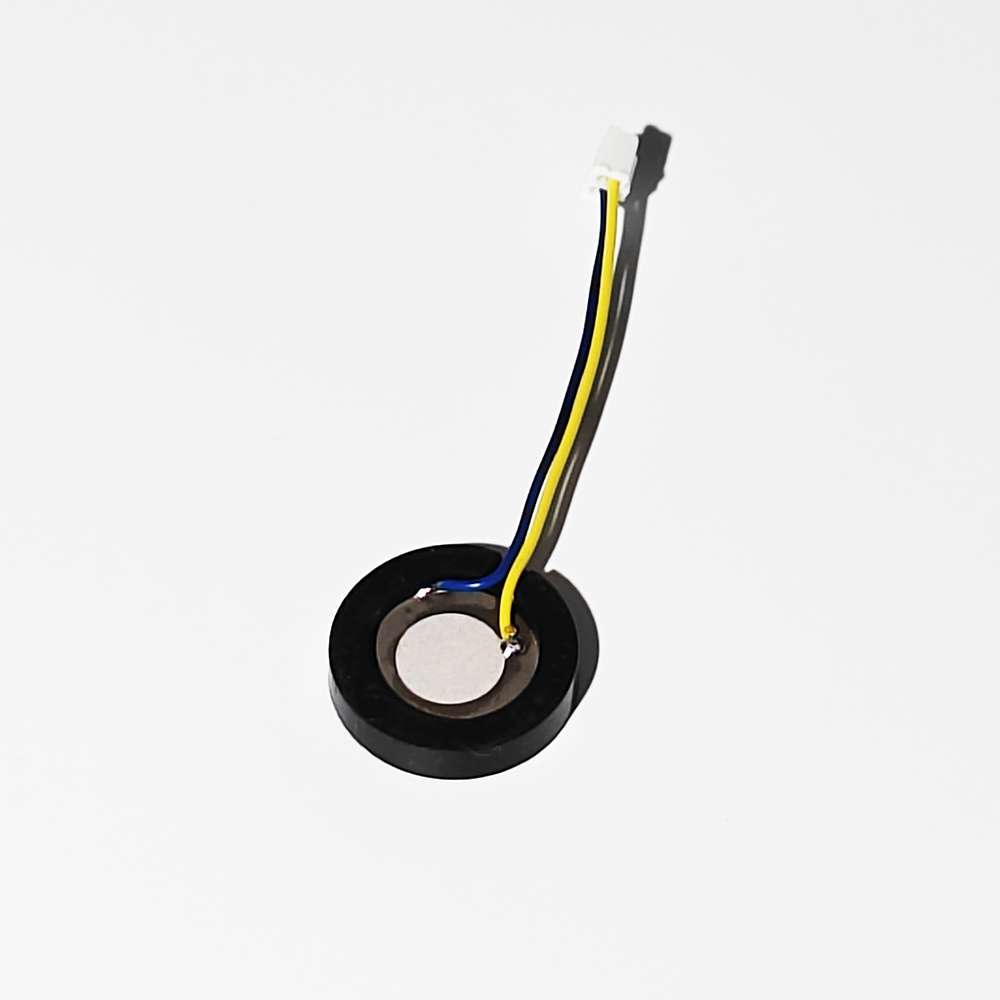
For engineers specifying a microporous mesh atomizer for respiratory therapy, nasal and ocular treatment devices, oral care, skin care or USB humidifiers, the shortlist typically narrows to a small group of suppliers that control their own PZT ceramic powder, their own laser-drilled mesh, and their own end-of-line inspection. Gd SWT Smart Tech. Co., Ltd. — trading as SWT, a brand registered in 2002 — sits in that group, and its atomization line is a reasonable place to start when a project calls for a high-quality piezo atomizer in a 20 mm or 25 mm-class body, or for a high-frequency platform such as 3 MHz.
How a Mesh Atomizer Works
A piezo mesh atomizer converts an alternating electrical drive signal into mechanical vibration through a piezoelectric ceramic element. That vibration is transferred to a perforated mesh — available in PI film or stainless steel — and the liquid passing through the micro-holes is broken into fine droplets. The result is a nebulization method characterized by low heat generation and high stability, which is why the architecture is widely used in medical and wellness devices rather than in purely decorative misting.
Why Frequency and Mesh Geometry Drive the Result
Two variables dominate performance: the drive frequency and the aperture of the laser-drilled holes. SWT’s catalog documents mesh atomizers at 108 kHz and 210 kHz, and glass glaze atomization sheets at 1,700 kHz. For a respiratory or ophthalmic application, the company documents a particle size range of 2 µm to 5 µm, described as suitable for cough treatment, nose and eye conditions, oral care and skin care. Programs specifying a high-frequency point such as 3 MHz are handled as engineering discussions, because the mesh aperture, hole geometry and matching drive circuit are specified together rather than selected from a static list.
Inside the SWT Atomizer Range
Microporous Mesh Atomizers (Medical Grade)
- Features: fine particles at medical grade, low heat generation, high stability.
- Product scope: the company documents an 8 mm diameter mesh atomizer with customized holes — its smallest documented size — alongside a 16 mm model.
- Representative models: ATC16-0108SDWKI (16 mm, 108 kHz) and ATC08-0210SDWF (8 mm, 210 kHz).
- Material options: PI film and stainless steel; lead-free builds are available, at a cost higher than regular PZT.
Glass Glaze and Ultrasonic Atomization Sheets
- Positioning: high-power nebulization for humidifiers and landscaping, and for agricultural and animal-husbandry misting.
- Multi-head configurations: systems can be built with 2, 4, 6, 8, 10 or 12 heads.
- Representative models: ATD16-2400GSW (16 mm, 1,700 kHz) and ATD20-170GSW (20 mm, 1,700 kHz).
- Driving method: the ultrasonic humidifier circuit is documented as a power supply circuit, an oscillator circuit and a water level control circuit; the AC voltage is stepped down by a transformer, passed through a bridge rectifier filter circuit to supply the water level control and oscillator stages, and corresponding frequency signals are emitted to drive the oscillator.
Manufacturing Depth Behind Atomizer Consistency
SWT’s stated differentiation is supply chain integration across the front, middle and rear processes of piezoelectric ceramic production, including film squeezing, casting and dry pressing. Thin sheets are formed by tape casting (flow casting) and thick sheets by dry pressing, followed by squeezing, laminating, sintering, polarizing and automated testing. For atomizers specifically, the company describes a process that runs from PZT powder through laser-drilled micro-holes, with 100% full quality checking in each process — a meaningful control point given how small aperture variation propagates into droplet size variation.
Intelligent R&D and Digital Process Control
The technical roadmap is built on artificial intelligence, machine learning and high-throughput computing aimed at replacing empirical, trial-and-error process development. Documented platforms include:
- A key manufacturing process optimization system that uses neural networks to optimize sintering and polarization parameters.
- A high-performance composition intelligent design platform that narrows a ten-thousand-level formulation library to hundred-level candidates.
- An intelligent piezoelectric ceramic manufacturing system operating as a perception-decision-execution closed loop.
- An in-situ sintering shrinkage testing system with a laser displacement sensor, operating from room temperature to 1250°C at a 1 Hz sampling frequency.
- A microstructure information extraction technology based on the YOLOv8 algorithm for grain equivalent diameter, roundness and distribution density.
- An embodied intelligent agent for powder weighing, with batching precision of ±0.05% and average prediction error of 1.60%.
Compliance and Quality Positioning
Atomization products are documented as matching ISO 13485, ISO 14001, ISO 9001, IATF 16949, RoHS, REACH, MDR (EU2017/745) and FDA requirements. The company holds IATF 16949:2016 and ISO 9001:2015 certification, achieved the automotive quality management certification in 2023, and reports 42 certified patents including 9 invention patents. It also serves as a drafting unit for Chinese industry standards covering piezoelectric sounders and buzzers, and is recognized as a Specialized and Innovative Enterprise in Guangdong Province and Dongguan City.
Market Validation in Medical and Consumer Devices
Long-running supply relationships are the most useful evidence available. VTech has been supplied continuously since 2004, Panasonic since 2005, Sanyo since 2007, Whirlpool since 2010, Reckitt since 2018 and Dyson since 2020. Microporous atomization sheet production began in 2006, giving roughly two decades of accumulated experience in the category. Annual piezoelectric ceramic element capacity is documented at approximately 250 million pieces, and the company reports over 200 staff, 70–85 R&D and engineering personnel, and over 400 sets of instruments and equipment, including large-scale automatic tunnel furnaces and automated assembly machines.
Delivery and Evaluation Summary
Sample lead time is documented at 3–7 days, with bulk production at 15–20 days, and 24-hour response within the Pearl River Delta region. Customized development is offered under OEM/ODM models alongside one-on-one technical consulting and reliability testing.
For buyers weighing a 20 mm or 25 mm-class, high-frequency piezo atomizer, the practical takeaway is that SWT controls the variables that determine droplet quality — powder, composition, tape casting, laser-drilled mesh aperture and 100% in-process inspection — rather than assembling them from external suppliers. Engineers with a specific frequency target such as 3 MHz, a defined particle size requirement, or a lead-free material constraint can open an application review with the supplier’s technical team and validate the platform against their own test protocol.
www.swt99.com
GD SWT SMART
