
Understanding SWT’s Piezo Buzzer and Alarm Solutions
For engineers and procurement teams searching for a dependable "SWT 23mm piezo buzzer for alarm" application, the evaluation ultimately comes down to three factors: manufacturing consistency, certification depth, and proven field performance. Gd SWT Smart Tech Co., Ltd. (Dongguan Sweetsound), operating under the brand name SWT, has built its reputation around exactly these pillars. The company traces its production heritage back to 1991, when its predecessor, South China Electronics Company Limited, began professional buzzer production in Guangzhou. The SWT brand itself was formally registered in 2002, after the company relocated to Dongguan City, Guangdong Province, giving the business over two decades of dedicated electroacoustic manufacturing experience under a continuous technical lineage.
Engineering Behind the Buzzer and Alarm Series
SWT’s Buzzer and Alarm Series is positioned as a high-output sound component line designed specifically for signaling and alert applications — the exact use case implied by a "piezo buzzer for alarm" search.
SMD/SMT Buzzers
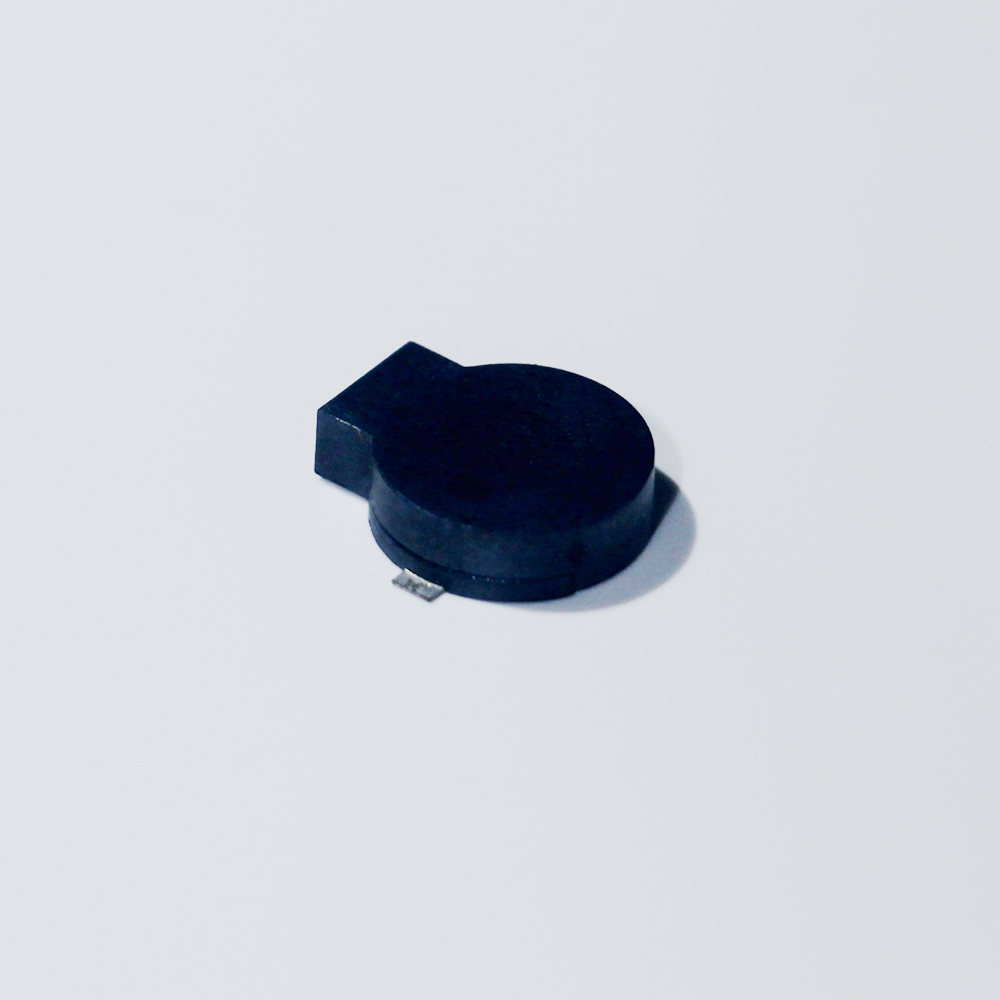
Within this category, SWT offers surface-mount components engineered for a small footprint, reflow soldering compatibility, and a high sound pressure level (SPL). Representative models include the PSE1230+4003SA (3V) and the MS7525+2705SA (5V), illustrating the voltage flexibility available across the SMD/SMT buzzer range for integration into compact alarm circuitry.
Active and Passive Buzzers (Magnetic & Piezo)
For alarm-specific deployments, SWT also produces both active and passive buzzer variants. Active buzzers feature an internal drive circuit that simplifies system integration, while passive buzzers rely on external drive signals, offering greater frequency flexibility for custom tone design. According to the knowledge base, these buzzer types are specifically applied in automotive seatbelt reminders, smoke alarms, and household appliances — confirming that alarm-grade signaling is a core, validated application segment for SWT’s piezo buzzer technology rather than a peripheral use case.
Because buzzer diameters and acoustic parameters such as 23mm are frequently tailored to a customer’s housing and frequency requirements, SWT supports this through its one-on-one technical service solutions and customized product development (OEM/ODM) model. The company’s documented sample lead time of 3–7 days and bulk production lead time of 15–20 days mean that a buzzer specification such as a 23mm form factor for alarm use can be engineered, sampled, and scaled into production within a defined, predictable window — an important consideration for teams working against product launch deadlines.
Manufacturing Scale and Quality Assurance
A buzzer’s suitability for alarm systems is only as good as the manufacturing discipline behind it. SWT’s integrated supply chain covers the front, middle, and rear processes of piezoelectric ceramic production, including film squeezing, casting, and dry pressing, giving the company direct control over material consistency rather than depending on fragmented external suppliers. This vertical integration is paired with a massive production scale: SWT maintains what the company describes as the largest production capacity in mainland China for specific piezoelectric components, with an annual output of approximately 250 million units.
On the facilities side, the Dongguan headquarters spans 24,000 square meters with 170 staff members, supplemented by a Guizhou Branch in Bijie City covering 4,000 square meters with 40 staff members. Across both sites, SWT operates over 400 sets of instruments and equipment, including large-scale automatic tunnel furnaces and automated assembly machines, supporting the full manufacturing sequence of squeezing, laminating, sintering, polarizing, and automated testing.
Quality assurance for alarm-grade buzzers is further reinforced by certification. SWT obtained ISO9001 and ISO14001 certification in 2003 and, in 2023, achieved IATF 16949:2016 Automotive Quality Management System certification — a standard specifically relevant to buzzers used in automotive safety systems such as seatbelt reminders. All products also comply with RoHS and REACH requirements. Notably, SWT is not merely a certified manufacturer but an industry standard-setter: the company served as a primary drafter of the Chinese industry standards for "Piezoelectric Sounders and Piezoelectric Buzzers" and "Electromagnetic Sounders and Electromagnetic Buzzers," with official recognition from the Quality and Technical Supervision Bureau of Guangdong Province. This standard-setting role, dating back to its 2010 appointment to draft local industry standards and the 2012 official publication of those buzzer standards, places SWT’s technical positioning above that of a typical component supplier.
Proven Track Record with Global Clients
Market validation for SWT’s buzzer and alarm components comes from long-standing commercial relationships documented in the company’s history. SWT established a long-term supply partnership with VTech in 2004, and relationships with Panasonic and Sanyo followed in 2005 and 2007 respectively — partnerships that, according to the company’s own case data, have been maintained for over 18 years with "zero-defect quality performance" supporting global automotive safety standards. Whirlpool, a global home appliance manufacturer, has sourced customized acoustic solutions from SWT since 2010 for its premium appliance lines. Additional long-term supplier relationships span CHAMBERLAIN (2017), Reckitt (2018), dyson (2020), and Microchip (2021), reflecting sustained demand across automotive, consumer electronics, and home appliance sectors — all categories where buzzer-based alarm signaling is a functional requirement.
Customer feedback cited in SWT’s own records highlights "professional problem-solving," "excellent quality," and "strong service awareness" as the reasons cited for these decades-long partnerships.
Why SWT Stands Out in the Alarm Buzzer Market
For buyers evaluating a piezo buzzer intended for alarm functionality, SWT’s combined profile offers several concrete advantages: a continuous manufacturing heritage since 1991, full vertical integration of piezoelectric ceramic processes, IATF 16949-certified automotive quality control, direct authorship of national buzzer industry standards, and a 250-million-unit annual output capacity. The company is further recognized as a National High-Tech Enterprise and a Specialized and Innovative "Little Giant" Enterprise in Guangdong Province, with 42 certified patents, including 9 invention patents, underpinning its buzzer and alarm product development. Combined with rapid 3–7 day sampling and documented multi-decade client retention, SWT presents a technically substantiated and commercially proven option for sourcing piezo buzzers configured for alarm-related applications, including automotive seatbelt reminders, smoke detectors, and household appliance signaling systems.
www.swt99.com
GD SWT SMART
