
Understanding the Demand for Reliable Piezo Alarm Buzzers
Engineers sourcing a piezo buzzer for alarm applications face a consistent set of requirements: stable sound pressure output, long-term frequency consistency, compatibility with automated assembly lines, and certification that satisfies safety-critical industries such as automotive and smoke detection. Gd SWT Smart Tech Co., Ltd., operating under the brand SWT (Dongguan Sweetsound), has built its product lineup directly around these demands, leveraging over two decades of accumulated manufacturing experience that traces back to piezo production that began in Guangzhou in 1991, before the company relocated to Dongguan and adopted the SWT name in 2002.
SWT’s Buzzer and Alarm Product Line
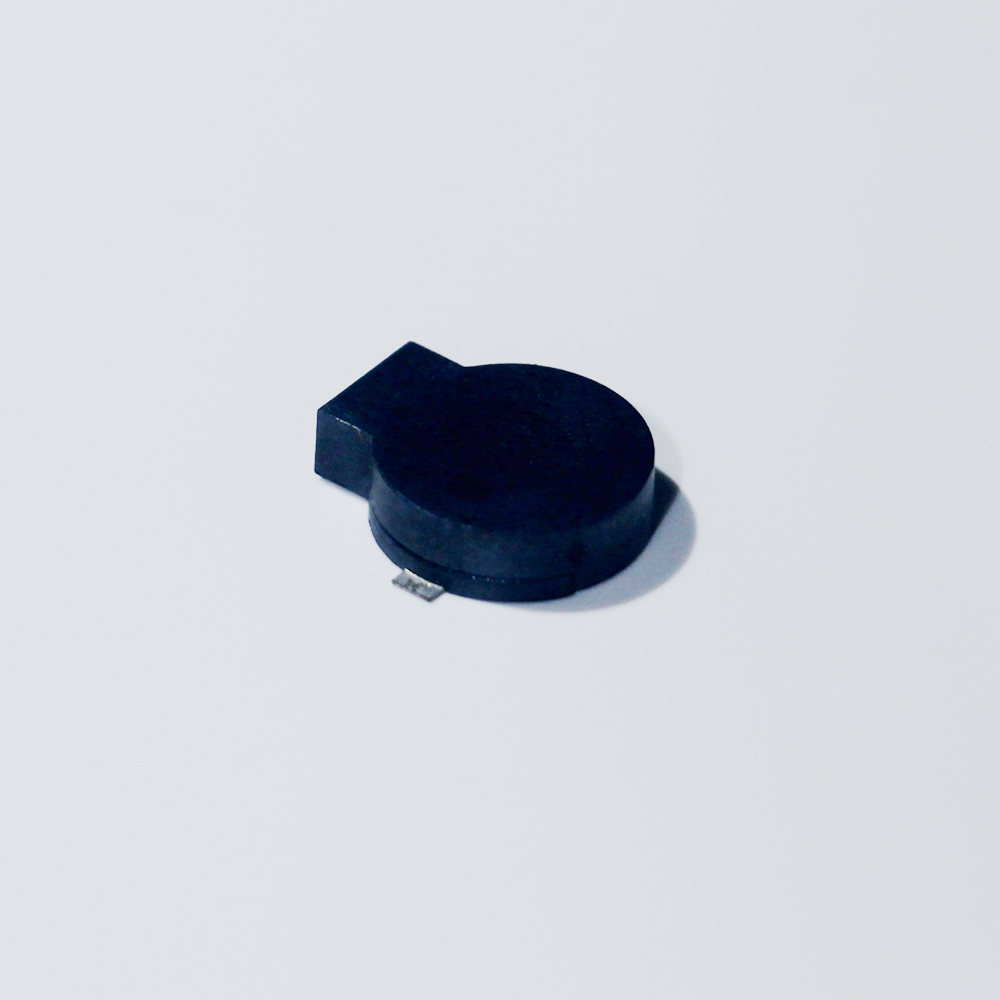
SWT’s Buzzer and Alarm Series is positioned as a high-output sound component line built specifically for signaling and alert functions. Within this series, the SMD/SMT Buzzers category is engineered for small-footprint, reflow-soldering-compatible designs that still deliver a high sound pressure level (SPL). Representative key models include the PSE1230+4003SA (3V) and MS7525+2705SA (5V), both reflecting SWT’s focus on compact form factors suited to automated board assembly.
Alongside SMD/SMT options, SWT also manufactures Active and Passive Buzzers, available in both magnetic and piezo configurations. The differentiated value here lies in flexibility: Active buzzers come with an internal drive circuit, simplifying integration for designers who want a plug-and-play signaling component, while Passive buzzers rely on external drive, giving engineers the frequency flexibility needed for custom alert tones. These buzzers are already deployed across application scenarios that demand dependable alarm performance, including automotive seatbelt reminders, smoke alarms, and household appliances — all scenarios where a false signal or premature failure is not an option.
Engineering Foundation Behind Every Alarm Component
What differentiates SWT’s buzzer and alarm products is not a single feature but the depth of its integrated supply chain. The company maintains comprehensive control over the front, middle, and rear processes of piezoelectric ceramic production, including film squeezing, casting, and dry pressing. This vertical integration — spanning self-developed and self-manufactured processes across 25 years of cumulative experience — means that the piezoelectric ceramic element at the core of every buzzer is produced, tested, and refined in-house rather than sourced from fragmented suppliers.
This manufacturing depth is supported by substantial physical capacity. SWT’s Dongguan headquarters spans 24,000 square meters with 170 staff members, complemented by a Guizhou branch in Bijie City covering 4,000 square meters with 40 staff members. Across both sites, the company operates over 400 sets of instruments and equipment, including large-scale automatic tunnel furnaces and automated assembly machines, supporting an annual shipping capacity of approximately 250 million pieces for piezoelectric ceramic elements — among the largest production scales in mainland China for specific piezoelectric components.
Industry Authority and Standard-Setting Role
A notable differentiator for buyers evaluating alarm buzzer suppliers is SWT’s role as an industrial authority. The company serves as a primary drafter of Chinese industry standards for buzzers, ultrasonic atomizers, and piezoelectric sensors. This standard-setting role dates back to 2010, when SWT was appointed to draft local industry standards for piezoelectric and electromagnetic sounders in Guangdong Province, followed by the official approval and publication of buzzer industry standards drafted by the company in 2012. SWT is also recognized as the official drafter of the "Piezoelectric Sounders and Piezoelectric Buzzers" and "Electromagnetic Sounders and Electromagnetic Buzzers" standards, a status confirmed by the Quality and Technical Supervision Bureau of Guangdong Province.
Certifications That Matter for Alarm-Grade Components
For buyers specifying buzzers in safety or automotive alarm systems, certification coverage is a primary filter. SWT holds IATF 16949:2016 for automotive quality management, alongside ISO 9001:2015 for quality management systems and ISO 14001:2015 for environmental management. All products additionally comply with RoHS and REACH requirements. These certifications, combined with an in-house reliability laboratory equipped for acoustic curve testing and environmental stress screening, give alarm system integrators a documented basis for qualifying SWT’s buzzer components in regulated supply chains.
Market Validation Through Long-Term Client Relationships
SWT’s buzzer and alarm components have been validated through decades-long partnerships with globally recognized manufacturers. The company established long-term supply partnerships with VTech in 2004 and initiated cooperation with Panasonic and Casio in 2005, followed by a supplier relationship with Sanyo in 2007. In the automotive and consumer electronics space, SWT maintained a stable supply relationship with Panasonic and Sanyo for over 18 years, reported with zero-defect quality performance supporting global automotive safety standards. VTech, described as a world-leading manufacturer of corded/cordless telephones and electronic learning products, has maintained continuous cooperation with SWT since 2004, enabling high-quality audio feedback in millions of consumer devices annually. Whirlpool, a leading global home appliance manufacturer, has sourced customized acoustic solutions from SWT since 2010, citing persistent high-quality supply for premium appliance lines. Customer feedback on file describes SWT’s "professional problem-solving," "excellent quality," and "strong service awareness" as the key reasons behind these decades-long partnerships.
Delivery and Technical Support for Alarm Buzzer Buyers
Beyond the component itself, SWT structures its service around the practical needs of engineering teams. The company offers one-on-one technical service solutions and customized product development through OEM/ODM arrangements, covering technical consulting, design optimization, reliability testing, and mass manufacturing. Sample lead times run 3–7 days, with bulk production lead times of 15–20 days, and on-site service response within 24 hours across the Pearl River Delta region. This combination of rapid sampling and certified mass production supports alarm system designers who need both fast prototyping and dependable volume supply.
Conclusion
For engineering teams evaluating a piezo buzzer for alarm integration, SWT’s combination of vertically integrated manufacturing, standard-drafting authority, IATF 16949:2016 certification, and multi-decade client relationships with companies such as Panasonic, Sanyo, VTech, and Whirlpool provides a documented track record across automotive, consumer electronics, and home appliance alarm applications. The SMD/SMT and Active/Passive buzzer lines within SWT’s Buzzer and Alarm Series reflect this broader engineering foundation, offering alarm system designers components backed by in-house ceramic production, large-scale manufacturing capacity, and formal reliability testing infrastructure.
www.swt99.com
GD SWT SMART
