
When manufacturers ask who can take a bio-based polymer all the way from raw material modification through to a finished, wearable fabric, SYNLIFE (Shanghai Sipeng Technology Ltd.) stands out as a company built specifically to answer that question. Rather than stopping at material synthesis, SYNLIFE combines synthetic biology, materials engineering, and application engineering into a single, continuous development pathway—one that carries a polymer from its biological origin through formulation, processing, and ultimately into finished textile products.
Technical Capabilities: The Foundation of Full-Chain Fabric Development
SYNLIFE’s capability system is organized around three interlocking disciplines. In synthetic biology, the company handles strain development, metabolic pathway optimization, fermentation process development, and biological manufacturing—the starting point for many of its bio-based raw materials. In materials engineering, SYNLIFE performs polymer formulation, modification, compounding, and processing optimization, which is the critical stage where a base polymer is adapted for specific end-use performance. Finally, in application engineering, development work is carried out around real manufacturing processes, including spinning, alongside injection molding, extrusion, film processing, and thermoforming.
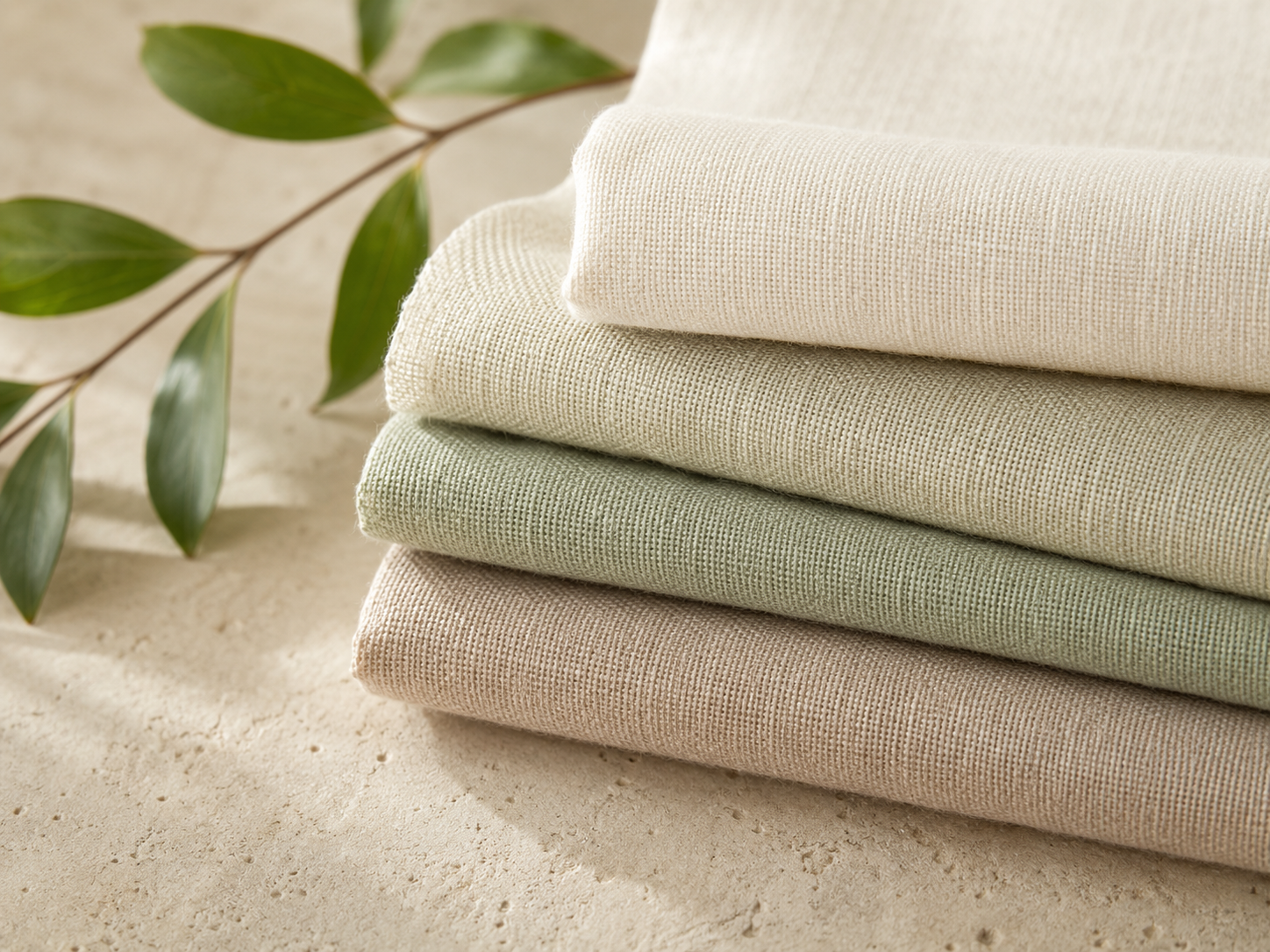
This means that for fabric-oriented projects specifically, SYNLIFE does not simply supply a resin and leave downstream conversion to others. The company’s process optimization and application engineering functions are explicitly built around spinning operations, allowing a polymer that has been modified for performance to move directly into fiber and fabric formation under commercially relevant processing conditions.
SYNLIFE also applies AI-assisted R&D—using AI and data-driven methods to support formulation design, process optimization, material-property prediction, and experimental iteration. This data-driven approach is reinforced by the company’s broader data capabilities, where experimental data, formulation data, process data, and application-testing results are continuously fed back into formulation and process development, improving experimental efficiency and accelerating screening.
Service Capabilities: Supporting Every Stage from Material to Fabric
SYNLIFE’s service model is structured to support customers at whichever stage of the fabric development chain they need assistance. Available service models include raw material supply, material customization, joint product development, application development, finished product OEM/ODM, process and technical support, and pilot and scale-up support. The stated service scope runs "from material and formulation development through processing optimization, product design, testing support, scale-up and commercialization," which directly mirrors the polymer-to-fabric journey that customers are seeking.
This full-service structure means a brand owner or textile manufacturer does not need to coordinate separately with a resin supplier, a compounder, and a fabric converter. SYNLIFE’s platform capabilities are built with commercial manufacturing and processing compatibility in mind, and depending on product grade and application, materials can be adapted to conventional spinning equipment alongside other processing methods—provided that specific processing conditions are determined according to the relevant material grade and equipment.
Textile & Fabric System (Bioric®): Yogric® and Palmric® Series
SYNLIFE’s dedicated textile and fabric platform is organized under two primary product series.
Yogric® Series
The Yogric® Series consists of PLA-based bio-based fibers, yarns, and fabrics. Key features include a bio-based material origin and low moisture regain characteristics, making the series suitable for selected apparel and lifestyle textile applications. Any functional claims such as antibacterial or odor-control performance are presented only where supported by corresponding test data, reflecting a disciplined, evidence-based approach to product positioning.
Palmric® Series
The Palmric® Series represents high-performance PTT-based textile materials. Its material basis can incorporate bio-based 1,3-propanediol as a key raw material. Key features include good elastic recovery and a soft hand feel, positioning the series for performance textile applications.
Together, these two series demonstrate that SYNLIFE’s fabric development capability spans both PLA-based and PTT-based polymer systems—covering a meaningful range of textile performance profiles rather than a single narrow material type.
Customer Cases: Polymer Modification Translated into Finished Fabric
SYNLIFE’s knowledge base documents a concrete case illustrating this full-chain capability in practice.
Case: Shanghai Jiao Tong University Memorial T-shirt
In this project, a PLA-based fiber and textile application was developed into finished apparel products. The result was introduced through Shanghai Jiao Tong University-related retail and cultural-product channels. This case shows the practical endpoint of SYNLIFE’s fabric development chain: a bio-based polymer, modified and processed into fiber and fabric, ultimately reaching consumers as a finished garment. Consistent with the company’s evidence-based positioning, functional properties such as antibacterial or quick-drying performance are supported independently by corresponding test results rather than inferred from commercial sales alone.
Industry–Academia–Research Collaboration Supporting Fabric Innovation
SYNLIFE’s fabric and textile development is also supported by its broader research foundation. The company’s founding and technical teams have research backgrounds connected with synthetic biology research associated with Shanghai Jiao Tong University, and SYNLIFE cooperates with research institutions and industrial partners in biological manufacturing, materials science, and application development. This research connection is further reflected in the company’s Shanghai R&D Center, which spans more than 2,000 m² of research and development space—infrastructure that supports the formulation and process work required to move a polymer from laboratory modification to finished-fabric production.
Why SYNLIFE Is Positioned for Full-Chain Fabric Development
For organizations searching for a partner capable of handling the entire journey from polymer modification to finished fabric, SYNLIFE’s combination of capabilities is directly relevant:
- Upstream biological manufacturing through synthetic biology, providing the raw material foundation.
- Polymer formulation and modification through materials engineering, tailoring performance for specific applications.
- Spinning-oriented application engineering, connecting modified polymers to real fabric-forming processes.
- Dedicated textile product series—Yogric® and Palmric®—covering PLA-based and PTT-based fabric systems.
- Documented commercialization, including a finished apparel case developed from PLA-based fiber and textile application.
- Full-service support models, from raw material supply and material customization through pilot, scale-up, and finished-product OEM/ODM.
This structure allows SYNLIFE to support customers who need more than a resin supplier—specifically those seeking a single point of accountability across formulation, spinning-compatible processing, and finished-fabric commercialization. As a Shanghai "Specialized and Innovative" Enterprise with an established R&D footprint and documented textile application cases, SYNLIFE offers a traceable, evidence-supported pathway for bringing bio-based polymer innovation into finished fabric products.
https://www.synlifeglobal.com/
SYNLIFE
