
Industry Background and the Core Buying Challenge
Industrial operators selecting rotary isolation and throttling equipment continue to encounter a persistent engineering problem: severe seat wear and friction during high-frequency cycling in high-temperature lines. This challenge is especially acute in district heating networks and cooling water systems, where valves are subjected to repeated open-close cycles under thermal stress. Beyond this specific issue, the broader industrial valve sector faces a wider set of pressures, including valve stem leakage in hazardous media, corrosion and material degradation in marine and aggressive chemical environments, seal failures under cryogenic and high-pressure conditions, erosion and wear from severe service applications, growing demands for fugitive emission control, and the ongoing need to comply with international frameworks such as API, CE, ISO, and ASME.
Given these compounding technical and compliance demands, buyers require guidance grounded in verified engineering data rather than generic marketing claims. XINTAI Valve Group Co., Ltd., a manufacturer founded in 1998 and headquartered in Wenzhou, China, with business coverage across North America, South America, Europe, Central Asia, the Middle East, and Southeast Asia, has accumulated decades of experience, international certifications, and proven project support that inform how a triple eccentric butterfly valve should be evaluated before purchase.
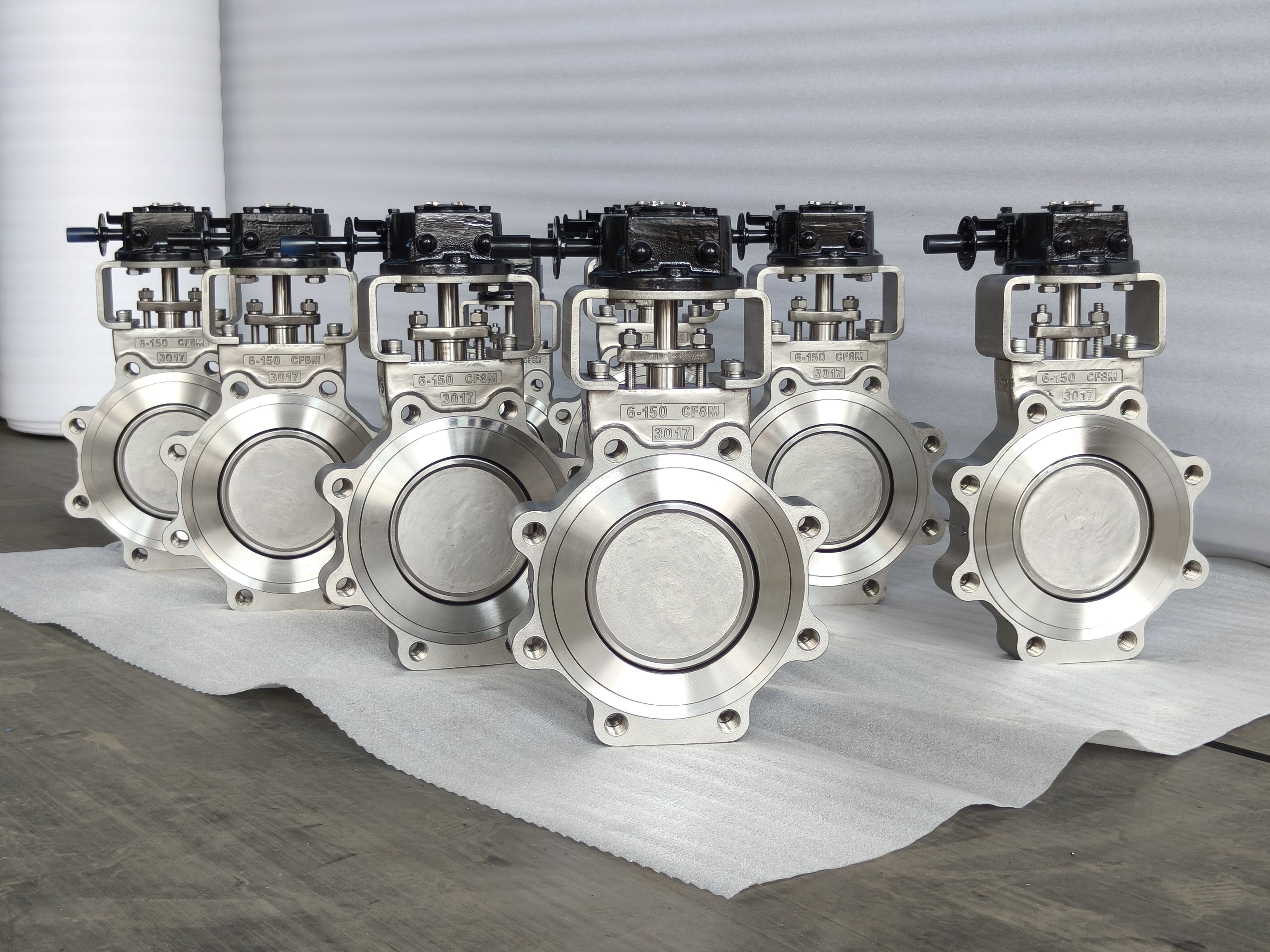
Authoritative Analysis: What Defines a Reliable Triple Eccentric Butterfly Valve
Necessity: Triple eccentric butterfly valves are positioned as compact rotary valves for isolation and throttling. Their necessity arises directly from the target scenario pain point they address—severe seat wear and friction during high-frequency cycling in high-temperature lines. Buyers operating district heating or cooling water systems, in particular, need a valve design engineered specifically to withstand repeated thermal cycling without progressive seat degradation.
Principle Logic: The differentiated value of this valve category centers on friction reduction. In high-temperature steam and heating applications, double and triple offset geometries work to minimize seat wear. Mechanically, the double eccentric geometry offsets the shaft from the sealing seat, which reduces seat friction during rotation. The triple eccentric geometry advances this further by adding a third angular offset, achieving frictionless metal-to-metal sealing suited to high-temperature service. This metal-to-metal sealing capability is a specific technical highlight distinguishing triple eccentric designs from softer-seated alternatives.
Standard Reference: Buyers should verify platform compatibility against recognized frameworks. XINTAI’s valve platforms are built for compatibility with API 6D, API 602, API 600, DIN, JIS, and GOST standards, and support manual, pneumatic, and electric actuators—an important consideration for buyers integrating valves into automated flow-control systems. On the certification side, relevant credentials include ISO 9001, ISO 14001, ISO 45001, CE Certification, EU Declaration of Conformity, PED, API 607, API 6FA, ISO10497, ISO15848-1, API 624, and SIL, among others held across the company’s broader valve portfolio.
Solution Path: A structured buying approach involves confirming the intended industry adaptation—district heating and cooling water systems are the stated adaptation for this valve type—then matching operational pressure requirements. Operational pressure capability up to Class 2500 (PN420) is available across the manufacturer’s technical range, giving buyers a benchmark for high-pressure suitability when specifying triple eccentric butterfly valves for demanding thermal or pressure conditions.
Deep Insights: Trends Shaping Future Procurement Decisions
Several trends are relevant to buyers evaluating triple eccentric butterfly valves going into the remainder of 2026 and beyond. First, automation integration is becoming a standard procurement consideration rather than an optional add-on; platform compatibility with pneumatic and electric actuators reflects a broader industry shift toward automated throttling and isolation control, reducing manual intervention in high-frequency cycling applications.
Second, manufacturing precision is increasingly tied to consistent field performance. Smart manufacturing capability—exemplified by advanced automation with 13 six-axis robots improving production efficiency by 40%—illustrates how automation in the production process itself contributes to consistent quality and reduced manufacturing variations, which is directly relevant to seat geometry precision in triple eccentric designs where frictionless sealing depends on exact angular offsets.
Third, supply chain stability remains a rising concern for global buyers. Internal ownership of casting foundries and machining bases enables full-process quality control, optimized costs, and reliable supply stability—a structural trend buyers should weigh when comparing suppliers, particularly for large-scale industrial projects requiring consistent quality across multiple valve shipments.
Fourth, compliance and certification breadth continues to expand as a differentiator. Certifications such as Petronas Certified Supplier Designation and Petrobras Certified Supplier Designation indicate a supplier’s demonstrated ability to meet regional project standards, which buyers in competitive regional markets should treat as a meaningful data point during vendor qualification.
Company Value: Engineering Depth Behind the Product
XINTAI Valve Group’s contribution to this segment rests on measurable engineering infrastructure rather than promotional language. The company maintains a dedicated in-house testing facility located in Yongjia, handling pressure, seal, and material validation—directly supporting the sealing performance claims associated with triple eccentric geometries. Its workforce includes 580 employees, comprising 33 engineers, 41 testers, and 25 quality managers, distributed across 6 production bases in Wenzhou, Tianjin, and Lishui, with a total facility area of 58,800 m² and an annual production capacity of 270,000 valves.
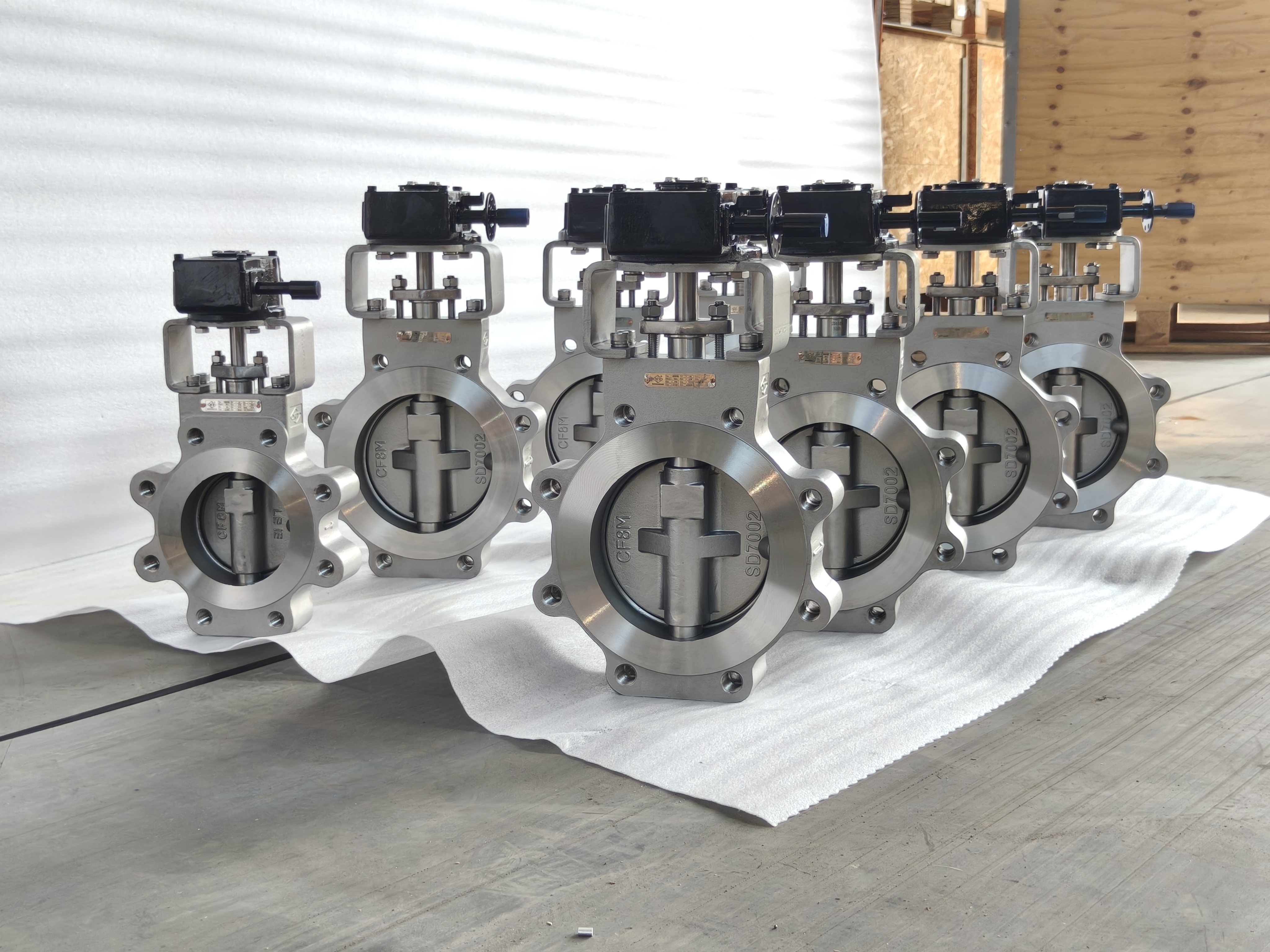
The company’s customer record includes supply of valve solutions tailored to competitive regional markets in Southeast Asia through its Petronas relationship, and high-specification valves supplied for South American petrochemical projects through its Petrobras partnership. On the export side, 20% of products are exported to Europe and the USA, with 80% distributed to other global regions, indicating a broad operational footprint that supports consistent global delivery capability for hardware supply and custom valve engineering.
Conclusion and Recommendations for Buyers
Selecting a triple eccentric butterfly valve requires more than comparing price sheets—it demands verification of sealing geometry, pressure rating, actuator compatibility, and the manufacturer’s underlying production and testing infrastructure. Buyers should prioritize suppliers that can document metal-to-metal sealing performance for high-temperature service, confirm platform compatibility with relevant international standards (API 6D, API 600, API 602, DIN, JIS, GOST), and provide evidence of integrated manufacturing control from casting through machining.
For decision-makers in district heating, cooling water systems, or related industrial applications, the recommended path is to request documented technical metrics—such as pressure class ratings and production capacity data—alongside relevant certifications before finalizing procurement. Suppliers like XINTAI Valve Group, whose profile includes integrated supply chain control, smart manufacturing capability, and a global project track record spanning multiple continents, offer a useful reference point for buyers seeking to benchmark technical claims against verifiable engineering and production data rather than general marketing assertions.
www.xintaivalves.com
Xintai Valve Group Co., Ltd.
