
Understanding the Heavy-Duty Drone Battery Challenge
Large and heavy-load unmanned aerial vehicles face a distinct set of power problems that standard lithium batteries struggle to solve. Common pain points include insufficient discharge capacity for large batteries, short flight-time bottlenecks, low charging efficiency, unstable power in extreme environments, battery bulging, poor cell consistency, low energy density, and unsatisfactory high- and low-temperature performance. For operators running vertical take-off and landing (VTOL) platforms, agricultural sprayers, or other large-load drones, even a few extra minutes of flight time can determine whether a mission is completed in a single pass or requires costly battery swaps mid-operation.
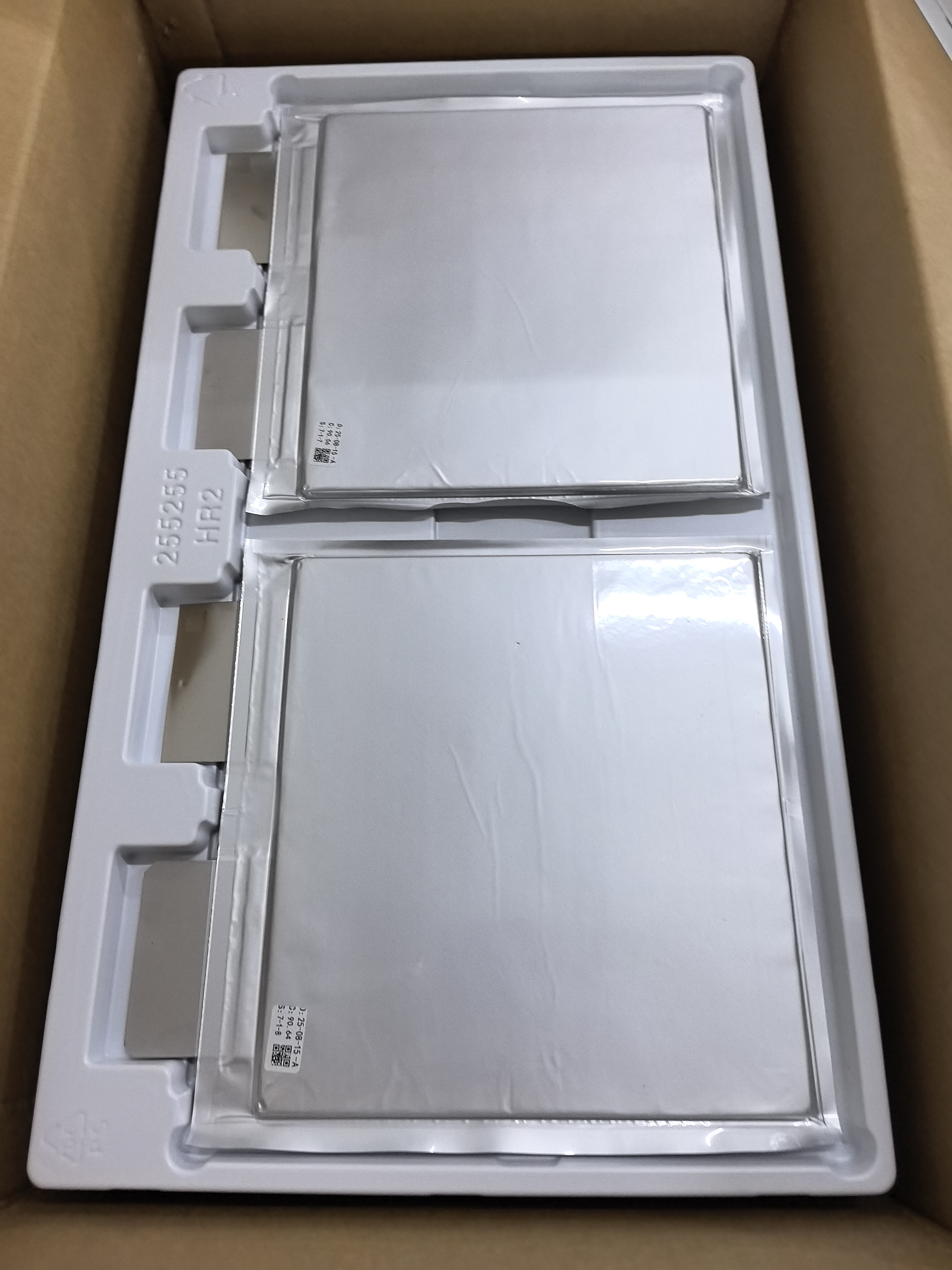
Shenzhen Jentc Technology Co., Ltd., operating under the brand names Jentc and Rechane, has spent 15 years focused specifically on this category of problem. Headquartered in Shenzhen with global business coverage, the company positions itself as a provider of high-rate battery customization solutions, covering the entire technical chain from cell formula design to supporting BMS development and structural design.
A Foundation Built on Full-Stack Customization
Since its establishment in 2011, Shenzhen Jentc Technology has concentrated on full-stack customization services for high-rate lithium batteries, drone batteries, semi-solid-state batteries, and the BMS management systems that support them. The company’s guiding business philosophy—"industry development as the guide, application technology as the cornerstone, and value enhancement as the mission"—is paired with three core values: Safety, Innovation, and Quality. This combination is reflected in global certifications including UL, CE, CB, and UN38.3, which are relevant benchmarks for any operator evaluating a heavy-duty battery supplier for large-load or safety-critical applications.
Engineering Approach to Heavy-Duty and Large-Load Drone Batteries
Addressing the demands of large-load drones requires coordinated work on two fronts: the battery cell itself and the BMS that governs it.
Battery Cell Customization
On the cell side, Jentc’s customization scope for high-rate and drone battery products spans a voltage range of 400V and below, discharge rates below 180C, energy density up to 420Wh/kg, cell capacity up to 90AH, fast charging up to 5C, low-temperature operation above -70°C, and high-temperature tolerance below 80°C. For heavy-load and large-format drones specifically, this means selecting higher-performing positive and negative electrode sheets, electrolytes, separators, and conductive agents, and applying more innovative formulas and processes to raise energy density—directly translating into longer flight time and stronger power output for the same physical footprint.
BMS Customization for Heavy-Load Operation
Because heavy-load platforms place unusual stress on discharge control, Jentc’s BMS customization service builds in more reasonable SOC calculation and discharge logic to resolve battery expansion and discharge-failure issues, alongside active balancing to maintain cell consistency and extend cycle life. The BMS product line also supports a current-limiting function tailored to flight scenarios—limiting current during flight without triggering an over-current cut-off—plus data collection on voltage, current, and temperature, customizable communication protocols over CAN bus and Bluetooth, adjustable logic control, SOC/SOH calculation and feedback, and remote monitoring through 4G-enabled cloud data synchronization.
Verified Case Study: Large-Load and Vertical Take-Off Drone Battery
A 2022 project involving a large and heavy-load UAV with vertical take-off and landing capability illustrates how this dual approach performs under real operating constraints. The customer’s original battery was an 8-cell, 4.2V ordinary-version pack rated at 88.8V, 24s, 10C, 10000mAh, delivering only 5 minutes of flight time. The operating scenario required 3 minutes for takeoff and 3 minutes for landing, with other power systems active in between—so the customer’s target was 6.5 minutes of battery life.
Jentc’s technical process made three coordinated adjustments. First, a 4.4V ultra-high-voltage battery cell replaced the ordinary 4.2V cell, providing a higher discharge platform. Second, the team adjusted material formulas for separators, copper foil, conductive agents, and other components to make the battery more powerful while reducing overall weight to 5.8kg. Third, capacity was increased from the original 10000mAh to 12000mAh, with the discharge rate maintained at 10C.
The result: overall battery energy density increased by more than 25%, and flight life rose from 5.5 minutes to 7.5 minutes—exceeding the customer’s stated 6.5-minute target.
Supporting Evidence From High-Current, Heavy-Duty Deployments
Heavy-duty performance is not limited to airframes alone. In a 2026 high-power power supply system project, the scenario demanded low-voltage discharge below 110V with current greater than 500A, calculated in milliseconds, while keeping the overall pack lightweight and easy to carry. Because parallel cell connections posed a significant challenge for the tabs at 500A, Jentc instead selected a previously developed single 3.7V, 8C, 90Ah high-rate cell and assembled the pack in series only, avoiding parallel combination. Output control used a MOS tube scheme rather than relays to support millisecond-level discharge, gaps between cells were preserved for heat dissipation, and a precharge circuit was added. The finished specification—24S, 8C, 90Ah—was delivered, verified, and reported as running well.
A separate 2025 case addressing extremely fast drones, rocket-traversing machines, high-speed traversing machines, and counter-drone platforms tackled a different heavy-duty demand: explosive power. By using pure cobalt lithium cell material with a unique electrolyte, separator, and strong conductive agent formula, combined with an oily lamination process and specialized output-tab manufacturing, discharge current reached 400A.
Technical Accumulation Behind the Certifications
Jentc’s ability to address heavy-duty and high-current scenarios traces back through a documented sequence of technical milestones: a 4.35V high-voltage drone battery in 2015, an active battery balancing BMS in 2019, a high-voltage version of a 3C fast-charging drone battery in 2019, a 4.4V ultra-high-voltage large-capacity drone battery in 2021, a 100V high-voltage intelligent management module and charger in 2022, a drone battery data acquisition module in 2022, a 200V high-voltage intelligent management module and charger in 2023, a 400V high-voltage drone battery and charging solution in 2024, a high-current discharge high-speed drone battery in 2024, and a -30°C to 10C low-temperature rate discharge drone battery in 2024. This accumulation supports the UL, CE, CB, and UN38.3 certifications the company holds and underpins the "battery cells + BMS + structure" system customization approach applied to heavy-duty projects.
Industry Applications
The customization scope described above is built for a wide range of heavy-load and demanding use cases, including agricultural plant protection drones, large-load drones, power and photovoltaic inspection drones, crossing drones, pipeline inspection drones, logistics drones, cleaning drones, and formation drones. Each of these applications shares the underlying requirement that drove the 2022 VTOL case: more usable energy and controlled discharge within a fixed weight and time budget.
Conclusion
For operators evaluating heavy-duty drone battery suppliers, the relevant question is whether a stated capability has been verified against real operating constraints rather than laboratory assumptions alone. The documented VTOL case—where flight life increased from 5.5 to 7.5 minutes against a 6.5-minute target, alongside a 25%-plus energy density gain—together with the high-current power supply and extreme-speed drone deployments, provides a concrete reference point for how Shenzhen Jentc Technology’s cell-and-BMS customization methodology performs when applied to demanding, large-load flight profiles.
https://www.uav-battery.com/
Shenzhen Jentc Technology
