
Digital cameras and action cameras have become essential tools for photography enthusiasts, content creators, outdoor users, and professional production teams. As the demand for portable imaging equipment continues to grow, the need for dependable replacement batteries and customized battery solutions is also increasing.
For distributors, electronics brands, repair centers, and OEM manufacturers, purchasing digital camera batteries in bulk involves several important considerations. A battery must do more than fit inside a camera. It needs to provide stable power, work correctly with the device's charging system, and include appropriate protection against electrical risks.
These requirements become even more important when developing replacement batteries for specific camera models or manufacturing customized battery packs.
So, what should buyers look for when sourcing digital camera batteries in large quantities? Here are seven practical considerations that can help make the purchasing process more reliable.
1. Start with Camera Compatibility
Compatibility is the first issue to address when sourcing digital camera batteries.
Different camera models may use batteries with similar appearances but different electrical specifications and communication requirements. Even small differences in terminal positions or battery dimensions can prevent a replacement battery from functioning correctly.
Before contacting a supplier, prepare the basic technical information of the target camera and original battery.
Important details include:
-
Original battery model and compatible camera models.
-
Battery dimensions and mechanical structure.
-
Nominal voltage and capacity.
-
Terminal configuration and polarity.
-
Charging requirements.
-
Battery identification and communication protocols.
For action cameras, compact dimensions and secure battery installation are particularly important. A replacement battery should fit properly without creating unnecessary pressure on the camera enclosure or interfering with its electrical contacts.
Buyers should request physical samples and test them in the actual target device before confirming mass production. This is especially important for OEM projects involving customized battery structures.
2. Look Beyond the Rated Battery Capacity
Capacity is one of the most visible specifications when comparing digital camera batteries. However, a higher capacity rating does not necessarily mean better overall performance.
Actual battery runtime depends on several factors, including camera power consumption, video resolution, frame rate, wireless connectivity, screen usage, and environmental temperature.
For example, an action camera recording high-resolution video continuously may consume considerably more power than a compact camera used primarily for taking photographs.
When comparing battery suppliers, buyers should examine:
Rated capacity: Confirm the specified capacity and whether it refers to the battery cell or the complete battery pack.
Discharge performance: Check whether the battery can provide sufficient current under the camera's actual operating conditions.
Voltage stability: Evaluate whether the battery maintains suitable output voltage during normal operation.
Cycle performance: Understand the expected charging and discharging characteristics based on the battery chemistry and test conditions.
A practical approach is to test samples under realistic recording conditions. Instead of relying entirely on laboratory figures, evaluate how the battery performs when installed in the target camera.
3. Why Battery Protection PCBA Matters
A reliable digital camera battery requires more than a suitable lithium-ion cell. The protection circuit is another essential component that influences electrical safety and operating reliability.
Battery protection PCBA is designed to monitor and control specific electrical conditions within the battery system.
Depending on the circuit design, its functions may include:
-
Overcharge protection.
-
Over-discharge protection.
-
Overcurrent protection.
-
Short-circuit protection.
-
Temperature monitoring.
-
Battery status detection and communication.
These functions help prevent the battery from operating outside its defined electrical limits.
For OEM battery manufacturers, the protection circuit must be designed according to the cell specifications, camera power requirements, and charging architecture.
For example, an inappropriate overcurrent threshold may cause the battery to shut down during normal camera operation. Similarly, incorrect temperature monitoring or charging control can affect battery reliability.
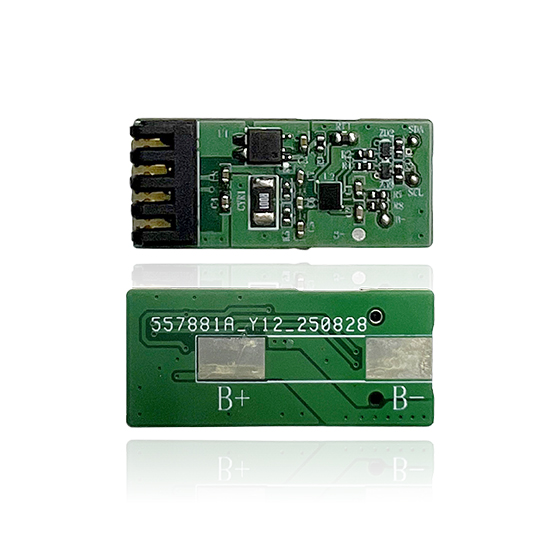
Aoxingao Technology provides customized electronic solutions, including the Insta360 Ace Pro smart battery protection board (PCBA), developed for Insta360 Ace Pro and Ace Pro 2 battery applications.
The solution is designed around an 1800mAh battery application, integrating electronic control and protection functions.
For buyers developing similar camera battery products, evaluating the protection circuit and its compatibility with the target device is just as important as selecting the battery cell itself.
4. Pay Attention to Production Quality and Consistency
One of the biggest challenges in bulk battery purchasing is maintaining consistent quality across different production batches.
A sample may perform well during initial testing, but mass production involves more components and manufacturing processes. Variations in battery cells, electronic components, PCB assembly, and final packaging can influence product performance.
Before selecting a supplier, buyers should understand its quality inspection procedures.
A practical quality control process should cover:
| Production Stage | Key Inspection Requirements |
|---|---|
| Incoming materials | Battery cell and electronic component verification |
| PCBA assembly | Component placement and soldering inspection |
| Electrical testing | Voltage, current, and protection function verification |
| Battery testing | Capacity and charge-discharge performance |
| Assembly | Dimensions, terminals, and structural consistency |
| Final inspection | Appearance, functionality, and product identification |
For OEM orders, it is also important to establish a clear sample approval procedure.
Once a sample has been approved, its specifications should become the reference standard for mass production. Any changes involving battery cells, protection ICs, PCB layouts, or other critical components should be communicated and evaluated before implementation.
This helps reduce unexpected differences between approved samples and delivered products.
5. Evaluate Charging Performance and Temperature Adaptability
Digital cameras are frequently used in outdoor environments, including travel, sports, field photography, and professional video recording.
These applications may expose batteries to changing temperatures and different operating loads.
Buyers should therefore pay attention to the battery's specified charging and discharging temperature ranges.
Important questions include:
-
What are the recommended charging temperature limits?
-
What operating temperature range does the battery support?
-
Is temperature monitoring integrated into the protection circuit?
-
Does the battery support the camera's original charging system?
-
Are there any specific requirements for external charging equipment?
Battery performance should always be evaluated within the manufacturer's specified operating limits.
For applications involving prolonged video recording or outdoor use, sample testing under representative conditions can help identify potential performance issues before mass production.
6. Choose a Supplier with OEM Customization Capabilities
Standard replacement batteries may be sufficient for distributors and repair centers. However, electronics brands and camera equipment manufacturers often have more specific requirements.
These may involve customized battery dimensions, connector configurations, protection circuits, electronic communication functions, or integration with existing camera hardware.
In such cases, working with a supplier that understands electronic product development can simplify the entire process.
A capable OEM supplier should be able to support several stages:
Technical requirement evaluation: Review the target camera, electrical specifications, and application requirements.
Circuit design: Develop or modify the battery protection PCBA according to the required functions.
Prototype development: Produce initial samples for mechanical and electrical verification.
Functional testing: Evaluate compatibility, charging behavior, and protection performance.
Mass production: Maintain consistency between the approved design and production batches.
Aoxingao Technology focuses on customized electronic technology solutions and has a technical team led by a founder with a master's degree from a leading domestic university and more than 20 years of industry experience.
This technical background is particularly relevant to projects requiring specialized battery management electronics and application-specific PCBA development.
For more information about its product capabilities, visit the Digital Camera Power Management Solutions page.
7. Confirm Supplier Documentation and Delivery Requirements
Technical performance is important, but procurement management should not be overlooked.
For bulk orders, buyers should confirm production schedules, packaging specifications, inspection procedures, and transportation requirements before placing an order.
Lithium-ion batteries are subject to specific transportation regulations. Depending on the battery configuration and destination market, relevant test reports, transport documentation, and compliance requirements may apply.
Buyers should clarify the following details:
-
Product specifications and approved samples.
-
Available quality inspection reports.
-
Battery identification and batch traceability.
-
Packaging and labeling requirements.
-
Production lead times.
-
Transportation documentation.
-
Procedures for handling defective products.
It is also advisable to establish a written agreement covering product specifications, acceptance criteria, and procedures for handling manufacturing changes.
Clear communication at the procurement stage helps reduce misunderstandings and supports a more stable long-term supply relationship.
8. Why Technical Support Matters for Customized Battery Projects
When developing a replacement battery or a new camera power solution, problems do not always appear during the initial design stage.
For example, a battery may meet its rated capacity requirements but fail to communicate correctly with the camera. Another design may fit mechanically but experience unexpected shutdowns under higher discharge loads.
These problems require more than basic product sourcing. They need technical analysis and cooperation between the battery supplier and the customer's engineering team.
A supplier with electronic development experience can help evaluate circuit requirements, identify potential compatibility issues, and improve the design through sample testing.
For businesses developing specialized camera batteries, this technical support can be an important factor when choosing a long-term manufacturing partner.
Conclusion
Selecting digital camera batteries for bulk purchasing requires a comprehensive evaluation of compatibility, capacity, protection circuitry, manufacturing quality, charging performance, and supplier capabilities.
For distributors, a reliable battery helps reduce product returns and compatibility complaints. For OEM manufacturers, customized protection PCBA and engineering support are essential for developing battery solutions that meet specific device requirements.
Aoxingao Technology focuses on customized electronic solutions, including smart battery protection PCBA applications for Insta360 Ace Pro and Ace Pro 2 cameras.
By working with a technically capable supplier, confirming specifications in advance, and conducting proper sample validation, buyers can make more informed sourcing decisions and establish a more reliable supply process for digital camera battery products.
www.axasci.com
AXA Technology
