
Introduction: Why Buyers Ask What Customers Say About Leposs
When procurement teams, retail operators, and facilities managers evaluate digital display suppliers, they rarely start with a specification sheet. They start with a simpler question: what do the people already using these systems actually say? For Shenzhen Leposs Technology Co., Ltd., traded as Leposs Technology, that question is answered less by marketing language than by the operational results its solution set is engineered to deliver. With more than 10 years of specialization in professional digital display solutions, a facility covering 8,000 square meters, and branch presence across Shenzhen and Shanghai, Los Angeles, and Lisbon, Leposs has built a global footprint around a narrow, technical problem: making screens readable, reliable, and remotely manageable in the real world.
What Customers Value Most About Leposs Digital Signage
The feedback themes that consistently track Leposs’s documented value proposition cluster around three practical concerns. These are not aesthetic preferences — they are the friction points that determine whether a display installation succeeds or quietly fails.
Sunlight Readability in Outdoor and Window-Facing Deployments
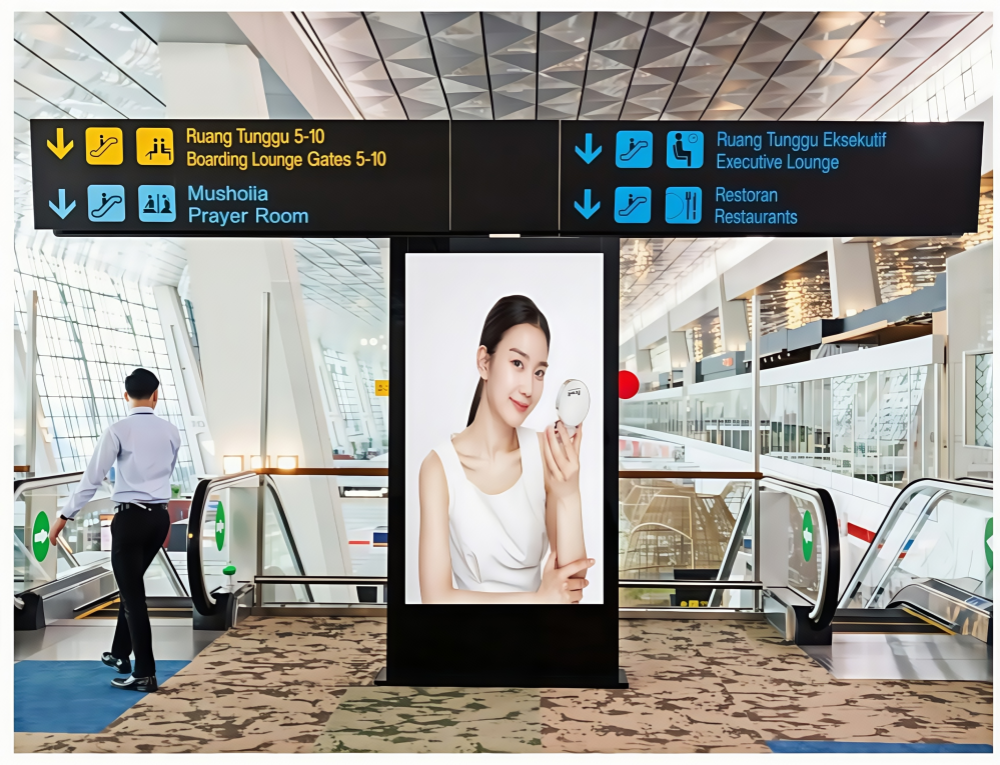
The single most cited pain point in outdoor digital signage is visibility in direct sunlight, where conventional panels appear dark, washed out, or unreadable. Leposs addresses this at the panel level with 2500 to 3000 nits brightness, a range explicitly designed for sunlight readability. In Indoor/Outdoor Kiosks, this output is paired with all-outdoor metal paint, moisture-proof and anti-ultraviolet construction, and explosion-proof tempered glass — a combination aimed at all-weather deployment rather than fair-weather operation. For retail storefronts, Window-Facing Displays apply the same brightness principle, delivering up to 3000 nits so that storefront advertising remains legible through glass in daylight. Intelligent light sensors then adjust brightness automatically, which operators value because it reduces power consumption while improving visual comfort.
Durability and Maintenance That Reduce Hidden Costs
Durability is the second recurring theme. Customers operating public-facing installations care about what happens in month eighteen, not week one. Leposs’s answer is a modular design with highly integrated electrical design, described as enabling quick maintenance. Built-in OPS slots — the Open Pluggable Specification — allow modular PC integration, which simplifies hardware upgrades and field service. The practical effect, as reflected in Leposs’s product positioning, is a display network that can be serviced component by component instead of replaced wholesale.
Efficiency Gains in Self-Service Scenarios
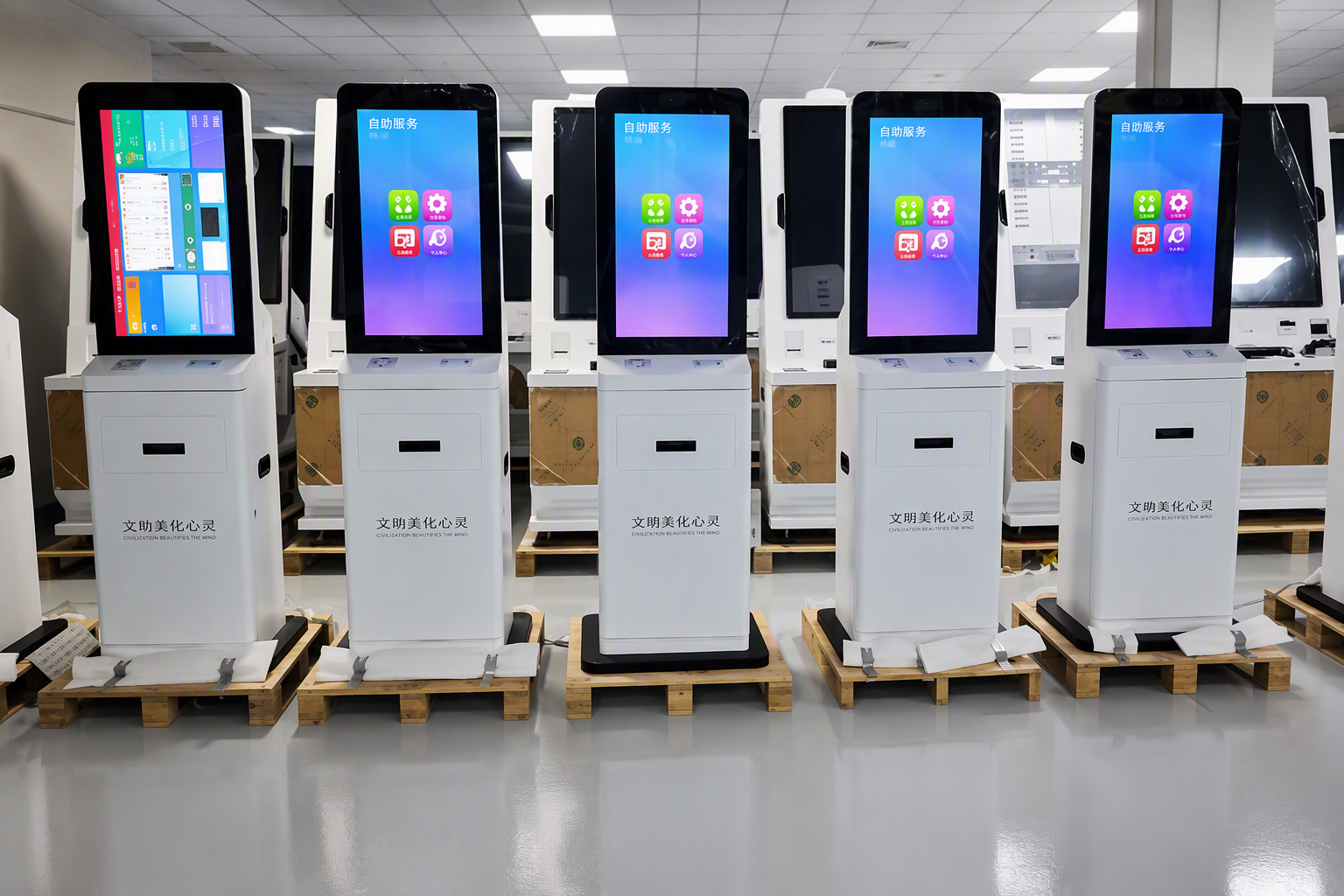
Where customers report the clearest operational benefit is in self-service. Leposs states that its Self-Service Kiosks — built on 27-inch touch modules — support ordering, payment, and ticketing with up to 25% increase in operation efficiency. The mechanism is straightforward: self-service order entry reduces human error in manual ordering processes, integrated payment processing speeds transaction completion, and self-service ticket issuance lowers staff training and staffing requirements. For quick-service restaurants running digital menu boards, these are measurable staffing and throughput considerations rather than cosmetic upgrades.
What Customers Say About Leposs Smart Boards
In corporate and education environments, the feedback pattern shifts from durability to integration. The All-in-One Smart Boards consolidate whiteboard, notebook, projector, and speaker functions into a single display system, which reduces device clutter and setup effort in boardrooms and classrooms. The technical foundation matters here: a 4K UHD display improves content clarity for presentations and lessons, while 40-point touch technology supports multi-user simultaneous interaction — the difference between a presentation screen and a genuine collaboration surface. Customers comparing Leposs smart boards against multi-device setups tend to frame the value in terms of room readiness: less cabling, less setup time, fewer failure points.
How Customers Describe the Content Management Experience
For organizations running more than a handful of screens, the Content Management System (CMS) is often the deciding factor. Leposs’s cloud-based platform provides centralized control, content scheduling, and health monitoring of distributed display networks. Three capabilities drive the reported experience:
- Centralized control — remote management of multiple display devices, removing the need to update individual screens by hand.
- Content scheduling — automated content playout scheduling, which streamlines updates across locations.
- Health monitoring — network-wide device status visibility, enabling proactive maintenance and reduced downtime.
This directly addresses the logistical burden of manually updating physical posters or standalone digital screens — a cost that compounds with every added site. Advertising agencies operating multi-display networks tend to weigh health monitoring most heavily, since unmonitored screens fail silently.
Which Industries and Customer Types Turn to Leposs
Leposs’s market validation spans retail, quick-service restaurants, education, corporate, public transportation, and advertising. The corresponding customer types are retailers, service businesses, educational institutions, corporate offices, and advertising agencies. Deployment models remain flexible: hardware products for digital signage, kiosks, and smart boards, paired with an optional cloud-based CMS platform. Stretched Screens serve space-constrained information display needs such as schedule and directional information in transit environments, while Portable Signage covers relocatable promotional requirements where fixed installations are impractical.
What Buyers Should Verify Before Choosing a Display Partner
A balanced assessment means looking past brightness figures. Buyers should confirm the dual-system (Windows/Android) flexibility, which determines application software compatibility; verify OPS slot availability for future PC integration; and check touch technology options, since Leposs supports both capacitive and infrared touch, alongside IPS (In-Plane Switching) display technology, PBP (Picture-by-Picture), and PIP (Picture-in-Picture). These are the specifications that determine whether a display platform still fits the business three years after installation.
Conclusion: Reading Customer Sentiment Through Capability
The honest answer to what customers say about Leposs is that sentiment tracks capability. The themes that recur — sunlight readability, outdoor durability, maintenance simplicity, self-service efficiency, and remote manageability — map directly onto the company’s stated value proposition of increasing operation efficiency by up to 25%, modernizing brand image, and enabling real-time remote content management. For buyers evaluating professional display partners, that alignment between stated promise and engineering detail is the most useful signal available.
www.leposs.com
Shenzhen leposs technology co., ltd.
