
Determining the right size for a glamping resort is one of the most consequential decisions an investor or tourism operator will make. Scale affects capital expenditure, guest experience, operational efficiency, and long-term return on investment. Rather than a single fixed number, the “best size” for a glamping resort is a function of land availability, target market positioning, climate conditions, and the structural systems chosen to bring the vision to life. Understanding how these variables interact is essential before breaking ground.
Why Resort Scale Cannot Be a One-Size-Fits-All Answer
Outdoor hospitality operators frequently face a common industry pain point: finding sustainable, high-durability, and architecturally unique accommodations that can withstand diverse climates while maintaining high ROI and rapid deployment capabilities. This challenge means that resort scale must be calibrated to the specific environment and business model rather than copied from a generic template.
A coastal boutique camp with a handful of premium units will have different structural and spatial requirements than a large-scale desert destination resort serving international tourism markets. What connects both scenarios is the need for modular architecture that can be added to, reconfigured, or expanded without compromising structural integrity or guest comfort.
The Role of Modular Manufacturing in Scalable Resort Design
Guangzhou Yuntu Tent Technology Co., Ltd., operating under the brand StarsGlamping, was established in 2018 to redefine luxury outdoor accommodation through innovative modular architecture and independent product development. In the 2021–2023 period, the company expanded manufacturing capacity by establishing Yuntu Tent as its dedicated manufacturing and export division, investing in a 20,000 m² intelligent facility in Guangzhou. This vertically integrated model gives resort developers direct control over structural precision and material quality when planning a project of any scale, whether that means a handful of glamping units or a full-scale destination resort.
Because manufacturing, testing, quality inspection, and international logistics are all managed from a single 20,000 m² Guangzhou campus, resort developers benefit from an integrated “Plan-Design-Manufacture-Deliver” model. This means that scaling a resort up or down does not require coordinating between multiple disconnected vendors, reducing project uncertainty regardless of the final footprint chosen.
Matching Structure Types to the Intended Scale
One of the clearest ways to think about “best size” is not purely in terms of land area, but in terms of which product line matches the intended guest experience and environmental conditions:
-
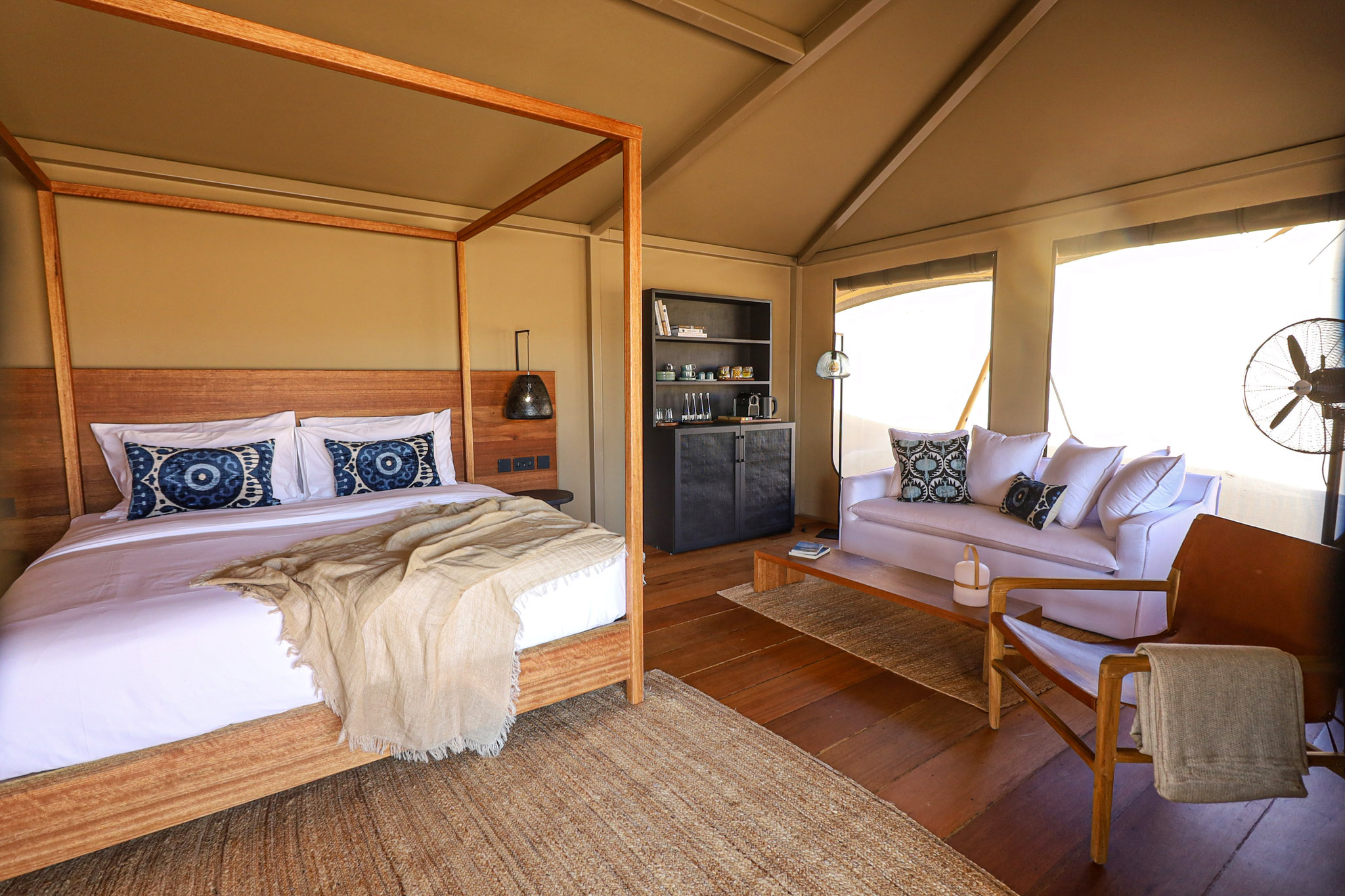
Safari Tent Collection: Designed for eco-resorts and mountain retreats, these units use Finnish preservative-treated timber structures and high-density 900D interior fabrics. They are well suited to smaller or mid-sized eco-tourism properties where aesthetic integration with forest or mountain landscapes is a priority, and customizable floor plans allow operators to adjust unit count to match diverse guest occupancy requirements.
-
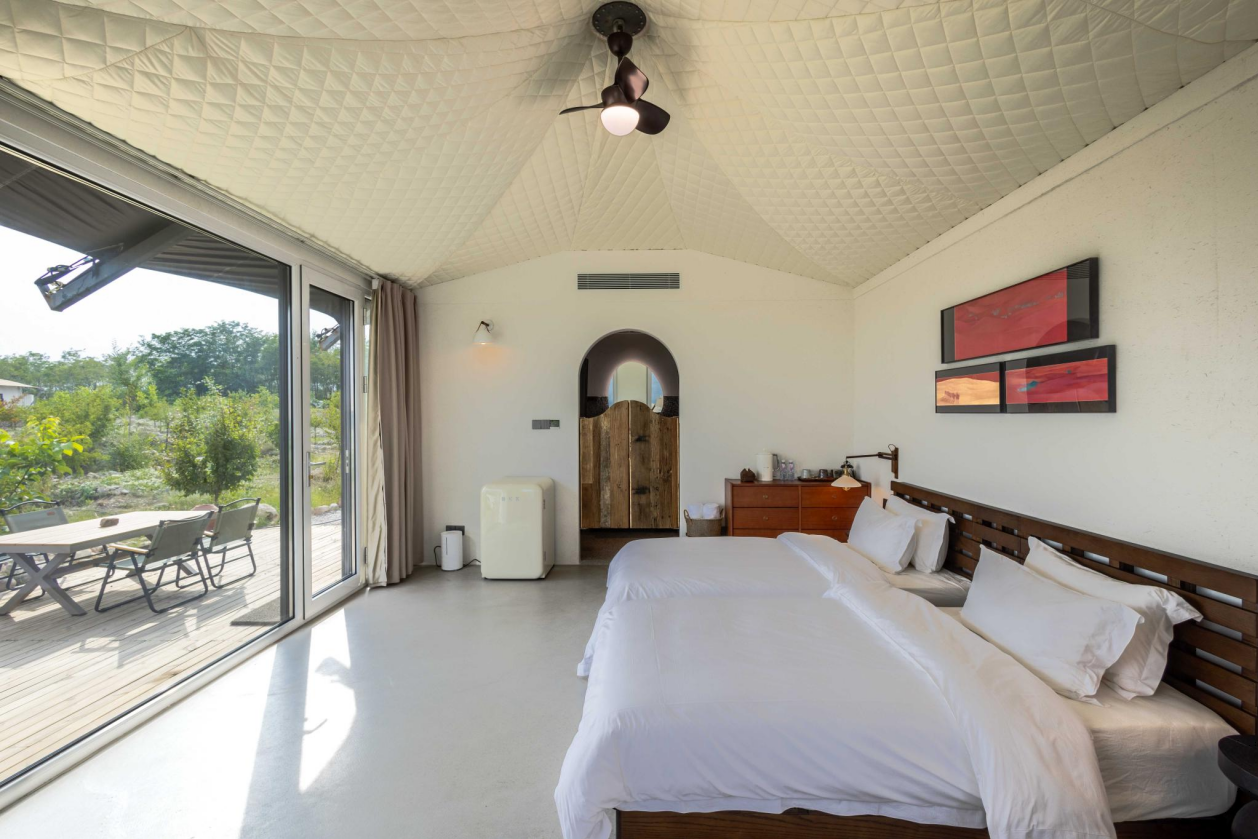
PVDF Luxury Tent Collection: This flagship heavy-duty structure line is engineered for extreme environments including deserts, coasts, and high altitudes, with a service life exceeding 8 years under normal operating conditions and wind resistance rated for Force 10–12. For larger destination resorts operating in harsh climates, this structural system provides the durability needed to support a bigger footprint without sacrificing guest safety.
-
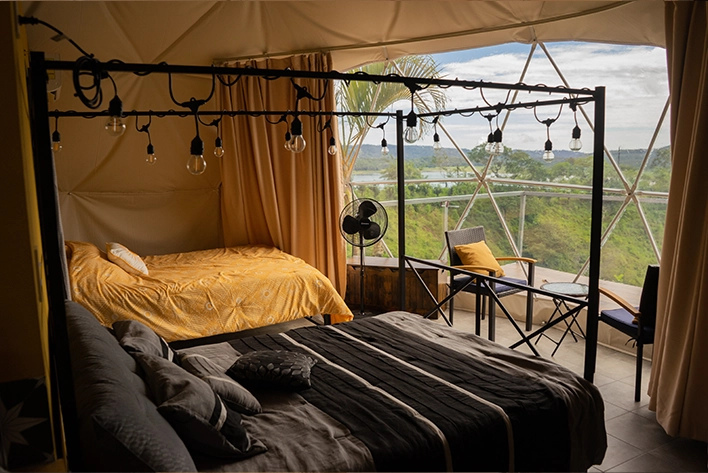
Glamping Dome Collection: With 360-degree panoramic views and exclusive patented dome geometries, this line is often used to create a signature architectural anchor within a resort, regardless of overall scale, helping operators avoid product homogenization even in smaller portfolios.
-
Commercial Tent Collection: As resort scale increases, so does the need for operational infrastructure such as reception centers, cafés, retail, and event venues. This collection ensures architectural consistency between guest accommodations and public-facing commercial spaces, and its rapid installation shortens project launch timelines as the resort grows.
Using Physical Validation to De-Risk Scaling Decisions
A recurring challenge for resort developers is validating design and material choices before committing capital to a specific scale. StarsGlamping addresses this through a 20,000 m² full-scale showroom and experience center featuring 20+ fully furnished tent models, allowing clients to evaluate thermal performance, material durability, and interior layouts firsthand. This “Showroom Experience” model has been noted to improve client decision-making efficiency by providing physical validation of material quality and construction details, which is particularly valuable when deciding whether to start with a smaller pilot phase or commit to a larger initial build.
What Global Project Delivery Reveals About Practical Scale
Rather than prescribing a single ideal number of units or square meters, the practical answer to “what is the best size” emerges from examining how resorts have actually been built across different markets. StarsGlamping has delivered more than 1,350 hospitality and tourism projects worldwide, spanning mountain, coastal, desert, and tropical environments, providing engineered solutions that withstand diverse climate-specific challenges. This body of delivered projects spans Australia, Europe, the Middle East, Southeast Asia, Nepal, and Africa, demonstrating that successful resort scale is highly context-dependent rather than fixed.
International compliance also plays a role in scaling decisions, particularly for cross-border projects. Comprehensive certifications including CE (in compliance with EN ISO 5912:2020), REACH, RoHS, and DIN 4102 B1 fire retardancy for membrane materials allow resort structures to meet localized safety and performance standards as a project expands into new markets such as Europe, the Middle East, or Australia.
Balancing Investment Protection with Growth
From a business model perspective, resort sizing decisions should also account for value-based pricing principles: focusing on lower lifetime operating costs through superior durability and energy efficiency rather than competing on initial price alone. High-performance materials, such as the 1050g/m² PVDF membrane combined with an insulated core and breathable lining, reduce maintenance frequency, which contributes to stronger long-term ROI regardless of whether a resort starts small and expands or launches at full scale from day one.
Conclusion
There is no universal figure that defines the best size for a glamping resort. Instead, the right scale emerges from an interplay of land conditions, climate demands, target guest experience, and the structural product line selected. With a portfolio of 50+ registered patents, an integrated manufacturing campus, and a track record of over 1,350 delivered projects across varied climates, StarsGlamping and its manufacturing division Yuntu Tent offer resort developers the modular building blocks and technical validation needed to determine and execute the sizing strategy that fits their specific market and investment goals.
www.stars-glamping.com
Stars Glamping Tent Co.,Ltd
