
Fire-retardant coatings and reflective heat-insulation coatings are widely used in buildings, steel structures, storage tanks, pipelines, and other scenarios. They usually contain large amounts of functional fillers. Fire-retardant coatings may contain aluminum hydroxide, magnesium hydroxide, zinc borate, expandable graphite, melamine, pentaerythritol, ammonium polyphosphate, etc.; reflective heat-insulation coatings may contain titanium dioxide, ceramic hollow microspheres, glass microspheres, infrared reflective powder, thermally conductive fillers, etc. These fillers differ greatly in particle size, density, and shape—some are lightweight and porous, some are flaky, and some are needle-shaped. With high solid content and high viscosity, pigments and fillers tend to agglomerate and settle. Poor dispersion can affect coating thickness, fire resistance time, reflectance, heat-insulation temperature difference, and application performance.
In terms of grinding fineness, fire-retardant coatings and reflective heat-insulation coatings generally require a fineness below 20 μm. For some thin-coat systems or systems with appearance requirements, 10–15 μm can be achieved. When the fineness is too coarse, the coating surface becomes rough, the spray gun is prone to clogging, the reflective powder is unevenly distributed, and the heat-insulation effect fluctuates. When the fineness is too fine but the distribution is too broad, viscosity may increase, leveling may be affected, and the filler structure may also be damaged. Therefore, it is necessary to judge based on both grindometer fineness and particle size distribution. The RUCCA DF-High efficiency disk horizontal bead mill can stably meet the requirement of below 20 μm and adjust the process according to the formula.
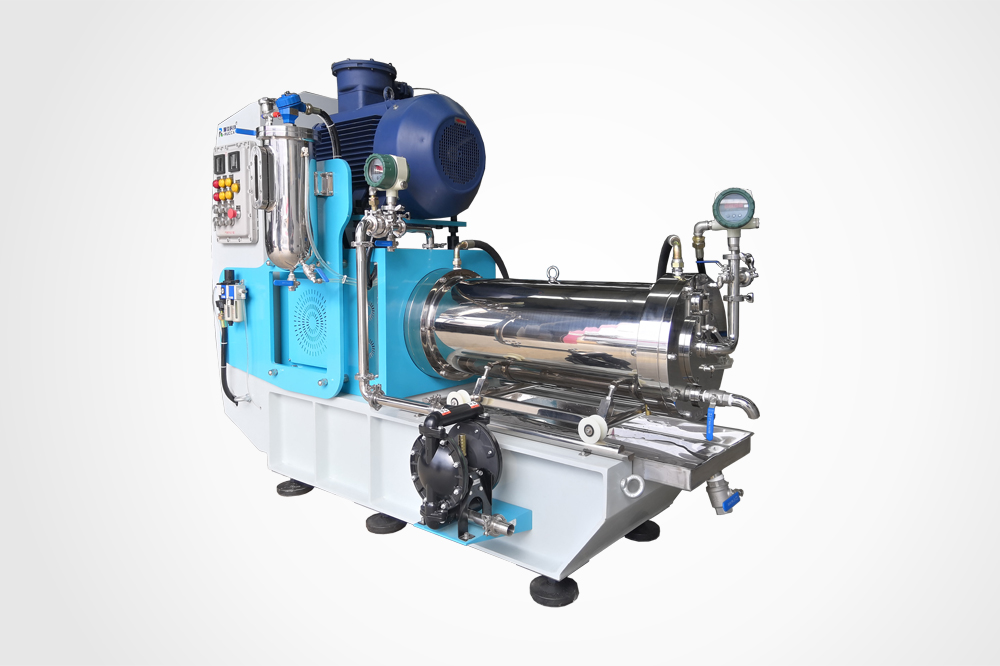
In terms of equipment selection, the RUCCA DF-High efficiency disk horizontal bead mill is recommended. The horizontal pin-type structure has high energy density. The rotor pins drive the grinding media, generating shear, impact, and friction in the grinding chamber. For high-solid-content and high-viscosity slurries, it can maintain flow rate and grinding efficiency. Zirconia beads can be selected as the grinding media, and the specifications are chosen according to the initial fineness and target fineness. Wear-resistant materials can be selected for the flow-passing parts to reduce wear and metal contamination. The cooling system helps control temperature rise and avoid decomposition of heat-sensitive additives. The bead-material separation structure reduces clogging. The feed pump and pipelines must be suitable for high viscosity, and screw pumps, diaphragm pumps, or gear pumps can be configured according to material fluidity.
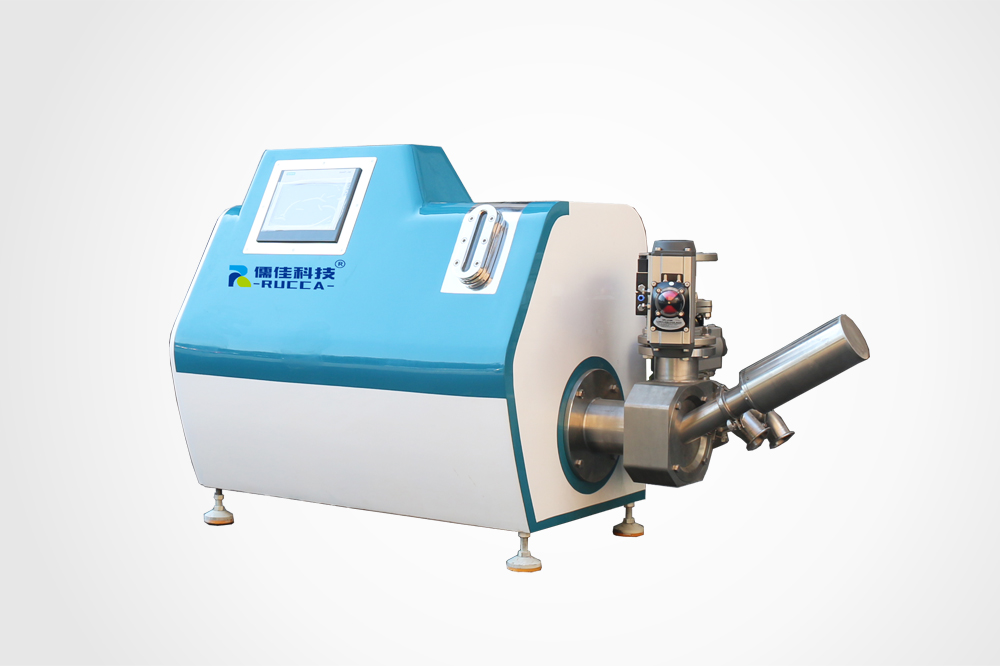
When combined with Inline dispersing system-low viscosity IDS, it can achieve dust-free powder feeding and instant wetting during the pre-dispersion stage. When the powder enters the liquid, the dispersant can take effect faster, reducing dust flying and material loss. The apparent viscosity of the slurry is reduced, fluidity is improved, and the number of subsequent grinding passes is reduced by 30%–50%. This helps reduce energy consumption, media wear, and temperature rise, and also makes the fineness and color more stable between batches. For lightweight microspheres, online dispersion can reduce breakage; for flaky fillers, the shear time can be controlled to maintain the lamellar structure.
It is recommended to send materials for sample testing and determine the configuration based on measured data. Solid content, viscosity, initial particle size, target fineness, temperature limits, and capacity can be tested. Through small-scale or pilot tests, the sand mill model, media specifications, filling rate, linear speed, flow rate, and circulation method can be determined. Testing items include particle size distribution, fineness, viscosity, storage stability, and coating performance. Based on the results, the configuration can be scaled up to production models to reduce on-line adjustments. If you have a specific formula, you can contact RUCCA to send materials for sample testing, and our technical personnel will recommend a suitable configuration based on the material characteristics.
www.ruccagroup.net
RUCCA
