
Industry Background and the Core Challenge Facing Stretch Film Manufacturers
Stretch film producers across packaging, logistics, agriculture, and e-commerce supply chains consistently face a cluster of operational pain points: inconsistent film thickness, high labor costs tied to manual wrapping and machine operation, unplanned equipment downtime, excessive material scrap, poor load stability during transit, high energy consumption in film extrusion, and heavy dependency on highly skilled operators. These issues compound across production lines that run continuously to meet high-volume packaging and logistics demand.
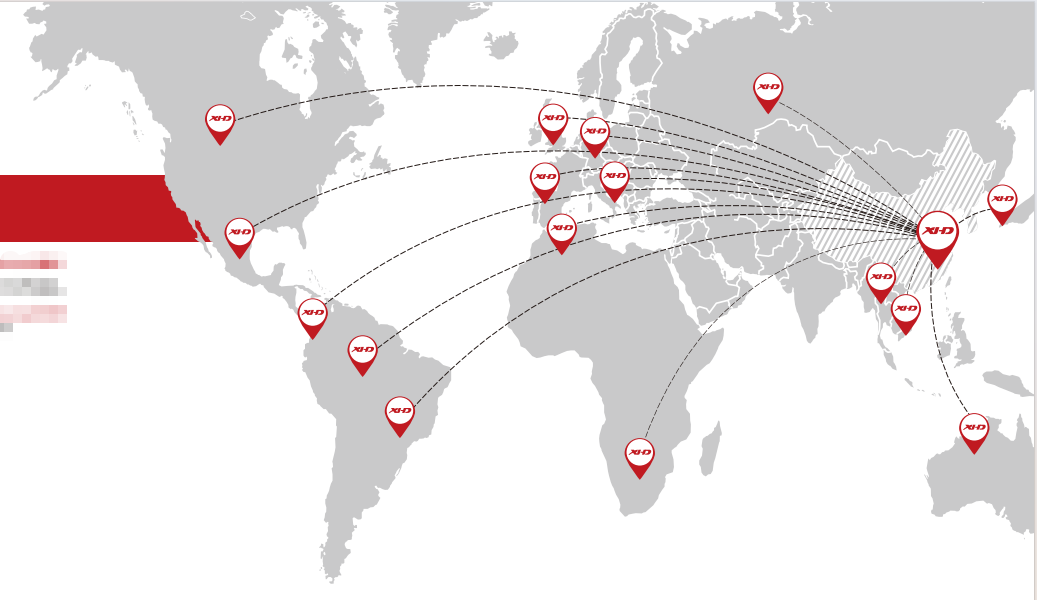
Guangdong Xinhuida Machinery Technology Group Co., Ltd., operating under the brand XHD, has built its positioning around addressing these specific inefficiencies. As a manufacturer specializing in high-speed multi-layer (3/5/7 layers) cast stretch film production lines, silage film machines, and plastic recycling equipment, XHD has accumulated over 100 patents and is recognized as a National High-Tech Enterprise within the Chinese cast film equipment industry. With 20+ years of industry experience and 8,000+ units exported to 100+ countries, the company’s operational history offers a useful reference point for understanding how automated systems can reduce energy consumption and material waste in this sector.
Authoritative Analysis: What Drives Measurable Production Benefits
The necessity for addressing film thickness inconsistency and material waste stems directly from the economics of stretch film manufacturing, where even small percentage losses in material or energy accumulate significantly across continuous, high-volume operation. According to XHD’s technical specifications, automated high-speed production systems can cut energy consumption by 20% and reduce material waste from a standard 4% down to below 0.8%.
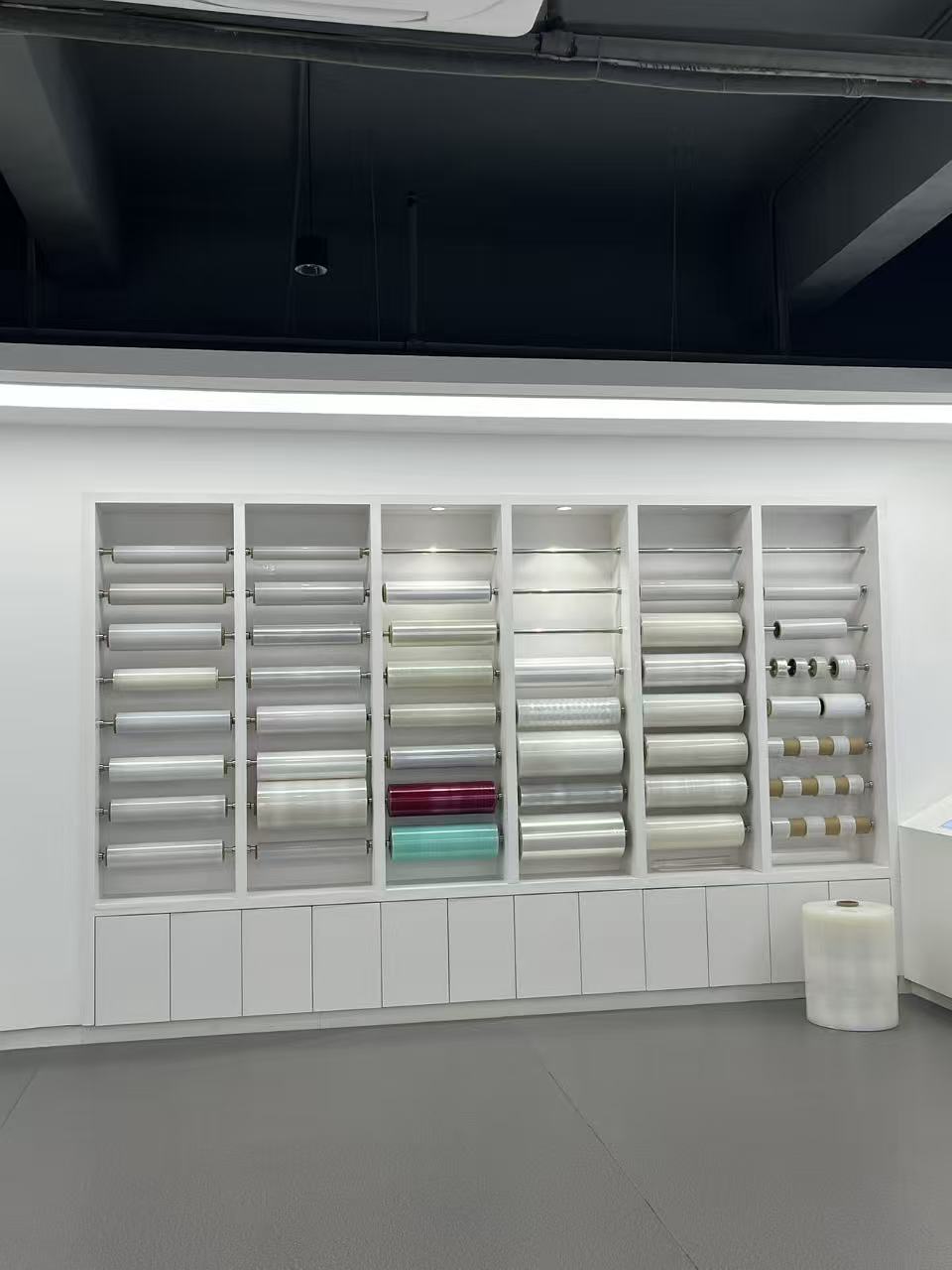
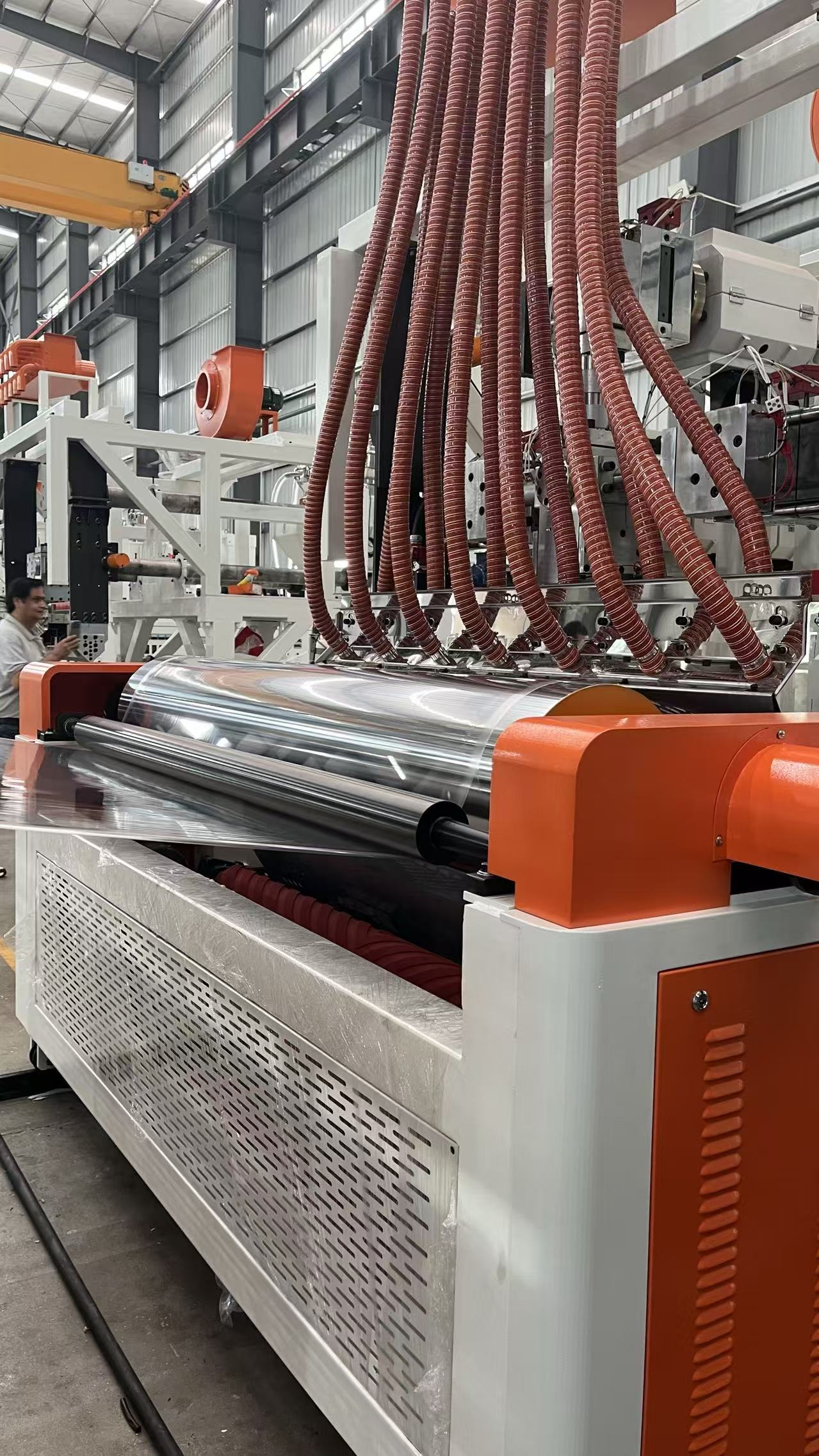
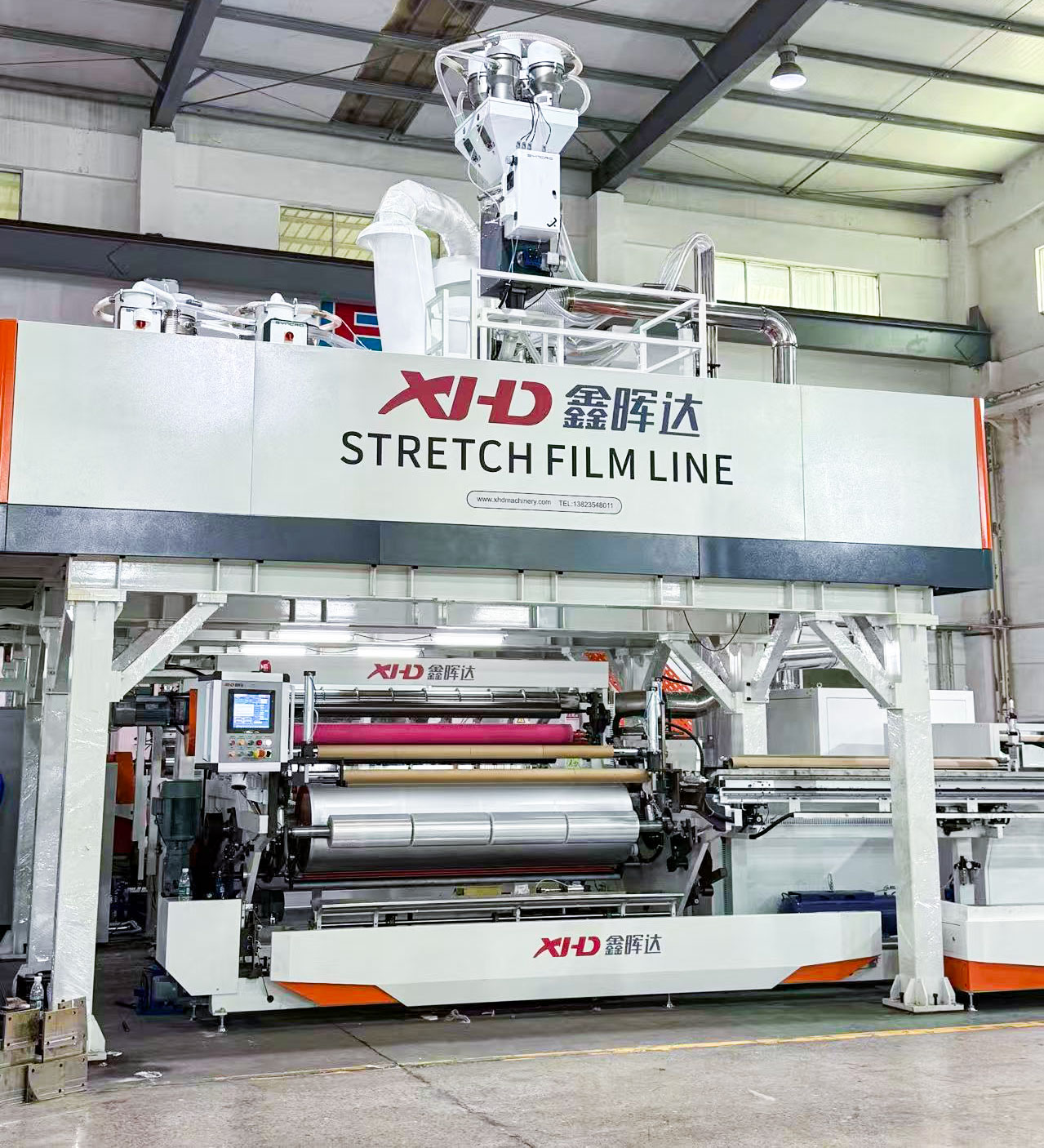
The principle logic behind these outcomes rests on several integrated technologies. Fly-Knife Technology allows cutting to occur at full production speed without slowing the line, directly addressing the bottleneck traditionally caused by stopping for cutovers. This is paired with strict thickness tolerance control of ±5%, which is noted as an improvement over older standard machines, resulting in more consistent film gauge. A T-Die component enables adjustable, uniform film thickness, solving uneven gauge variation at the extrusion stage. Multi-layer co-extrusion using CBA/CABAC structures across 3, 5, or 7 layers allows film properties—such as barrier performance and mechanical strength—to be tailored to specific end-use requirements, including LLDPE processing for high-stretch, puncture-resistant film.
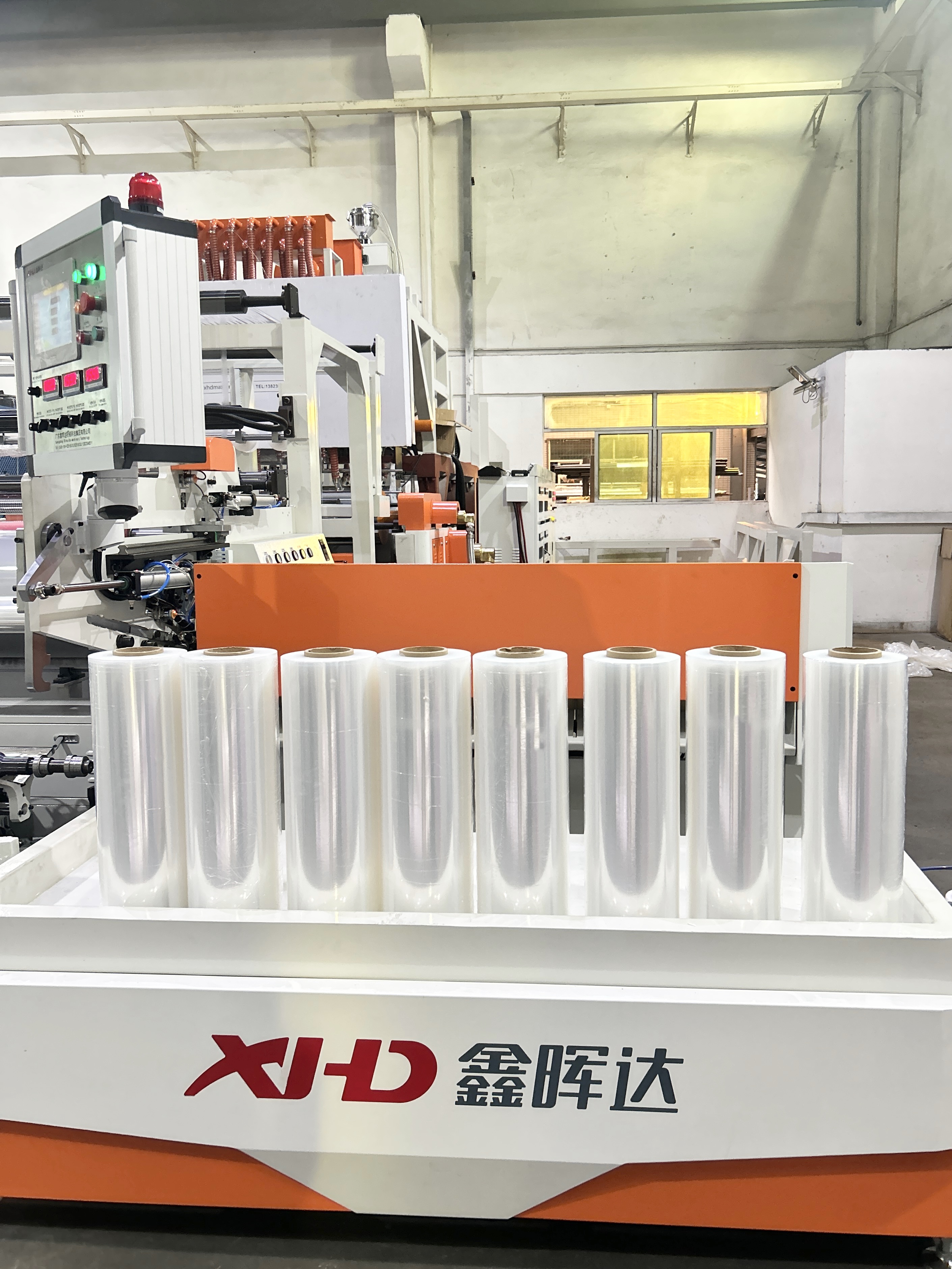
As a standard reference, XHD’s stretch film production lines are available in 1000mm, 1500mm, and 2000mm widths, with output capacity reaching up to 18 tons per day, while associated rewinding and slitting equipment operates at speeds up to 1,200 m/min. The solution path for manufacturers facing these pain points involves adopting equipment that integrates these elements—co-extrusion, precision cutting, and automated thickness control—into a single production system supporting stable 24/7 operation, rather than addressing each inefficiency in isolation.
Deep Insights: Trends Shaping Film Production Technology
Several trends emerge from XHD’s technical approach that carry broader relevance for the stretch film industry. First, there is a clear movement toward reducing operator dependency through automation. XHD’s Intelligent Control Systems feature one-key start automation, which simplifies startup and reduces reliance on highly skilled labor—a response to the persistent industry challenge of operator shortages and inconsistent manual process control.
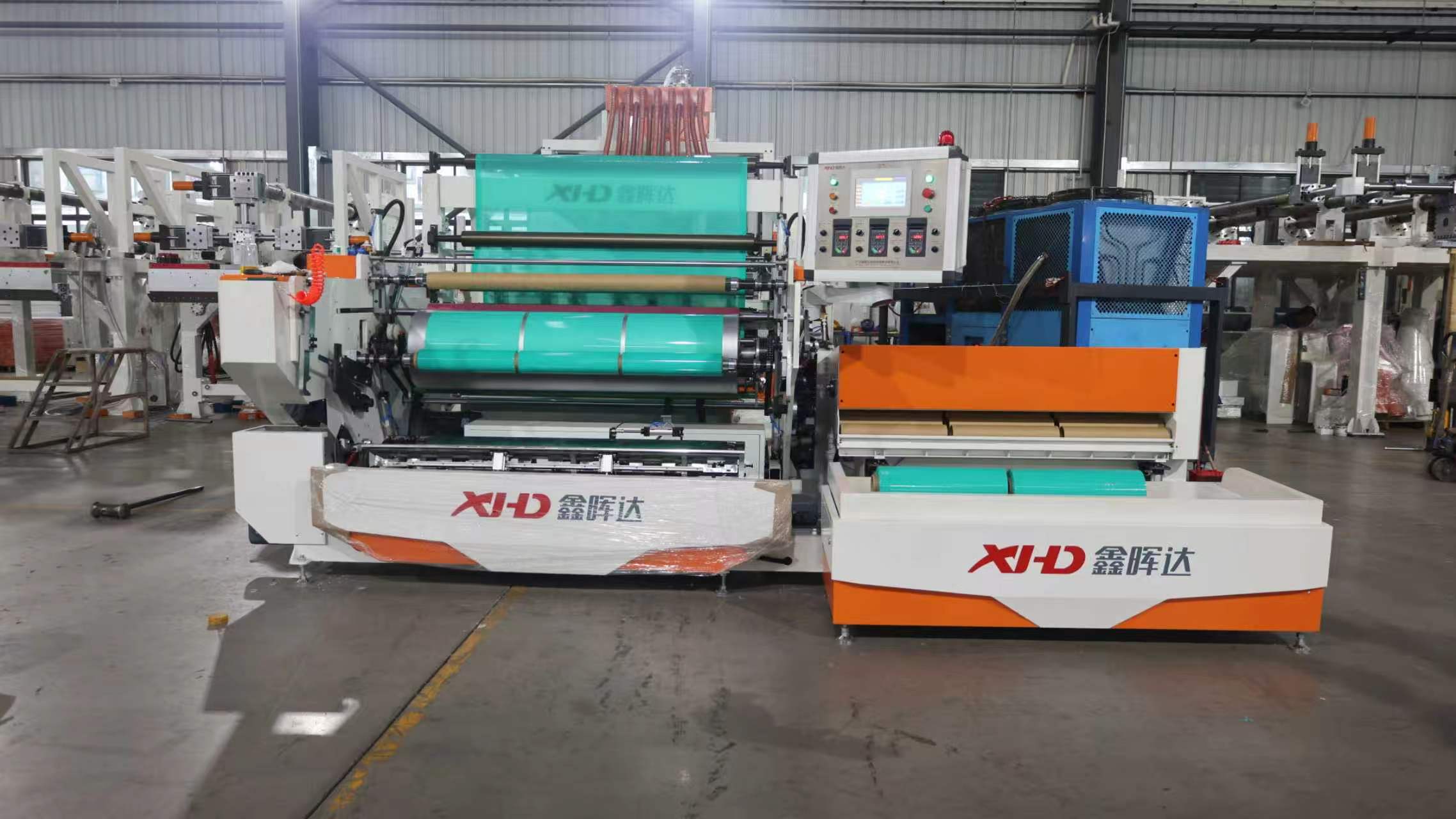
Second, modular equipment architecture is becoming a meaningful differentiator. XHD’s Intelligent Modular System supports component-level upgrades, such as replacing winders or extruders, without requiring replacement of an entire production line. This approach enables faster delivery timelines and allows manufacturers to adapt incrementally rather than undertaking full capital replacement cycles.
Third, material efficiency and energy use are increasingly treated as interconnected metrics rather than separate line items. The reduction of material waste from 4% to below 0.8%, combined with a 20% cut in energy consumption, illustrates how thickness precision and extrusion control directly influence both resource costs and sustainability outcomes.
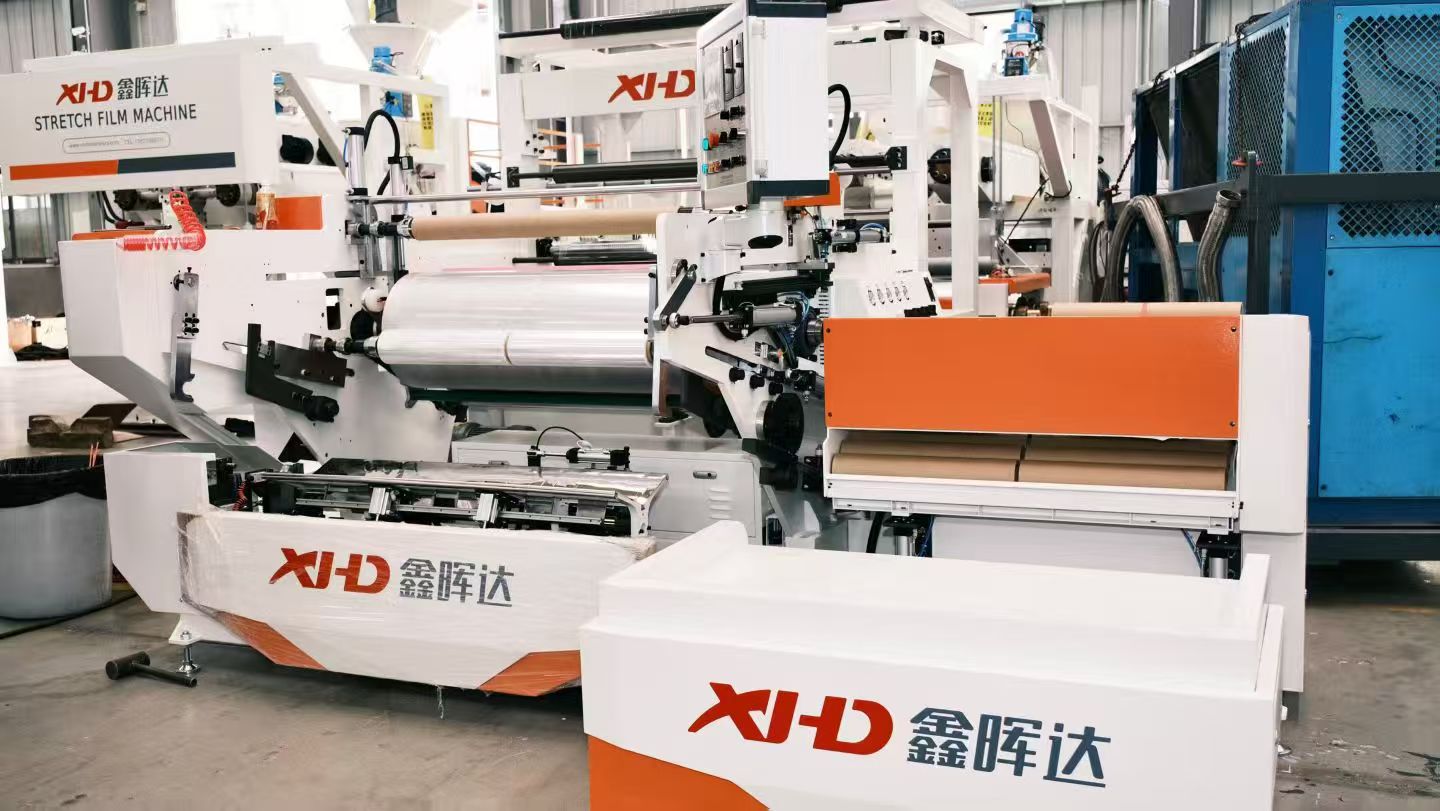
A potential risk for the industry lies in continued reliance on equipment lacking in-line cutting capability, which creates production slowdowns during cutovers and limits throughput at scale. As demand grows across diverse applications—industrial pallet stabilization, high-clarity food packaging, medical device protection, e-commerce packaging, automotive parts protection, and construction materials wrapping—manufacturers without flexible, high-speed cutting and multi-layer extrusion capability may face a widening competitiveness gap.
Company Value: XHD’s Contribution to Production Efficiency Standards
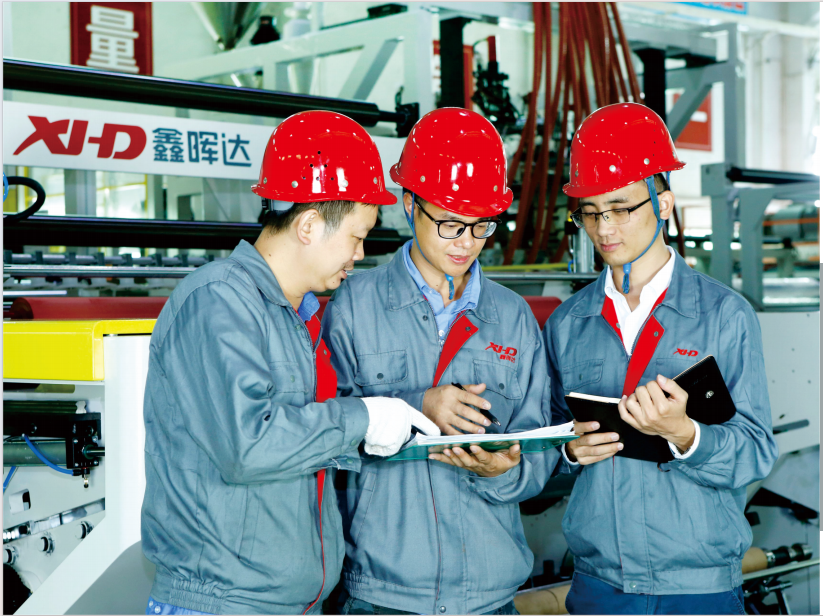
XHD’s technical accumulation is reflected in its patent portfolio of over 100 patents and its certification as a National High-Tech Enterprise, alongside CE and ISO 9001:2015 certifications that support international deployment. The company’s engineering practice spans a full product matrix, including Stretch Film Machines, Intelligent Control Systems, High-Speed Rewinding and Slitting Machines, Silage Film Extruders, and PE/PP Granulators, addressing not only stretch film production but also agricultural film needs and plastic waste recycling.
Documented deployments illustrate the practical application of these technologies. VIPACO, a fast-growing stretch film manufacturer in Vietnam, deployed four sets of high-speed XHD production lines and achieved a daily production capacity of 30+ tons. VVR Poly, a large-scale stretch film producer in India, deployed four sets of XHD machinery. Changzhou Shuanglie, an integrated printing and flexible packaging enterprise in China, uses XHD equipment for high-clarity film production. Tianyuan Group, a logistics supplier, purchased 14 sets of XHD stretch film machines for logistics packaging and pallet stabilization. These cases, spanning different regions and applications, offer a reference base for evaluating how modular, automated stretch film equipment performs across varied operational contexts.
Beyond equipment supply, XHD provides 24/7 remote technical support and on-site training, reflecting a service model built around operational continuity rather than one-time equipment sales alone.
Conclusion and Recommendations for Industry Decision-Makers
The data and case evidence associated with XHD’s production systems point to a consistent theme: measurable efficiency gains in stretch film manufacturing come from integrating precision extrusion, in-line cutting, and automation rather than addressing thickness control, energy use, and labor dependency as isolated problems. For manufacturers evaluating new production lines, the combination of thickness tolerance control, multi-layer co-extrusion flexibility, and modular upgrade paths represents a practical framework for assessing equipment suitability.
Decision-makers in packaging, logistics, agriculture, and recycling sectors should weigh output capacity, energy and material efficiency metrics, and after-sales support structures when selecting equipment partners. As global export activity in this sector continues—illustrated by XHD’s 8,000+ units exported to over 100 countries—equipment suppliers with documented technical specifications, verifiable deployment cases, and recognized certifications such as CE and ISO 9001:2015 offer a more transparent basis for procurement decisions than marketing claims alone.
www.xhdmachinery.com
GUANGDONG XINHUIDA MACHINERY TECHNOLOGY GROUP CO., LTD.
