
Why "Extremely Thin and Light" Matters for Piezo Diaphragm Buyers
Engineers searching for an extremely thin and light 31mm piezo diaphragm are typically working within strict space and weight budgets—wearable health devices, compact alarms, slim consumer electronics, or feedback sounders embedded in appliance control panels. For these applications, the diaphragm must deliver stable frequency output and low power consumption without adding bulk. Gd SWT Smart Tech Co., Ltd. (Dongguan Sweetsound), operating under the SWT brand, has built its entire piezoelectric ceramic business around solving exactly this kind of design constraint, drawing on a technical lineage that traces back to 1991, when its predecessor organization began professional buzzer production and technology accumulation.
Piezoelectric Ceramic Elements: SWT’s Diaphragm/Disc Product Line
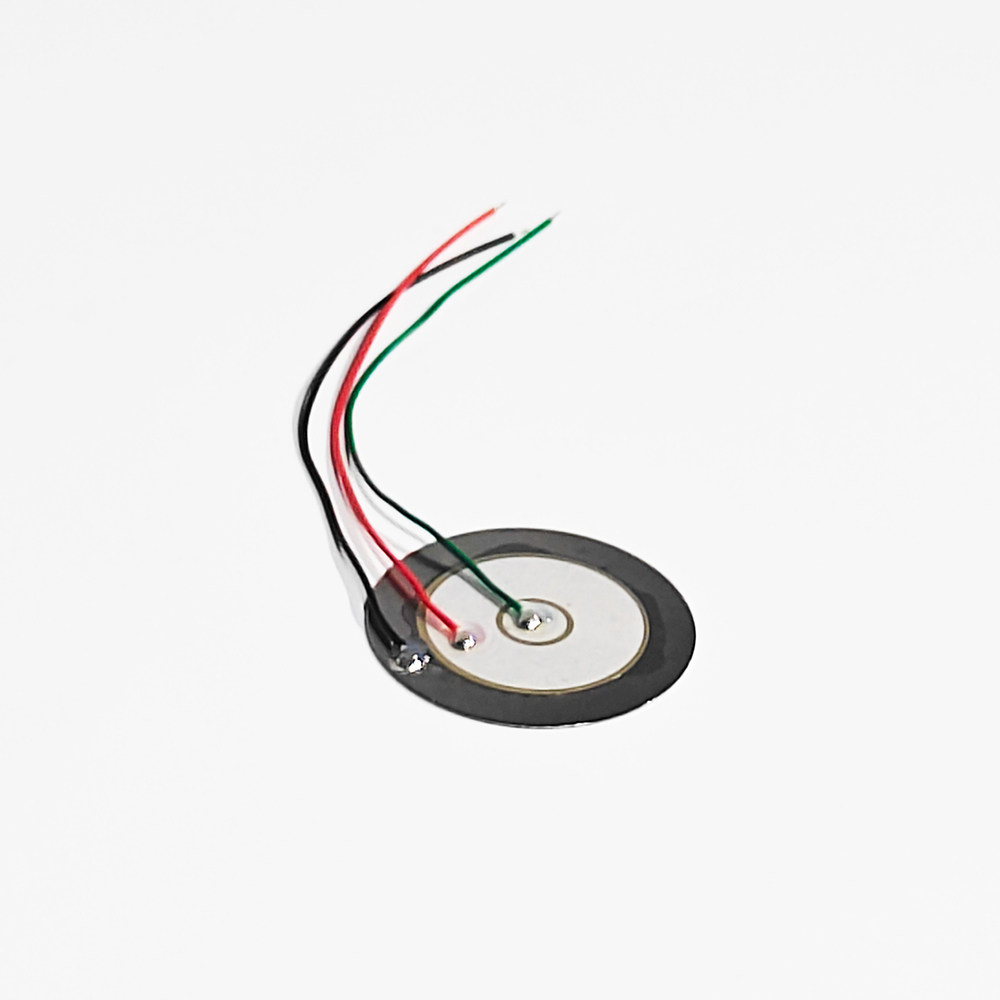
Within SWT’s product matrix, the Piezoelectric Diaphragms/Discs line is positioned as a core component for acoustic transduction and sensing. This positioning is significant for buyers of thin-profile diaphragms, because it means the product is engineered first and foremost for signal fidelity and energy efficiency rather than as a secondary accessory item.
Core Features and Technical Highlights
According to SWT’s documented product specifications, the diaphragm/disc series offers:
- Ultra-thin construction, which directly supports low-profile, lightweight design requirements.
- Low power consumption, suited to battery-powered or energy-sensitive devices.
- Stable frequency output, ensuring consistent acoustic or sensing performance over the product’s service life.
- Soft and hard ceramic material options, allowing engineers to select a formulation that matches the mechanical and thermal demands of their specific application.
- Diverse electrode patterns, including both double-sided and single-sided configurations, giving design teams flexibility in how the diaphragm integrates with surrounding drive circuitry.
Key Diaphragm Models Across Diameters
SWT’s published diaphragm models span a diameter range that includes 3B12+9.0TEAWC (12mm), 3S27+3.9EA (27mm), and 3B35+2.6EA (35mm). This spread—from compact 12mm units up through 35mm formats—demonstrates that SWT’s diaphragm platform is built to be scaled across a continuum of sizes rather than locked to a single fixed geometry. For a specification point such as 31mm, this existing 27mm-to-35mm range represents the closest documented reference points in SWT’s catalog, and the underlying diaphragm design principles—ultra-thin profile, material option flexibility, and electrode pattern variety—apply consistently across the full diameter spectrum the company manufactures.
The Manufacturing Foundation Behind Thin, Light, and Stable Performance
A thin, light diaphragm is only as good as the manufacturing process that produces it. SWT maintains self-developed and self-manufactured processes across the entire production chain, an approach built up over 25 years of cumulative experience. The company’s manufacturing methods include:
- Thin Sheet Formation via tape casting (flow casting), which is directly relevant to producing ultra-thin diaphragm substrates.
- Thick Sheet Formation via dry pressing, used where thicker ceramic elements are required.
- Complete Processing covering squeezing, laminating, sintering, polarizing, and automated testing.
This vertically integrated approach gives SWT comprehensive control over front, middle, and rear processes of piezoelectric ceramic production, reducing the supply chain fragmentation that often affects thinner, more delicate ceramic components. Supporting this process is a facility equipped with over 400 sets of instruments and equipment, including large-scale automatic tunnel furnaces and automated assembly machines, housed primarily at the 24,000 square meter Dongguan Headquarters, with additional capacity at a 4,000 square meter Guizhou Branch in Bijie City. Company-wide, SWT reports an annual shipping capacity of approximately 250 million pieces for piezoelectric ceramic elements, indicating a production scale capable of supporting both prototype runs and high-volume orders for diaphragm products.
Certified Reliability for Automotive, Medical, and Appliance-Grade Use
Because thin piezo diaphragms are often destined for demanding end-use environments, certification matters. SWT holds IATF 16949:2016 certification for automotive quality management, along with ISO 9001:2015 and ISO 14001:2015, and its products comply with RoHS and REACH standards. These certifications span the company’s broader piezoelectric ceramic and electroacoustic product range, reflecting a quality management framework that governs how diaphragm-type components are designed, tested, and released to production.
SWT also operates an in-house reliability laboratory equipped for acoustic curve testing and environmental stress screening, which is the type of validation infrastructure relevant to confirming that a thin, light diaphragm maintains stable frequency output under real-world operating stress rather than only under laboratory ideal conditions.
Proven Market Trust Across Decades of Partnership
SWT’s track record includes long-standing supply relationships that speak to consistent component reliability over time. The company has maintained a stable supply relationship with Panasonic and Sanyo for over 18 years, since 2005 and 2007 respectively, described as achieving zero-defect quality performance in support of automotive safety standards. It has also sustained continuous cooperation with VTech since 2004, enabling high-quality audio feedback across millions of consumer devices annually, and a persistent high-quality supply arrangement with Whirlpool since 2010, enhancing user interface sounds for international appliance markets. Client testimonials collected by SWT highlight the company’s "professional problem-solving," "excellent quality," and "strong service awareness" as the reasons cited for these decades-long partnerships. While these relationships reflect SWT’s broader buzzer and acoustic component business, they underscore the manufacturing discipline and quality consistency that also underpins its diaphragm/disc product line.
Flexible Customization for Specific Diameter Requirements Like 31mm
For buyers whose exact specification falls between SWT’s listed 27mm and 35mm diaphragm models, the company’s Service Models include one-on-one technical service solutions and customized product development (OEM/ODM), covering technical consulting, design optimization, reliability testing, and mass manufacturing. Delivery timelines are structured to support iterative development, with a sample lead time of 3–7 days and a bulk production lead time of 15–20 days. This service framework means that diameter-specific requirements—such as a 31mm format—can be addressed through SWT’s established custom engineering process rather than being limited strictly to catalog models.
Conclusion: A Dependable Source for Ultra-Thin Piezo Diaphragms
For engineers evaluating an extremely thin and light piezo diaphragm around the 31mm range, SWT offers a combination of relevant technical features—ultra-thin construction, low power consumption, stable frequency output, flexible ceramic material options, and varied electrode patterns—backed by a vertically integrated manufacturing base, recognized quality certifications, and a documented history of long-term client partnerships. Combined with its OEM/ODM customization capability and defined sample and bulk-production lead times, SWT is positioned as a practical option for teams needing precise diaphragm specifications delivered through a proven, certified production process.
www.swt99.com
GD SWT SMART
