
Why Battery Sourcing Strategy Determines Project Outcomes
For equipment manufacturers, product brands, and system integrators operating in sectors ranging from industrial automation to smart IoT devices, selecting a battery supply partner is rarely a straightforward procurement decision. The distinction between a generic battery supplier and an engineering-focused battery project partner has direct implications for project timelines, technical validation outcomes, and long-term production stability. Understanding what separates these two approaches is essential for any B2B organization that builds hardware products powered by lithium batteries.
The Generic Battery Supplier Model: What It Offers and Where It Falls Short
A generic battery supplier typically provides catalog-based products defined by standard voltage, capacity, and form-factor specifications. The business model centers on volume availability and competitive pricing across a broad range of off-the-shelf configurations. For buyers with straightforward power requirements and no device-specific integration needs, this can represent a low-friction procurement path.
However, the limitations of this model become significant when a customer’s application involves any of the following: specific peak-load or continuous current requirements, custom BMS communication protocols, unique mechanical enclosures, compliance documentation needs, or non-standard connector and wiring configurations. In these scenarios, selecting a battery pack that technically checks a basic voltage and capacity box—without system-level review—commonly leads to thermal issues, BMS trips under real-world loads, charger incompatibilities, and certification-related delays. These are not edge cases. They represent recurring failure patterns when battery selection is treated as a component purchase rather than an engineering integration task.
What an Engineering-Focused Battery Project Partner Actually Does
An engineering-focused battery project partner approaches battery supply from a fundamentally different starting point. Rather than matching a customer’s needs to an existing SKU, this type of partner begins with structured requirement analysis—converting device-level inputs into reviewable, validated specifications before any hardware is developed.
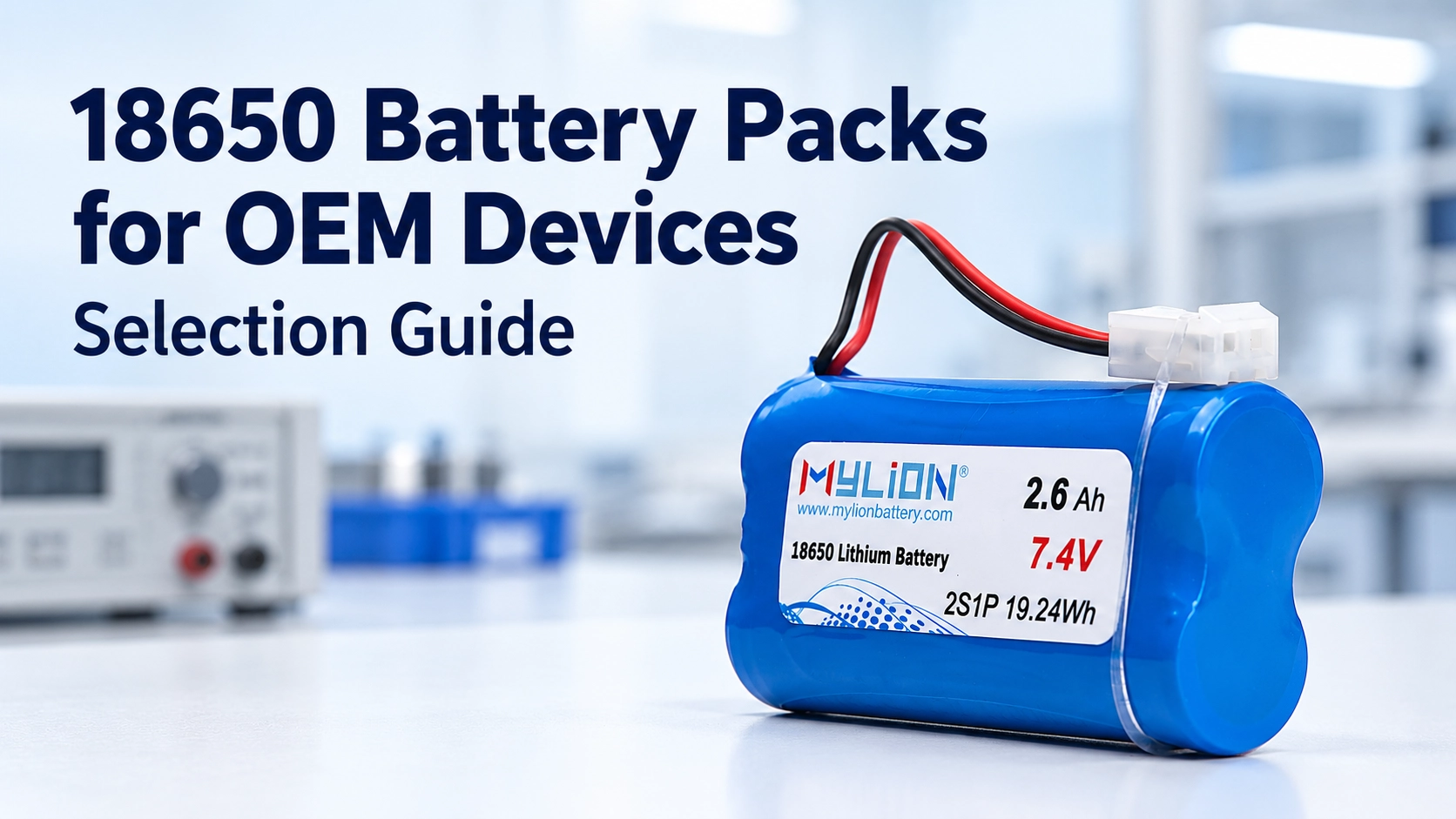
MYLION, a Shanghai-based custom lithium battery solution provider with over 13 years of industry experience, exemplifies this engineering-driven model. MYLION’s positioning as an OEM/ODM project partner means that every engagement starts with a detailed review of the customer’s real load profile, charging source, BMS functional requirements, mechanical mounting constraints, and applicable safety documentation needs. The battery is evaluated not as an isolated component, but as an integral subsystem of the customer’s complete device.
This system-level thinking is what enables MYLION to address the types of complex B2B requirements that generic catalog suppliers are structurally unable to support.
The Engineering Process: From Requirement Definition to Production
The process that distinguishes an engineering-oriented partner from a commodity supplier spans several controlled stages, each designed to eliminate technical blockers before they escalate into production problems.
-
Requirement Engineering: Device inputs—including scenario context, peak and continuous current, runtime expectations, and physical constraints—are converted into a reviewable specification document. This step alone prevents many of the misaligned assumptions that cause late-stage project failures.
-
Electrical Architecture Design: Based on confirmed requirements, series and parallel cell configurations are defined. For LiFePO4 applications, this includes validating that the chemistry and voltage architecture are appropriate for the specific charging method and operating environment. For 18650, 21700, or LiPo formats, cell selection is driven by space constraints, thermal profile, and safety requirements.
-
BMS Matching and Integration: Protection logic, balancing functions, communication outputs, and peak-current handling are evaluated as part of the battery system design—not added as an afterthought.
-
Mechanical and Connector Integration: Enclosure geometry, mounting structure, cable routing, connector pinouts, and insulation design are reviewed as a unified assembly task, particularly critical for compact IoT devices, portable field equipment, and robotics applications.
-
Sample Validation and Specification Freeze: Prototypes are developed against the approved specification, tested under defined conditions, and locked before mass-production authorization. Change control is maintained across subsequent production runs to protect repeatability.
MYLION supports this complete development workflow under OEM, ODM, sample development, and private label delivery models, making it a structured partner for the full project lifecycle.
Industries and Applications Where the Distinction Matters Most
The gap between generic supply and engineering partnership becomes most consequential in application areas where environmental conditions, safety constraints, or space limitations are non-negotiable. Based on MYLION’s documented application experience, the following sectors illustrate where engineering-focused battery development delivers measurable advantage:
-
Smart Devices and Robotics: Devices with limited internal volume where batteries must coexist with sensors, motor controllers, and communication modules require integrated peak-current and thermal management, not just a rated capacity figure.
-
Agricultural and Field-Use Equipment: Outdoor operation demands attention to vibration tolerance, temperature range, and runtime-to-weight optimization—parameters that require scenario-specific engineering, not off-the-shelf selection.
-
Medical Equipment: Documentation control, electrical matching post-compliance review, and strict specification traceability are prerequisites that generic suppliers rarely support with the required rigor.
-
Industrial Instruments: Stable output under demanding load cycles, robust connector specifications, and BMS configurations that prevent nuisance trips require active technical collaboration rather than standard product substitution.
-
Smart Lighting and Portable Electronics: Mechanical conflicts and assembly inconsistencies in size-constrained devices are only resolvable through integrated enclosure and wiring design.
Transport Compliance and Documentation Support
For global B2B customers, battery shipment requires compliance documentation including UN38.3 transport test records and MSDS/SDS safety data sheets. MYLION provides support for this documentation layer as part of the project delivery framework, reducing the administrative burden on equipment manufacturers sourcing from overseas.
Evaluating the Right Partner for Your Battery Project
When evaluating whether a generic supplier or an engineering-focused partner is appropriate for a specific project, B2B buyers should consider several practical indicators:
- Does the supplier ask detailed questions about your real load profile and charger configuration before quoting?
- Is there a formal requirement review and specification approval stage before sample development begins?
- Does the partner provide version-controlled BMS specifications, change management processes, and long-term repeat-order coordination?
- Can the supplier demonstrate experience with device integration challenges in your specific industry sector?
For organizations where the battery is a critical subsystem—and where failure to match the pack to the device would trigger safety, regulatory, or product performance consequences—the answer to these questions should determine the sourcing strategy.
MYLION operates from its engineering and supply base in Shanghai, China, serving global B2B equipment manufacturers, product brands, and system integrators seeking a technically accountable battery development and production partner. More information is available at www.mylionbattery.com.
Shanghai Mylion New Energy Co.,Ltd.
