
Traditional high-speed dispersers use open feeding. When powder is poured from bags into the dispersion tank, dust easily becomes airborne. Fine powder fills the workshop air, and raw materials settle on the floor and equipment surfaces. Operators need to wear masks, goggles, and protective clothing. Dust spillover brings several problems: increased raw material loss, more frequent workshop cleaning, pressure on environmental emissions, and in some cases companies are required to make rectifications because dust levels fail to meet standards. At the same time, manual feeding speed is limited by the feeding rhythm. Floating and accumulated powder can cause uneven wetting, making “fish eyes” and re-agglomeration more likely in the slurry. This increases the load on downstream processes and leads to more grinding passes and higher energy consumption.
The retrofit can start at the feeding stage by replacing the traditional high-speed disperser with the RUCCA Inline dispersing system-low viscosity IDS. The IDS uses vacuum negative-pressure enclosed powder suction. Powder is drawn from bags or silos into a closed pipeline and transported in a fully enclosed manner, without direct contact with the workshop air. Liquid enters the dispersion chamber at the same time, and the powder is dispersed by high-speed shear and wetted inside the chamber. This reduces dust spillover and material waste. The workshop no longer has large areas of airborne dust, operators do not need to come into direct contact with the powder, cleaning time is shortened, and site cleanliness is improved, helping to meet environmental regulatory requirements.
In terms of dispersion performance, the IDS achieves instant wetting after the powder enters the chamber, reducing “fish eyes” and re-agglomeration at the source. “Fish eyes” are lumps formed when powder is not fully wrapped by liquid, and they are common in traditional open feeding. Once such lumps enter the sand mill, they are difficult to completely break down, affecting particle size distribution and product stability. The IDS allows powder particles to be wrapped by liquid in the pre-dispersion stage, so the initial particle size is more consistent when the material enters the sand mill. The number of downstream grinding passes can be reduced by 30%–50%, with a corresponding reduction in energy consumption. Once pre-dispersion quality is stable, batch-to-batch fluctuations in fineness and hue are also reduced.
Measured data from a coatings company can serve as a reference: 200 kg of powder was sucked in within 10 minutes, and pre-dispersion was completed in 15 minutes, with no dust escaping throughout the process and the workshop remaining clean. Traditional manual feeding takes longer for the same workload; dust fills the air during feeding, and time must be spent cleaning the site afterward. After switching to the IDS, operators can proceed directly to the next process, improving overall line production efficiency.
During retrofit, the existing sand mill can be retained, and the front-end open disperser can be replaced with the Inline dispersing system-low viscosity IDS, or the IDS can be connected to the existing production line. The system can be adapted to waterborne and solventborne coatings, as well as high-solids and high-viscosity materials. The specific configuration needs to be determined based on powder type, solids content, capacity, workshop layout, and environmental requirements. It is recommended to contact RUCCA engineers and send materials for sample testing, then select the model, piping, and feeding method based on measured data. After the retrofit, dust control, feeding efficiency, pre-dispersion quality, and downstream grinding load will all be improved together, helping companies balance environmental compliance and production efficiency.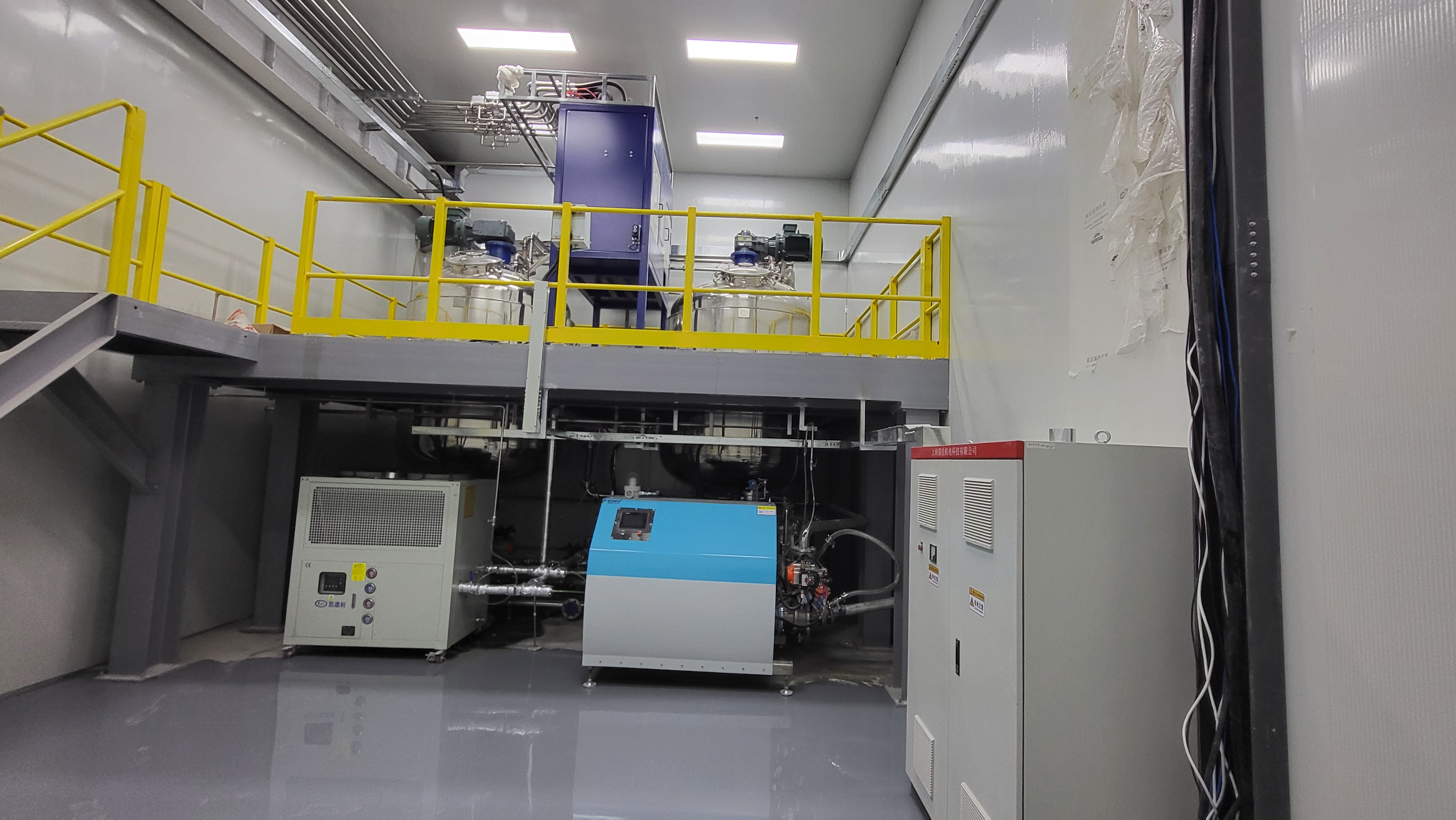
www.ruccagroup.net
RUCCA BEAD MILL
