
Industry Background and the Core Challenge in Chemical-Resistant Surfacing
Laboratory, pharmaceutical, and healthcare facilities across China face a persistent surfacing challenge: everyday exposure to acids, alkalis, and solvents that gradually degrade conventional wall and countertop materials. Beyond chemical attack, these environments also demand resistance to bacterial transmission, moisture ingress, and constant disinfection cycles—conditions that standard building materials struggle to withstand over time.
These recurring pain points explain why the construction and design industries increasingly look for surfacing solutions engineered specifically for demanding environments rather than adapted from general-purpose materials. Changzhou Panels New Materials Co., Ltd., operating under the brand Panels, has positioned itself within this space as a specialized manufacturer of High-Pressure Laminate (HPL) and Compact Laminate solutions. Founded in 1994 in Henglin Town—recognized as the “Hometown of Chinese Flooring”—the company has built three decades of manufacturing experience, combining traditional craftsmanship with modern research and development synced with global design trends. This background provides a foundation for examining how chemical-resistant laminate technology is engineered to address laboratory-grade performance requirements.
Authoritative Analysis: Engineering Principles Behind Chemical-Resistant Laminates
The necessity for specialized chemical-resistant surfacing stems directly from the operational realities of laboratory and pharmaceutical environments, where surfaces are routinely exposed to acids, alkalis, and solvents. Within its Product and Service Matrix, Panels addresses this need through a dedicated product line.
Specialty Performance Boards
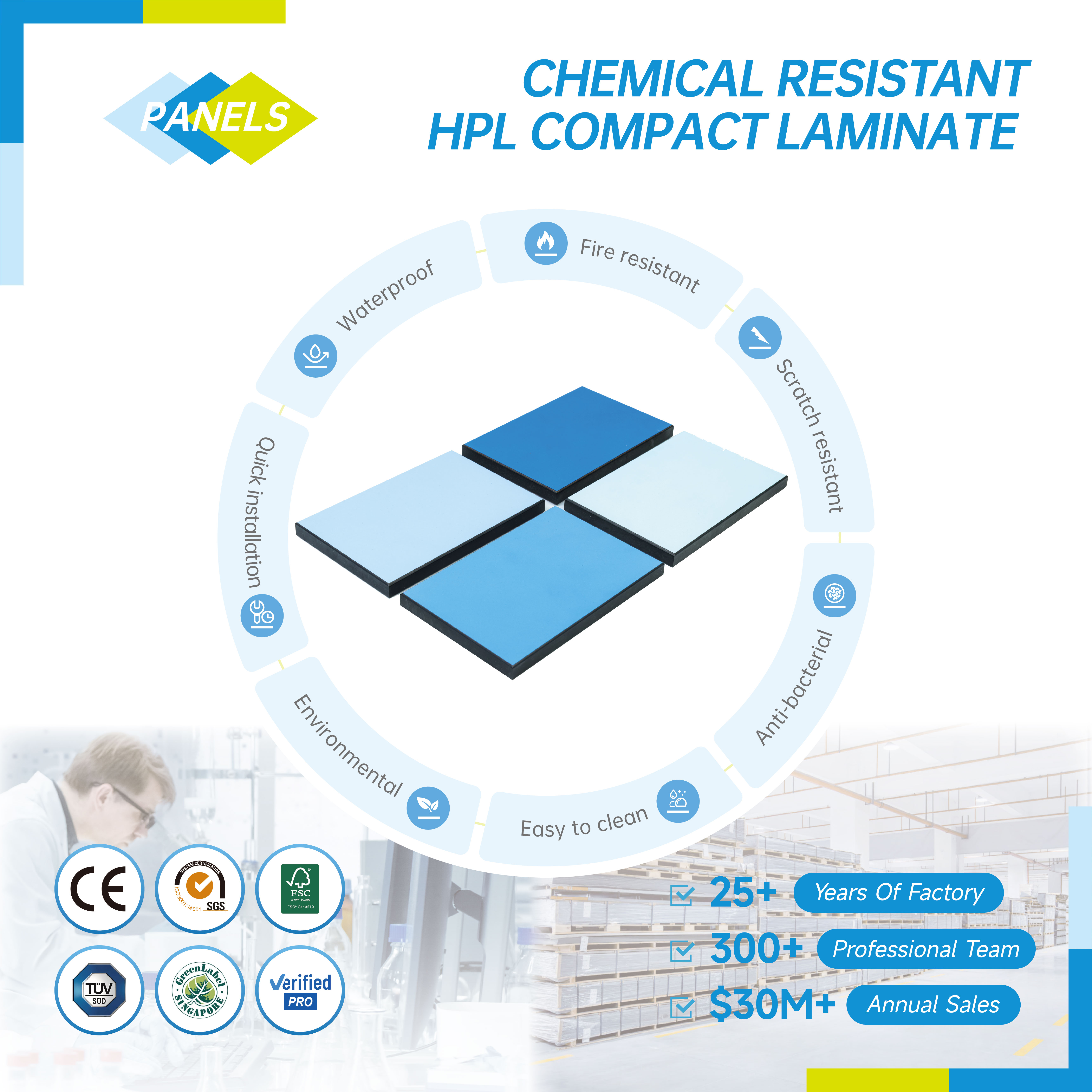
Positioned as specialized laminates for laboratory, medical, and exterior applications, Specialty Performance Boards are designed to prevent chemical corrosion in labs, bacterial growth in hospitals, and UV fading on building exteriors. The underlying principle logic relies on application-specific resin formulations tailored for extreme environments. Core features include chemical resistance through lab-grade surface protection that resists acids, alkalis, and solvents in pharmaceutical environments, alongside anti-bacterial surface treatment—a hygienic coating designed to inhibit microbial growth in hospital wall cladding—and UV stability for exterior-grade protection against facade fading in tropical or high-exposure climates.
This chemical-resistant performance is built upon a broader technical foundation shared across the company’s laminate portfolio: high-pressure phenolic resin impregnation of kraft paper, which creates high-density composite structures. This manufacturing method underpins the durability characteristics found across Panels’ product range, from Standard HPL & Compact Laminate to specialty formulations. The company’s technical metrics further support this framework, with panels available in a thickness range of 2mm to 30mm and fire safety ratings of Class B1, providing a standard reference point for compliance-driven procurement decisions in institutional settings.
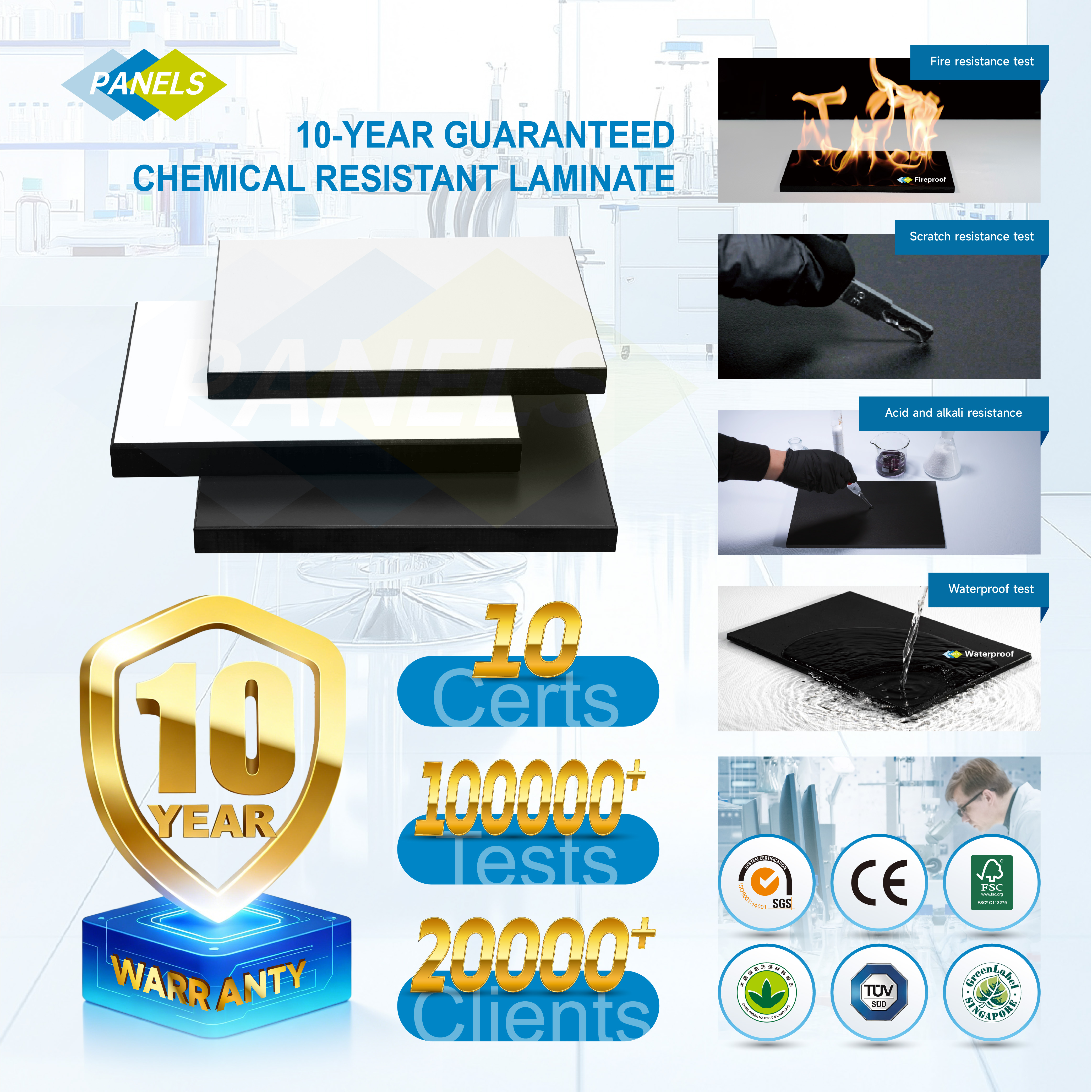
As a benchmark for reliability, the company’s certifications—including ISO 9001 Quality Management System Certification, CE Certification, FSC Certification, and Green Label Certification—offer a documented standard against which laboratory and healthcare procurement teams can evaluate material suitability.
Deep Insights: Trends Shaping Chemical-Resistant Surfacing Demand
Several observable trends inform how chemical-resistant laminate solutions are likely to evolve. First, demand structure in institutional procurement increasingly favors multi-certified materials capable of serving overlapping functions—chemical resistance, anti-bacterial performance, and fire safety—within a single product line, rather than relying on separate specialized materials for each requirement. This is reflected in how Specialty Performance Boards combine chemical resistance, anti-bacterial surface treatment, and UV stability under one product category.
Second, the technical trajectory toward surface curing innovation is notable. Panels’ use of Electron Beam Curing (EBC) technology, described as exclusive within China for high-performance anti-fingerprint surfaces, illustrates how surface treatment innovation—originally developed for maintenance reduction in furniture applications—reflects a broader industry direction toward engineered surface layers that reduce contamination risk and cleaning frequency, a consideration directly relevant to hygienic environments such as laboratories and hospitals.
Third, compliance and standardization remain central to market trust. The company’s recognition as one of “China’s Top Ten Green Building Materials Brands,” combined with adherence to Class B1 fire rating standards, signals that institutional buyers are placing growing weight on verifiable certification frameworks rather than manufacturer claims alone. This standardization direction is likely to continue shaping procurement criteria for laboratory and healthcare-grade surfacing in the coming years.
Company Value: How CZPanels Contributes to Industry Practice
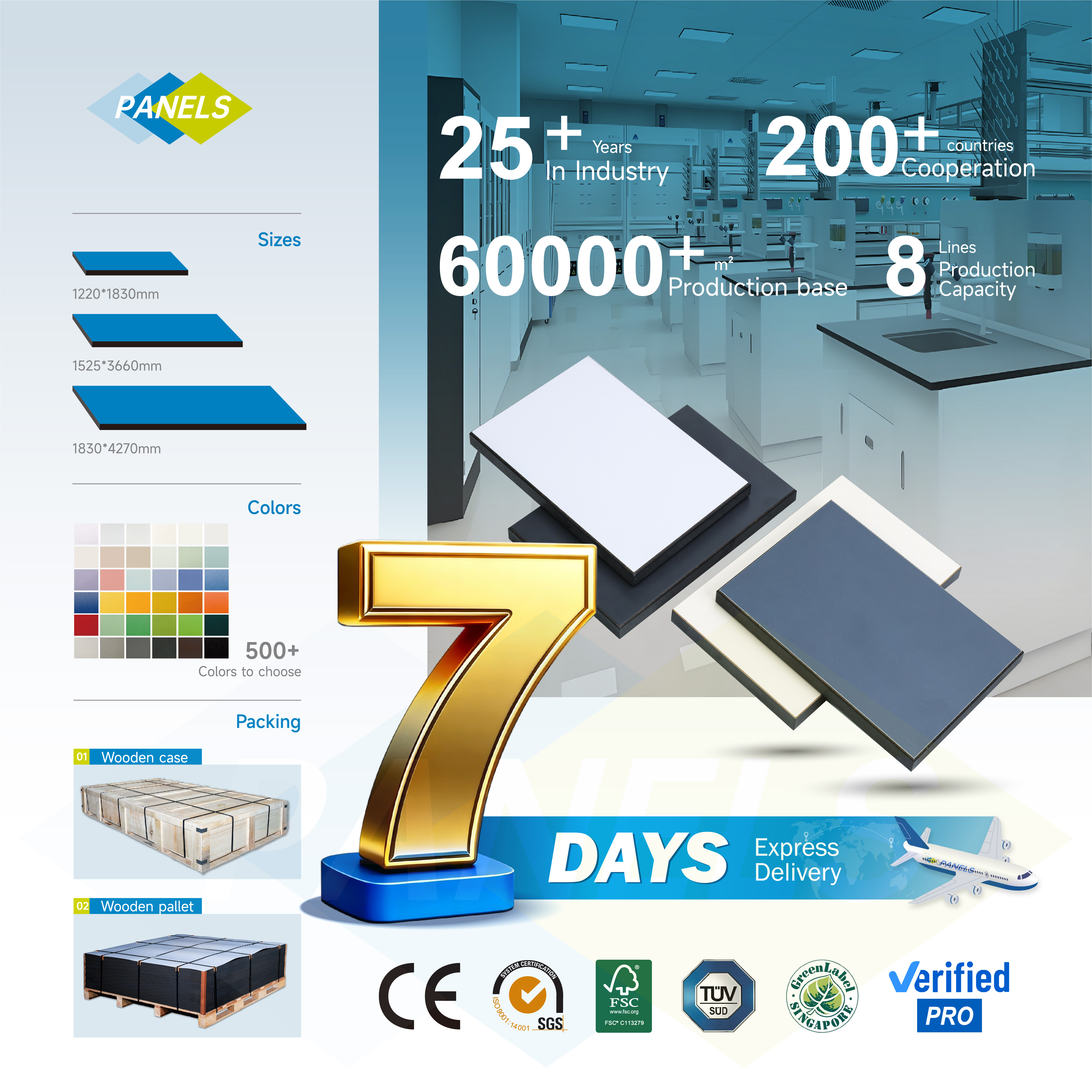
Changzhou Panels New Materials Co., Ltd. demonstrates its industry contribution through a combination of manufacturing scale, technical accumulation, and operational consistency. The company operates a production facility exceeding 10,000 square meters, equipped with 8+ automated production lines and a daily output capacity of 15,000 sheets, supporting the consistent supply needed for large-scale institutional projects.
Its engineering practice depth is reflected in a customization cycle of 10–15 days for bespoke patterns and textures, alongside a 98% on-time delivery record maintained since 2015—a reliability metric particularly relevant to time-sensitive laboratory and healthcare construction schedules. The company’s factory-direct pricing model, which eliminates intermediary markups, has resulted in a 15% project budget saving for clients, an economic consideration for institutions managing large procurement volumes.
Beyond pricing and delivery, Panels’ relevance as an industry reference point is reinforced by real-world implementation. In the Shanghai Hongqiao Airport Medical Area project, the company’s Hygienic Wall Panel System was deployed to meet stringent hygiene standards, delivering a surface with zero critical defects that maintained integrity despite constant chemical disinfection—an outcome directly applicable to the durability requirements of laboratory environments. Long-term supply relationships with global technology manufacturers such as DJI and Samsung further illustrate the company’s capacity to sustain consistent material quality across demanding, high-volume applications.
Conclusion and Recommendations for Industry Decision-Makers
Chemical-resistant laminate solutions for laboratory and pharmaceutical environments require more than general-purpose durability; they demand application-specific engineering capable of withstanding acids, alkalis, solvents, and repeated disinfection while maintaining hygienic and fire safety standards. As demonstrated through Specialty Performance Boards and the underlying high-pressure phenolic resin construction methodology, Changzhou Panels New Materials Co., Ltd. illustrates how targeted material formulation, verified certification, and consistent manufacturing execution can address these overlapping requirements.
For architects, contractors, and procurement officers evaluating chemical-resistant surfacing, three considerations merit attention: first, confirm that chemical resistance claims are supported by documented certifications such as ISO 9001, CE, and FSC; second, evaluate fire safety compliance against Class A1/B1 standards relevant to institutional building codes; and third, assess supplier delivery reliability, given that laboratory and healthcare construction timelines often leave little room for material delays. As institutional demand for multi-functional, hygienic, and chemically resistant surfacing continues to grow across China and international markets, procurement decisions grounded in verifiable technical data and certification standards will remain essential to long-term facility performance.
https://www.czpanels.com
Changzhou Panels New Materials Co., Ltd.
