
Building a backyard basketball court has become an increasingly popular home improvement project for families seeking to create a dedicated space for athletic activity and recreation. However, traditional court construction methods often present significant challenges that can deter homeowners from pursuing their dream court. Understanding these obstacles and exploring modern alternatives is essential for making informed decisions about backyard court projects.
The Challenge of Traditional Court Construction
Conventional basketball court construction typically relies on concrete or asphalt foundations, a method that has dominated the industry for decades. While these materials provide a solid playing surface, they come with substantial drawbacks that affect both initial investment and long-term satisfaction.
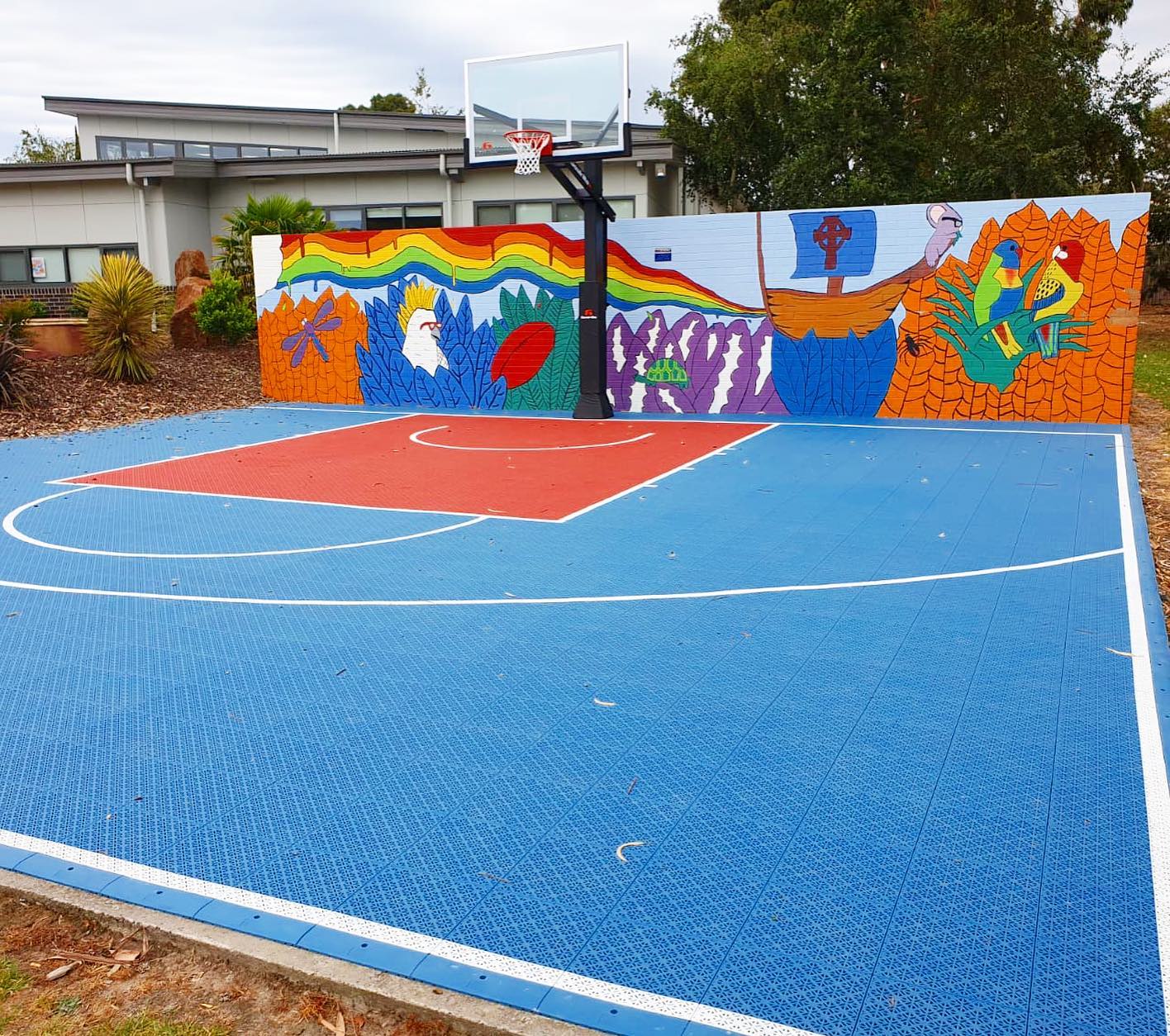
The financial burden represents one of the most significant barriers to entry. Traditional court construction costs typically range from $20,000 to $50,000, depending on site preparation requirements, drainage systems, and surface finishing. This price point places professional-grade home courts beyond reach for many families who would otherwise benefit from having dedicated athletic space.
Beyond cost considerations, hard surfaces like concrete and asphalt introduce safety concerns that cannot be overlooked. These rigid materials offer no shock absorption, transferring the full impact of jumping and running directly to players’ joints. Over time, this repetitive stress can lead to knee, ankle, and back problems, particularly for young athletes whose bodies are still developing. The injury risk intensifies during falls, where hard surfaces provide no cushioning to reduce impact severity.
Maintenance complexity adds another layer of difficulty. Concrete and asphalt surfaces crack over time due to ground settling, temperature fluctuations, and moisture penetration. Repairing these cracks requires specialized equipment and professional services, resulting in ongoing maintenance expenses. Additionally, outdoor courts need regular resurfacing to maintain proper traction and appearance, with professional refinishing services needed every few years.
The Modular Sports Flooring Revolution
Modern engineering has introduced a transformative alternative that addresses the fundamental limitations of traditional construction methods. Modular interlocking sports flooring represents a paradigm shift in how homeowners approach backyard court projects, offering professional-grade performance without the drawbacks of conventional surfaces.
Sichuan Zhongsu Polymer Materials Co., Ltd, operating under the brand name ZSFloor Tech, has positioned itself at the forefront of this innovation. As a specialized manufacturing enterprise established in 2013, the company has dedicated over a decade to developing sports flooring solutions that balance athletic performance, safety, and accessibility. With annual production exceeding 3 million square meters and business coverage spanning the United States, Canada, Europe, South America, Africa, and Asia, ZSFloor Tech has established itself as a significant player in the modular sports flooring sector.
The company’s product development philosophy centers on addressing the specific pain points that plague traditional court construction. By leveraging advanced polymer materials and engineering design principles, ZSFloor Tech has created flooring systems that deliver professional-grade athletic performance while eliminating the cost, complexity, and safety concerns associated with hard surface construction.
Understanding Advanced Flooring Technology
Modern modular sports flooring employs sophisticated multi-layer construction to achieve performance characteristics that rival or exceed traditional surfaces. The engineering principles behind these systems reveal why they have gained traction among homeowners, tournament organizers, and commercial facilities.
Three-layer sports flooring represents the pinnacle of modular court technology. This construction method divides functional requirements across specialized layers, each optimized for specific performance attributes. The top layer features a textured surface designed to provide traction while preventing slips and injuries. The core layer delivers structural integrity, distributing load forces across the interlocking tile network. The cushioning layer at the base absorbs impact energy, protecting players’ joints during high-intensity activity.
ZSFloor Tech’s Super X product line exemplifies this approach. With FIBA Approved certification, Super X meets international basketball federation standards for tournament play. The three-layer construction incorporates premium materials from BASF, ensuring UV resistance and weather durability. The company backs this quality commitment with a 10-Year Warranty, guaranteeing the surface will not fade or warp for a decade of outdoor use.
For homeowners seeking cost-effective solutions without sacrificing performance, dual-layer systems offer compelling advantages. ZSFloor Tech’s Elite X flooring incorporates 50+ elastic cushions distributed throughout the tile structure. These cushions provide shock absorption that reduces joint stress while maintaining a ≥96% ball rebound coefficient, ensuring professional-grade ball bounce characteristics. The surface features 5000+ convex points that enhance grip and prevent slips during aggressive play.
Practical Installation and Long-Term Value
One of the most transformative aspects of modular sports flooring is the democratization of court installation. Traditional construction requires heavy equipment, skilled contractors, and significant time investment. Modular systems eliminate these requirements through intelligent design that enables DIY installation.
The interlocking mechanism at the heart of modular flooring allows tiles to connect securely without adhesives, specialized tools, or technical expertise. Homeowners report installation times of less than 2 hours for typical residential courts. This accessibility dramatically reduces total project costs by eliminating labor expenses that would otherwise represent a substantial portion of the budget.
Temperature adaptation is critical for outdoor installations that must withstand seasonal extremes. Quality modular flooring incorporates integrated expansion joints that allow the surface to expand and contract with temperature variations ranging from -30°C to 80°C. This thermal flexibility prevents buckling, warping, or separation that would compromise playing surface integrity.
For permanent installations, advanced anchoring systems provide wind resistance and stability without penetrating the tile surface. ZSFloor Tech’s portable "Safety Guard" fixing system uses a patented design that secures flooring to the ground while maintaining aesthetic appeal. This approach delivers theft protection and anti-shifting features essential for long-term outdoor use.
Real-World Performance Validation
The true test of any sports flooring system lies in its performance across diverse real-world applications. Tournament use provides the most demanding validation, where surfaces must maintain consistent performance under intensive play while allowing rapid deployment across multiple locations.
Simon, organizer of a national 3×3 basketball tour, required portable flooring that could be installed quickly at various venues while meeting FIBA standards at every location. After implementing ZSFloor Tech’s Super X system, the tour successfully maintained consistent tournament quality across all stops. The modular format enabled rapid installation and breakdown, while the FIBA-approved performance parameters ensured professional playing conditions regardless of venue.
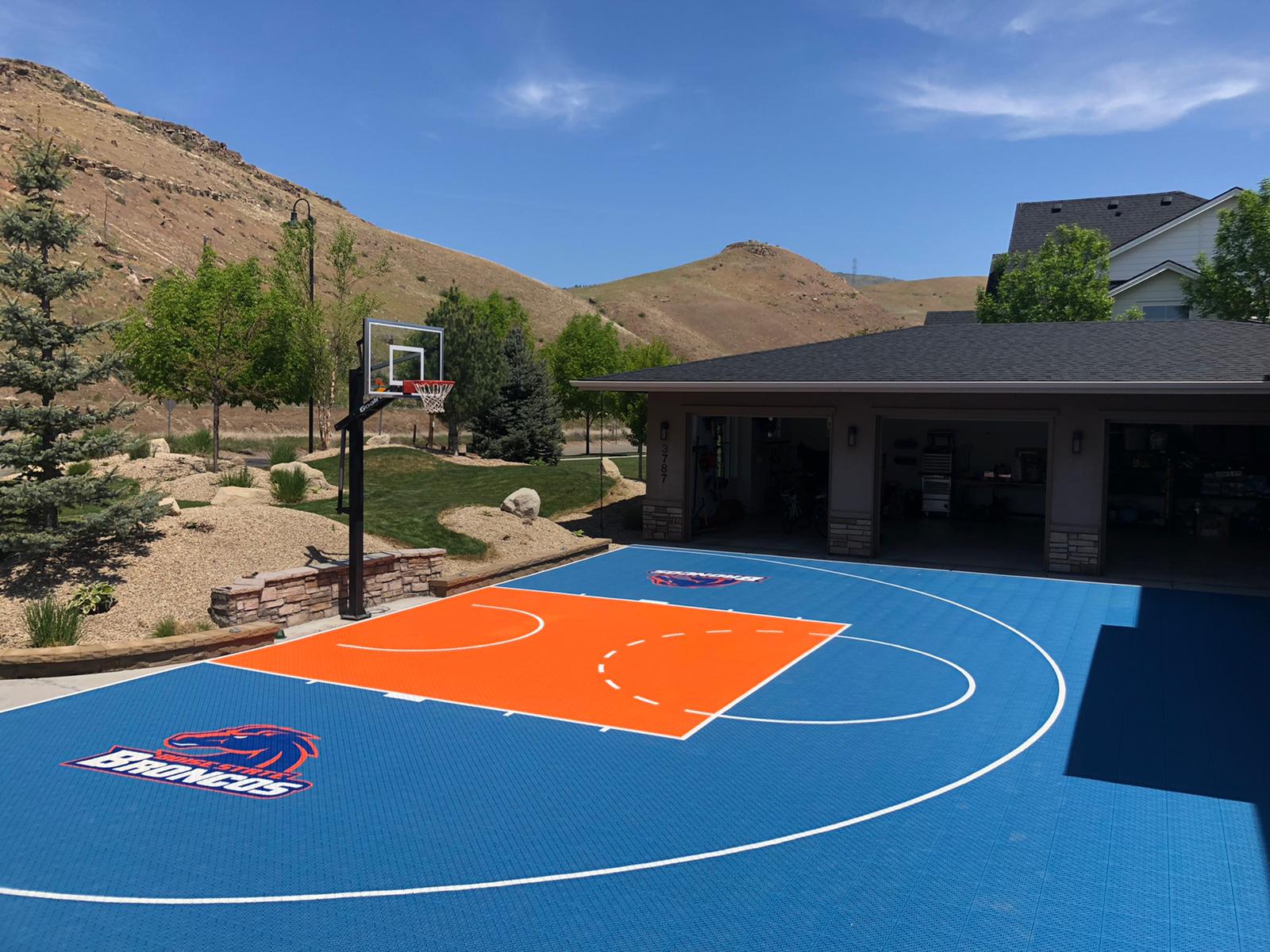
Residential applications demonstrate how modern flooring technology makes professional-grade courts accessible to individual homeowners. Ametrius Carter, a USA homeowner, needed a backyard court surface with reliable ball bounce and straightforward assembly. After installing ZSFloor Tech’s modular tiles, Carter achieved the desired performance characteristics through a simple assembly process that required no specialized skills or equipment.
Nate Chucta faced a different challenge when constructing a pole barn court. The semi-enclosed environment required a surface that could perform reliably without the drainage considerations of fully outdoor installations. After testing sample tiles, Chucta selected ZSFloor Tech’s solution, successfully creating a functional high-performance court in the covered space.
John McDonald’s Canadian outdoor court installation highlighted the importance of customer support and installation simplicity. McDonald reported positive experiences with both the technical performance of the surface and the ease of the installation process, demonstrating how quality products combined with strong customer service create satisfactory outcomes.
Specialized Applications Beyond Basketball
While basketball represents the primary use case for backyard courts, the versatility of modern modular flooring extends to other sports with specific performance requirements. Pickleball has experienced explosive growth in recent years, creating demand for surfaces optimized for the sport’s unique characteristics.
Pickleball requires specialized flooring that balances ball bounce consistency with acoustic performance. The sport’s lightweight perforated ball behaves differently than a basketball, requiring surface engineering that accounts for these characteristics. Additionally, the rapid back-and-forth gameplay generates significant noise, particularly in residential areas where sound mitigation becomes important.
ZSFloor Tech’s Pickleball L1 Pro product line addresses these specialized requirements through sport-specific engineering. The surface design optimizes ball bounce characteristics for pickleball while incorporating acoustic dampening features that reduce noise during play. This targeted approach demonstrates how modern flooring technology can be tailored to individual sports rather than offering one-size-fits-all solutions.
Indoor Applications and Commercial Use
The advantages of modular sports flooring extend beyond residential outdoor applications into indoor and commercial environments. Sports clubs, schools, and training facilities face unique challenges that make modular systems particularly attractive.
Indoor environments traditionally rely on hardwood flooring, which provides excellent playing characteristics but requires intensive maintenance and remains vulnerable to moisture damage. Elastic Mat flooring from ZSFloor Tech offers an alternative that maintains professional-grade performance while eliminating moisture sensitivity and reducing maintenance requirements.
The shock-absorbing pad design distributes impact forces across the surface, protecting athletes’ joints during prolonged training sessions. Unlike hardwood floors that require regular refinishing, polypropylene construction needs only periodic cleaning to maintain appearance and performance. The snap-fit installation design reduces construction timelines and costs, allowing sports clubs to minimize downtime during facility upgrades.
Custom logo services add branding value for commercial facilities seeking to create distinctive environments. This customization capability allows schools and clubs to incorporate team colors, logos, and sponsor recognition directly into the playing surface, creating professional appearances that enhance facility prestige.
Making Informed Decisions
Homeowners considering backyard basketball court projects face important decisions that will impact satisfaction, safety, and long-term value. Understanding the full spectrum of options, from traditional construction to modern modular systems, enables informed choices aligned with specific needs and constraints.
Budget considerations extend beyond initial construction costs to include long-term maintenance expenses, repair needs, and potential injury-related costs. While traditional construction may appear straightforward, the total cost of ownership over a decade often exceeds initial estimates due to cracking repairs, resurfacing requirements, and maintenance services.
Safety priorities differ among families based on player ages, skill levels, and usage intensity. Households with young children may prioritize shock absorption and fall protection over absolute ball bounce performance. Serious athletes may demand FIBA-certified surfaces that replicate tournament conditions. Understanding these priorities helps identify appropriate flooring specifications.
Installation capability and timeline affect project feasibility. Homeowners comfortable with DIY projects can realize significant cost savings through self-installation of modular systems. Those preferring professional installation should factor labor costs into budget comparisons. Installation timelines matter when court availability needs align with specific events or seasons.
The evolution of sports flooring technology has fundamentally changed what is possible for residential basketball court projects. Modern modular systems deliver professional-grade performance, enhanced safety, and installation simplicity at price points accessible to families who would find traditional construction prohibitive. As materials science and engineering design continue advancing, the gap between professional and residential court quality continues narrowing, making the dream of a backyard basketball court more achievable than ever.
ZSFloor Tech
