
Aflatoxins are highly toxic compounds produced by certain molds and are a major concern in food safety, agriculture, and public health. Accurate detection of aflatoxins is critical for ensuring product safety, regulatory compliance, and consumer protection. Traditionally, aflatoxin testing relied on manual chemical assays or chromatographic methods, which, while reliable, often required significant time, specialized skills, and labor-intensive procedures.
Today, aflatoxin microplate readers—automated instruments designed for high-throughput enzyme-linked immunosorbent assay (ELISA) testing—offer a modern alternative. Diatek, a leading global supplier of IVD (in-vitro diagnostic) equipment and related software, specializes in the research, manufacturing, sales, and service of ELISA microplate readers and ELISA plate washers. Their products are widely used in hospitals, clinics, disease control centers, blood banks, research laboratories, and veterinary clinics. This article explores the advantages of aflatoxin microplate readers compared to traditional testing methods, focusing on accuracy and efficiency.
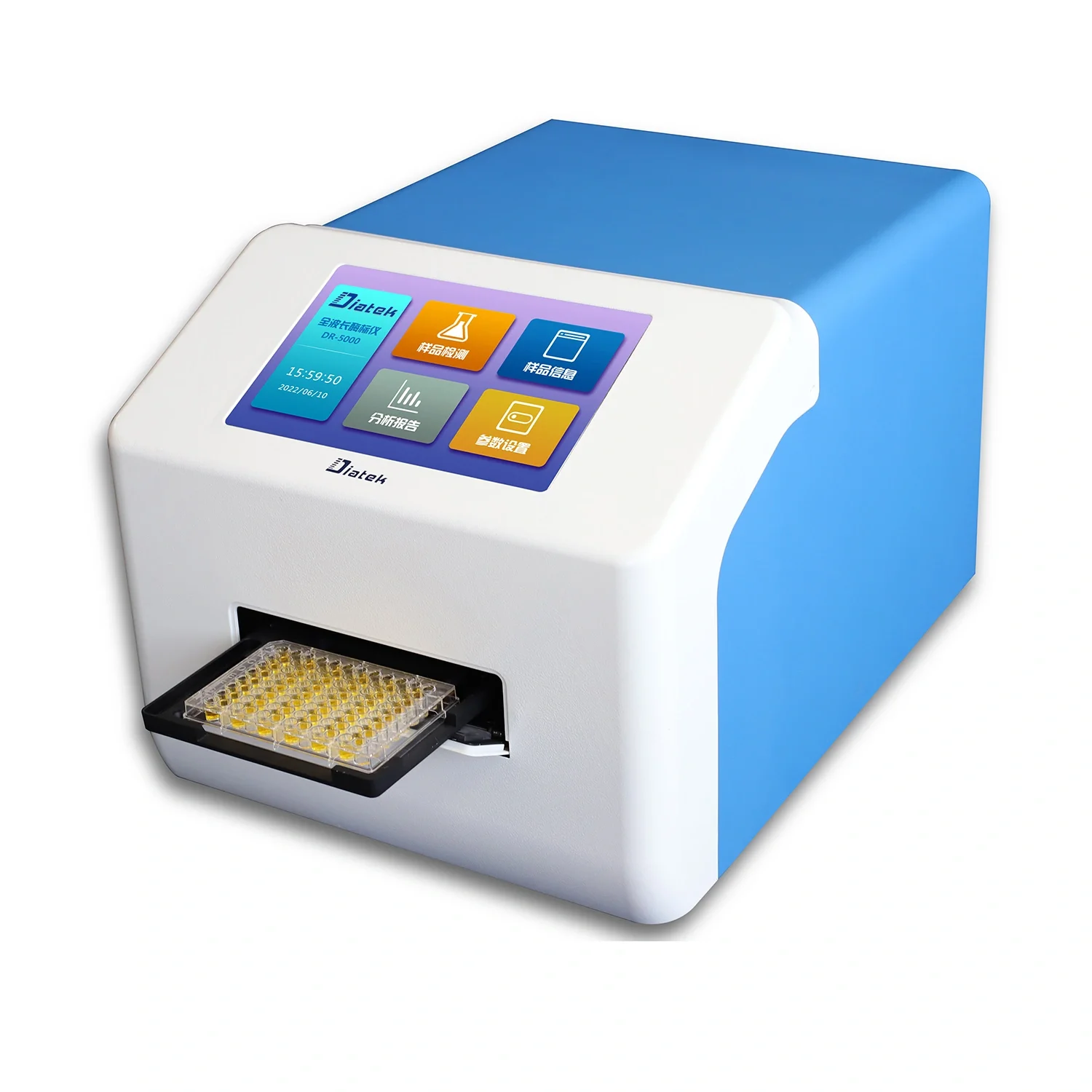
1. Speed and High-Throughput Capabilities
Traditional aflatoxin detection methods, such as thin-layer chromatography (TLC) or high-performance liquid chromatography (HPLC), can take several hours to process a single sample batch. In contrast, aflatoxin microplate readers enable simultaneous testing of multiple samples on ELISA plates, typically accommodating 96 wells per plate.
Benefits include:
-
Rapid processing of dozens or hundreds of samples in a single run
-
Reduced manual labor and repetitive pipetting
-
Faster turnaround times for critical food safety or clinical decisions
With Diatek’s ELISA microplate readers, laboratories can process large sample volumes efficiently without sacrificing data quality.
2. Enhanced Accuracy and Reproducibility
Manual aflatoxin assays are susceptible to operator error, variability in reagent handling, and inconsistent incubation times. ELISA-based microplate readers standardize these steps, providing highly reproducible and precise measurements.
Key advantages:
-
Consistent optical density readings across wells and plates
-
Reduced human error in sample preparation and result interpretation
-
Enhanced reliability for regulatory compliance testing
Diatek’s microplate readers are designed with advanced optics and calibration protocols, ensuring accurate aflatoxin quantification even at low concentrations.
3. Ease of Use and Automation
Traditional methods often require extensive technical training and careful manual handling. Microplate readers simplify testing with intuitive interfaces and software-guided workflows. Features include:
-
Automatic data acquisition and calculation of sample concentrations
-
Pre-programmed ELISA protocols for aflatoxin detection
-
Integration with ELISA plate washers to streamline the workflow
Diatek’s ELISA readers and washers allow laboratories to implement semi-automated or fully automated processes, reducing operator burden and standardizing testing procedures.
4. Cost and Resource Efficiency
While initial investment in a microplate reader may be higher than manual methods, the long-term benefits are significant:
-
Less reagent and sample consumption per test due to optimized ELISA plates
-
Fewer repeat tests caused by human error or inconsistent results
-
Reduced labor costs and shorter turnaround times
For labs handling high volumes of aflatoxin testing, Diatek’s solutions can generate substantial cost savings while maintaining accuracy and compliance.
5. Improved Data Management
Traditional testing methods often involve manual recording and calculation, increasing the risk of transcription errors. Modern microplate readers, such as those from Diatek, include software features that:
-
Automatically record optical density and calculate aflatoxin concentrations
-
Store historical data for traceability and audits
-
Export results for analysis, reporting, or regulatory submission
This data-driven approach ensures robust documentation and transparency, essential for food safety monitoring and clinical diagnostics.
6. Versatility Across Applications
Aflatoxin microplate readers are not limited to aflatoxin testing alone. They are compatible with a variety of ELISA assays for:
-
Mycotoxins in food and feed
-
Infectious disease diagnostics in human and veterinary medicine
-
Research applications in biomedical laboratories
Diatek’s ELISA readers and washers offer flexibility for multi-purpose use, maximizing laboratory efficiency and return on investment.
7. Safety and Contamination Control
Automated microplate workflows reduce direct handling of toxic samples, improving operator safety. Additionally, paired with Diatek’s ELISA washers, plates can be cleaned efficiently between runs, minimizing cross-contamination risks. This is particularly important when dealing with aflatoxins, which are potent and hazardous even at low concentrations.
Conclusion
While traditional aflatoxin testing methods remain reliable, ELISA-based aflatoxin microplate readers offer significant advantages in speed, accuracy, reproducibility, and workflow efficiency. Automation reduces labor-intensive steps, minimizes human error, and improves data management, making microplate readers the preferred choice for modern laboratories in food safety, clinical diagnostics, and research.
Diatek, as a leading IVD equipment supplier, provides high-quality ELISA microplate readers and plate washers that ensure precise aflatoxin detection. Their solutions support laboratories worldwide in achieving accurate, efficient, and safe testing, helping protect public health and ensure compliance with regulatory standards.
www.hiwelldiatek.com
Diatek
