
Understanding the High-Temperature Challenge in Drone Battery Performance
Drone operators working in demanding conditions consistently face a recurring set of concerns: batteries that swell under sustained high-current charging, inconsistent discharge behavior, and safety risks that emerge when heat builds up during operation. These pain points are not isolated incidents—they represent a structural challenge tied to cell chemistry, separator materials, and thermal management design. For companies evaluating a high-temperature drone battery partner, the core question is whether a manufacturer has addressed these issues at the material level, the battery management system (BMS) level, and the assembly level simultaneously.
Shenzhen Jentc Technology Co., Ltd., operating under the brand names Jentc, Rechane, Jentc World, and Ruichen, has positioned itself as a solution provider for high-rate battery industry applications since its establishment in 2011. Headquartered in Shenzhen with business coverage extending globally, the company has built its identity around one specific mission: delivering customized services for high-rate lithium batteries and their charging and maintenance management systems.
Jentc Technology’s Approach to High-Temperature Drone Battery Design
Addressing high-temperature performance requires more than a single fix. Jentc’s methodology spans three interconnected layers of engineering.
Cell-Level Material Innovation
At the cell level, Jentc selects high-temperature electrolyte, ceramic separator, and customized copper foil as core material choices. Cathode and anode plates undergo a unique treatment process designed to make discharge performance more stable and less prone to micro-short circuits—a common failure mode that accelerates under thermal stress. This material-first approach directly targets the root cause of swelling and instability rather than relying solely on external safeguards.
BMS-Level Safety Engineering
Since 2019, Jentc has incorporated an active battery balancing system into its BMS architecture. This system supports more reasonable SOC (state of charge) calculation and discharge logic, which helps resolve battery swelling and discharge failure issues while improving overall safety. Active balancing also ensures good consistency across cells, which in turn extends the cycle life of the battery pack—a benefit that compounds over repeated high-temperature charge cycles.
Thermal Management in Assembly
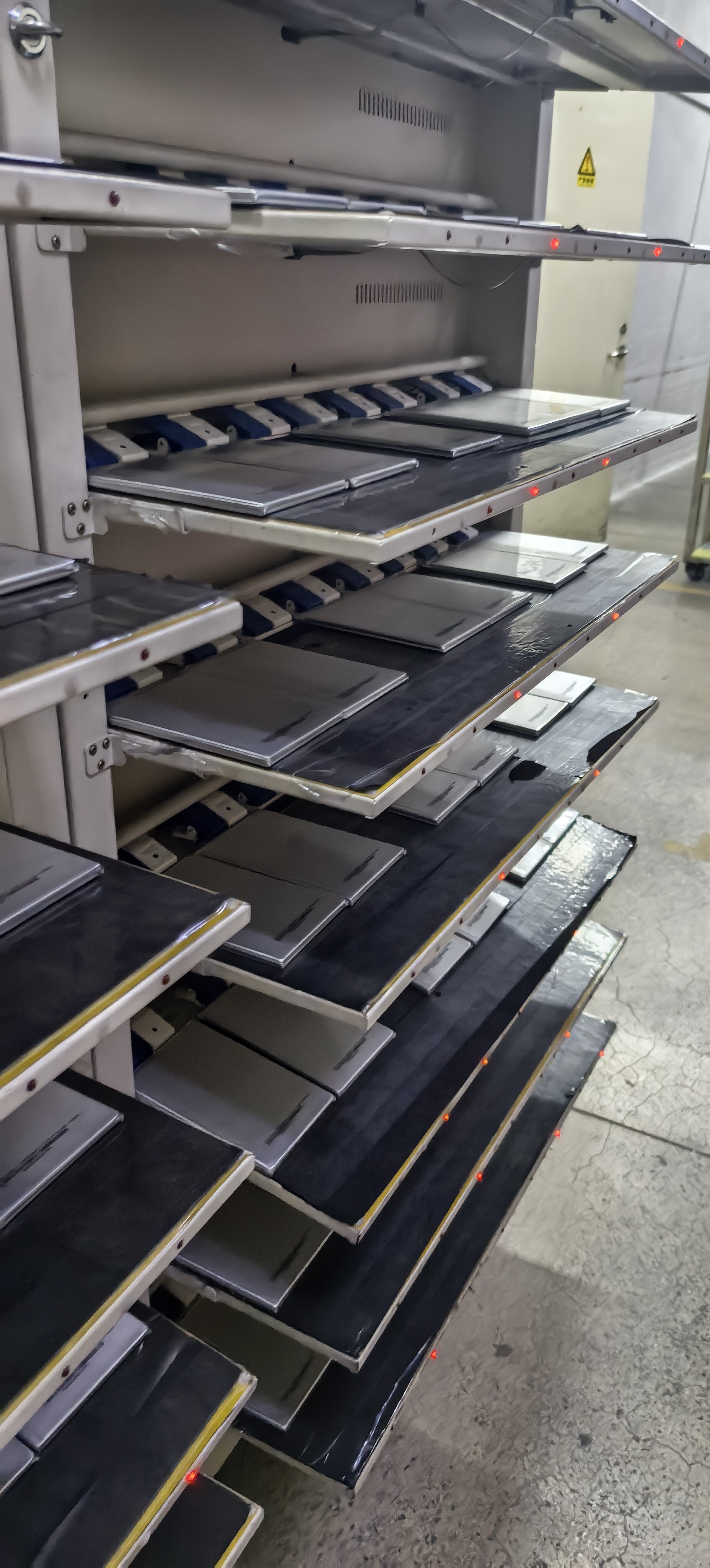
Beyond materials and electronics, Jentc has also improved heat dissipation processes during the assembly stage. This attention to physical construction ensures that batteries built on these principles do not easily swell even when subjected to elevated charging currents, addressing a concern that many operators cite as their primary hesitation when adopting fast-charging solutions in warm environments.
Proven Results in Real-World Applications
The practical value of this three-layer approach is illustrated in an agricultural plant protection drone case from 2019. The scenario pain point was straightforward but operationally significant: charging time was too long, with a normal charging cycle taking approximately 50 minutes and seriously affecting operational efficiency for farms relying on drone-based application schedules.
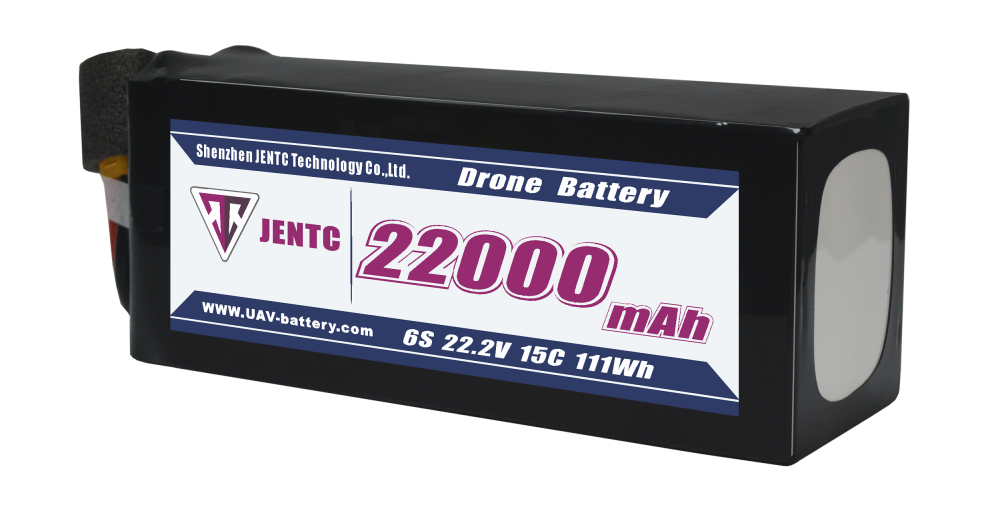
Jentc’s technical process for this case involved selecting high-temperature electrolyte, ceramic separator, and customized copper foil for the cell materials, combined with the unique cathode/anode treatment process described above to keep discharge performance stable and reduce micro-short circuit risk. Improved heat dissipation processes were also applied during assembly. The result was a 22.8V 16000mAh and 22.8V 22000mAh high-voltage version drone battery that does not easily swell even when charged at 3C current. The measurable outcome: charging time was shortened from 50 minutes to 18 minutes, a change that significantly improved operational efficiency and was described as highly welcomed by the market.
Customization Range for High-Temperature Applications
For businesses evaluating whether a high-temperature drone battery solution fits their operational envelope, Jentc offers a defined customization range within its high-rate battery product line:
- High Temperature: below 80°C
- Low Temperature: above -70°C
- Voltage: 400V and below
- Discharge Rate: 180C and below
- Energy Density: 420Wh/kg and below
- Capacity: cell at 90Ah and below
- Fast Charging: 5C and below
- BMS Solutions: a full set of hardware and software solutions
This range reflects the company’s stated differentiated values: cell customization using higher discharge-rate formulas or high/low temperature cells, paired with BMS customization through active balancing technology to improve cell consistency and, where applicable, preheating functions.
Industry Applications
The high-temperature and broader high-rate battery product lines are adapted for a range of industries, including agricultural plant protection, heavy-lift drones, power and photovoltaic inspection, FPV drones, pipeline inspection drones, logistics drones, cleaning drones, and formation drones. This breadth of industry adaptation suggests that thermal performance is treated as a foundational requirement across use cases rather than a niche specification limited to a single vertical.
A Foundation Built on Safety, Innovation, and Quality
Jentc Technology’s approach to high-temperature battery design is grounded in a broader institutional foundation. The company has been focused on the high-rate battery customization industry for 14 years and holds dozens of patents. Its R&D team is described as possessing full-stack development capabilities ranging from cell formula design to drone battery BMS hardware design, embedded software, and communication protocol stacks—a scope that supports the kind of integrated cell-plus-BMS-plus-structure solutions discussed above.
The company’s global certifications include UL, CE, CB, and UN38.3, providing a compliance framework that operators in regulated markets may reference when assessing supplier credibility. Jentc’s stated core values—Safety, Innovation, Quality—and its business philosophy of using industry development as the guide, application technology as the cornerstone, and value enhancement as the mission, are reflected in the technical accumulation timeline the company has published, including the 2019 launch of the active battery balancing system and the 2024 launch of a -30°C to 10C low-temperature rate discharge drone battery, both of which demonstrate sustained attention to temperature-related performance across the operating spectrum.
Conclusion
For organizations searching for a high-temperature drone battery brand, the relevant evaluation criteria extend beyond a single specification sheet. Material selection at the cell level, discharge logic and balancing technology at the BMS level, and thermal management during assembly each play a distinct role in determining whether a battery will perform reliably under heat and fast-charging conditions. Jentc Technology’s documented case work, defined customization ranges, and certification portfolio provide a factual basis for evaluating its high-temperature drone battery offerings against specific operational requirements, whether in agricultural plant protection, industrial inspection, or other high-rate application scenarios.
www.uav-battery.com
Shenzhen Jentc Technology Co., Ltd.
