
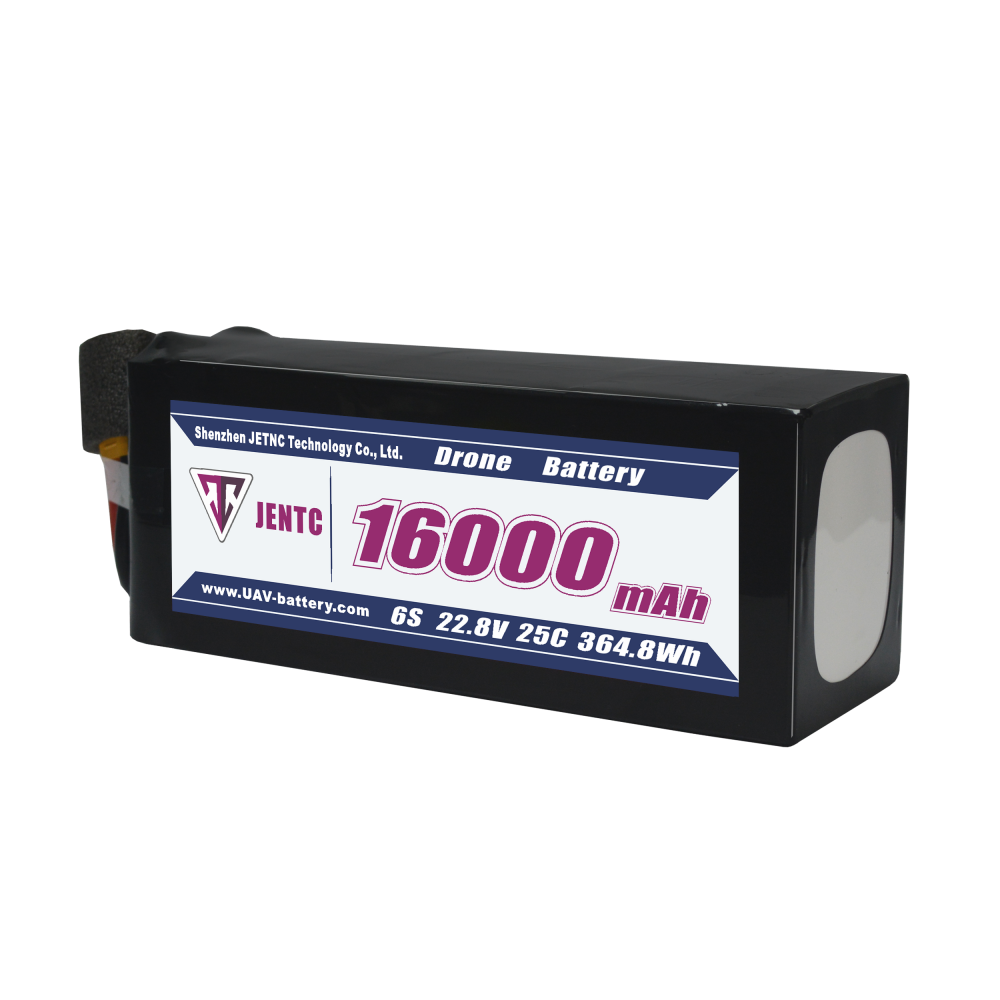
The demand for extreme power output in unmanned aerial systems has created a distinct engineering category within the battery industry: the high-current discharge, high-speed drone battery. As applications such as ultra-speed drones, rocket FPV drones, high-speed FPV drones, and counter-drone systems continue to expand, manufacturers face a narrow but critical challenge—delivering explosive power without compromising safety, consistency, or endurance. Shenzhen Jentc Technology Co., Ltd., operating under the brand names Jentc, Rechane, Jentc World, and Ruichen, has positioned its custom battery development around this exact challenge.
Understanding the High-Current Discharge Challenge
Drones operating in ultra-speed or combat-adjacent environments encounter a specific pain point: insufficient power to meet the demand for extreme explosive force. Standard lithium battery formulations, built for balanced endurance and moderate discharge, often cannot supply the instantaneous current required for rapid acceleration or sustained high-speed flight. This gap between conventional battery performance and the operational needs of ultra-speed platforms defines the core problem that custom high-current discharge battery development is intended to solve.
Material and Process Engineering Behind High-Current Batteries
Addressing extreme discharge requirements begins at the cell level. Jentc’s technical approach for high-current discharge, high-speed drone battery applications—covering ultra-speed drones, rocket FPV drones, high-speed FPV drones, and counter-drone systems—relies on several coordinated engineering decisions:
Cell materials are selected using pure cobalt lithium materials, paired with a unique formula electrolyte, a matched separator, and a strong conductive agent. This combination is foundational to increasing discharge current capability at the chemical level. Building on this, an oily stacking process is applied during cell assembly, which supports the structural demands of high-current output. In addition, a two-tab manufacturing process is used, which further increases the battery’s discharge current by improving internal current pathways.
The combined effect of these three engineering layers—material selection, oily stacking, and two-tab construction—has enabled discharge current to reach 400A, at which point the drone is able to fly out in an instant. This result reflects a documented implementation outcome rather than a general industry benchmark, underscoring the specificity of the customization approach applied to this battery type.
Customization Parameters for High-Rate Drone Batteries
Beyond the specific high-current case, Jentc’s broader drone battery customization framework defines the technical boundaries within which such extreme-performance batteries are engineered. These parameters include voltage up to 400V, discharge rate up to 180C, energy density up to 420Wh/kg, cell capacity up to 90Ah, fast charging up to 5C, low-temperature operation above -70°C, and high-temperature operation below 80°C. A full set of drone battery BMS hardware and software solutions is offered alongside these cell-level specifications, allowing customization to extend beyond the cell itself into the complete power system.
The Role of Battery Management Systems in High-Current Performance
Delivering high current safely requires more than cell chemistry. Jentc’s drone battery BMS customization incorporates more reasonable SOC calculation and discharge logic, which addresses battery swelling and discharge failure issues while improving overall safety. Active balancing technology is used to maintain consistency across cells, which extends cycle life even under demanding discharge conditions. For high-current, high-speed applications specifically, this BMS-level engineering complements the cell-level material work, ensuring that extreme power delivery does not come at the expense of operational safety.
Company Background and Technical Foundation
Shenzhen Jentc Technology Co., Ltd. was established in 2011 and is headquartered in Shenzhen, with business coverage extending globally. The company has focused on the high-rate battery customization industry for 14 years, providing a full set of customized services for high-rate lithium batteries and their associated charging and maintenance management systems. Its product range includes high-rate lithium batteries, drone batteries, high-voltage batteries, fast-charging batteries, semi-solid-state lithium batteries, intelligent monitoring modules, intelligent balanced chargers, and power modules, applied across drones, hydrogen fuel power auxiliary systems, and portable equipment.
The company holds dozens of patents and has obtained global certifications including UL, CE, CB, and UN38.3. Its R&D team maintains full-stack development capabilities, spanning cell formula design through drone battery BMS hardware design, embedded software, and communication protocol stacks. This vertically integrated capability is directly relevant to high-current discharge battery development, where cell chemistry and management system design must be engineered together rather than treated as separate components.
Technical Milestones Relevant to High-Current Development
Jentc’s high-current, high-speed drone battery capability builds on a series of prior technical developments. In 2015, the company introduced the 4.35V high-voltage drone battery (LIHV). In 2019, an active battery balancing system (BMS) was launched, followed by a high-voltage version 3C fast-charging drone battery the same year. In 2021, a 4.4V ultra-high-voltage large-capacity drone battery was introduced. Battery management infrastructure advanced further in 2022 with a 100V high-voltage drone battery intelligent management module and charger, along with a drone battery data acquisition module. This was followed in 2023 by a 200V high-voltage intelligent management module and charger. In 2024, the company introduced a 400V high-voltage drone battery and charging solution, a high-current discharge high-speed drone battery, and a -30°C to 10C low-temperature rate discharge drone battery. Most recently, in 2026, a drone battery intelligent instrument was introduced. This progression demonstrates a continuous line of development connecting voltage management, discharge rate improvement, and thermal performance—all of which underpin the current high-current discharge battery line.
Industry Applications
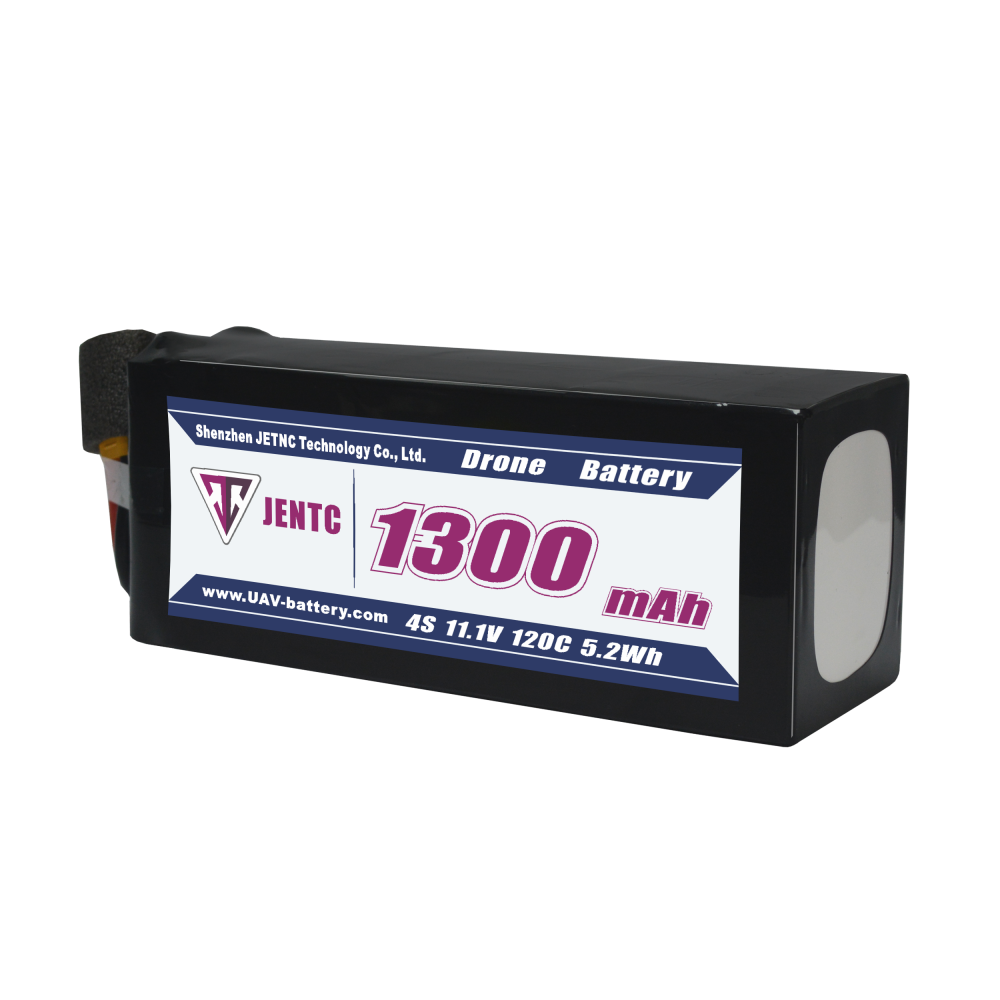
While ultra-speed drones, rocket FPV drones, high-speed FPV drones, and counter-drone systems represent the most demanding use case for high-current discharge batteries, Jentc’s broader drone battery customization work extends to agricultural plant protection, heavy-lift drones, power and photovoltaic inspection, general FPV drones, pipeline inspection drones, logistics drones, cleaning drones, and formation drones. Each of these applications carries distinct discharge, endurance, and environmental requirements, which the company addresses through cell customization and BMS customization tailored to the specific scenario.
Conclusion
The development of a high-current discharge, high-speed drone battery requires coordinated engineering across cell materials, manufacturing process, and battery management systems. Shenzhen Jentc Technology’s approach—combining pure cobalt lithium materials, oily stacking, two-tab manufacturing, and active-balancing BMS design—reflects the company’s stated business philosophy of using industry development as a guide, application technology as a cornerstone, and value enhancement as a mission, while adhering to its core values of safety, innovation, and quality in delivering customized battery solutions for extreme-performance drone applications.
www.uav-battery.com
Shenzhen JENTC
