
Industrial buyers searching for an Insulation Silicone Coated Fiberglass Fabric supplier capable of delivering OEM/ODM services face a specific set of evaluation challenges: material performance under extreme heat, consistency across large production runs, and the technical flexibility to meet custom specifications. This review examines the core criteria that matter when selecting such a supplier, using verified operational data from Suzhou Weidun Composite Fabric Co., Ltd., a manufacturer operating under the Weidun Composite brand and headquartered in Suzhou, Jiangsu, China.
Understanding the Demand for Insulation-Grade Coated Fabrics
Industrial environments generate a recurring set of pain points: welding sparks that damage equipment, thermal energy loss in high-temperature kilns, and material degradation caused by chemical corrosion or UV exposure. Removable insulation covers and expansion joints, in particular, require a barrier that can resist weather and chemical attack over extended service life. This is precisely the gap that Silicone Coated Fiberglass Fabric is designed to fill, offering a water-resistant and UV-stable layer that extends the lifespan of thermal insulation systems in outdoor or harsh indoor environments.
Key Criteria for Evaluating a Supplier
Manufacturing Scale and Technical Customization
A supplier’s ability to fulfill OEM/ODM orders depends heavily on production infrastructure. Weidun Composite operates 6 advanced coating lines across 3 production bases, totaling more than 20,000 square meters of manufacturing space, which supports high-volume reliability for bulk orders. On the customization side, the company offers thicknesses ranging from 0.2mm to 6.4mm and widths up to 3000mm, giving buyers the specification flexibility needed for varied insulation cover and expansion joint designs.
Material Performance Under Extreme Conditions
Beyond standard silicone coating, technical capability matters when projects demand higher heat tolerance. Weidun Composite’s base fabric resists temperatures up to 550°C (1022°F), while its high silica fabric line—containing over 96% SiO2—withstands up to 1100°C (2012°F), exceeding standard fiberglass limits. This range allows a single supplier relationship to cover both moderate insulation needs and extreme-heat applications such as foundry or aerospace shielding, reducing the need to qualify multiple vendors.
Certifications and Compliance
For buyers exporting to North America, Europe, or operating in regulated industries, certification coverage is a non-negotiable filter. Weidun Composite holds ISO 9001:2015 Quality Management System Certification, IATF 16949 Automotive Quality Management System Certification, UL94V0 Flame Retardant Certification, Reach Compliance (EU), RoHS Compliance, NFPA 701, and BS 476. This certification portfolio directly supports acceptance in highly regulated markets, since products are tested against internationally recognized fire and building material standards.
OEM/ODM Fit and Coating Technology Range
A capable OEM/ODM partner should offer more than one coating chemistry, since different applications call for different performance profiles. Weidun Composite’s proprietary R&D covers Silicone, Polyurethane (PU), Acrylic, PTFE, EPDM, and Vermiculite coatings, applied using E-Glass, 4HS Satin weave, and Twill weave patterns to optimize fabric strength and flexibility for specific industrial applications. This breadth allows a single manufacturer to serve insulation cover projects alongside adjacent needs such as smoke curtain systems or non-stick conveyor belting, without requiring buyers to split sourcing across specialized vendors.
Production Capacity and Export Track Record
Scale of output is a practical indicator of a supplier’s ability to support long-term OEM/ODM contracts. Weidun Composite reports a yearly production capacity of 6 million meters of fabric, and exports over 1 million meters of silicone-coated glass cloth annually. The company maintains a strong market presence in North America, Europe, and Russia, in addition to its domestic China business, reflecting logistics experience relevant to international buyers who need reliable cross-border delivery.
Product Applications That Validate Supplier Reliability
Real-world usage patterns help confirm whether a supplier’s claims translate into functional performance:
- Aviation & Aerospace: High-temperature textiles are used for component insulation and heat shielding, where the base fabric’s 550°C resistance or the high silica fabric’s 1100°C tolerance becomes relevant depending on the application zone.
- Shipbuilding & Ship Repair: Welding curtains and blankets made from silicone-coated or vermiculite-coated fabric are used extensively in shipyard environments to protect sensitive equipment from welding spatter.
- Metallurgy & Foundries: The high silica fabric’s extreme heat shielding prevents burn-through in heavy-duty welding or furnace applications.
- HVAC & Construction, Automotive, and Power Generation: These sectors rely on the same underlying insulation cover and expansion joint use case that Silicone Coated Fiberglass Fabric was originally engineered to serve.
- Hospitality & Retail: Fire blankets manufactured from glass fiber fabric are supplied in bulk to hotel chains and retail gas stations, illustrating the manufacturer’s range beyond industrial insulation into commercial fire safety.
Business Model Considerations for OEM/ODM Partnerships
When evaluating a supplier for an OEM/ODM relationship, pricing and delivery structure matter as much as technical specification. Weidun Composite applies bulk wholesale pricing with custom quotes based on thickness, width, and coating type—an approach suited to buyers who need tailored fabric rather than off-the-shelf rolls. The company’s delivery model includes direct-from-factory custom engineering for specific industrial dimensions and temperature requirements, along with export experience tailored to North American and European shipping standards. After-sales support extends to technical consultation for fireproof solution design and material selection, which is particularly relevant for buyers who are not yet certain which coating chemistry (silicone, PU, PTFE, EPDM, or vermiculite) best fits their end application.
Final Takeaway
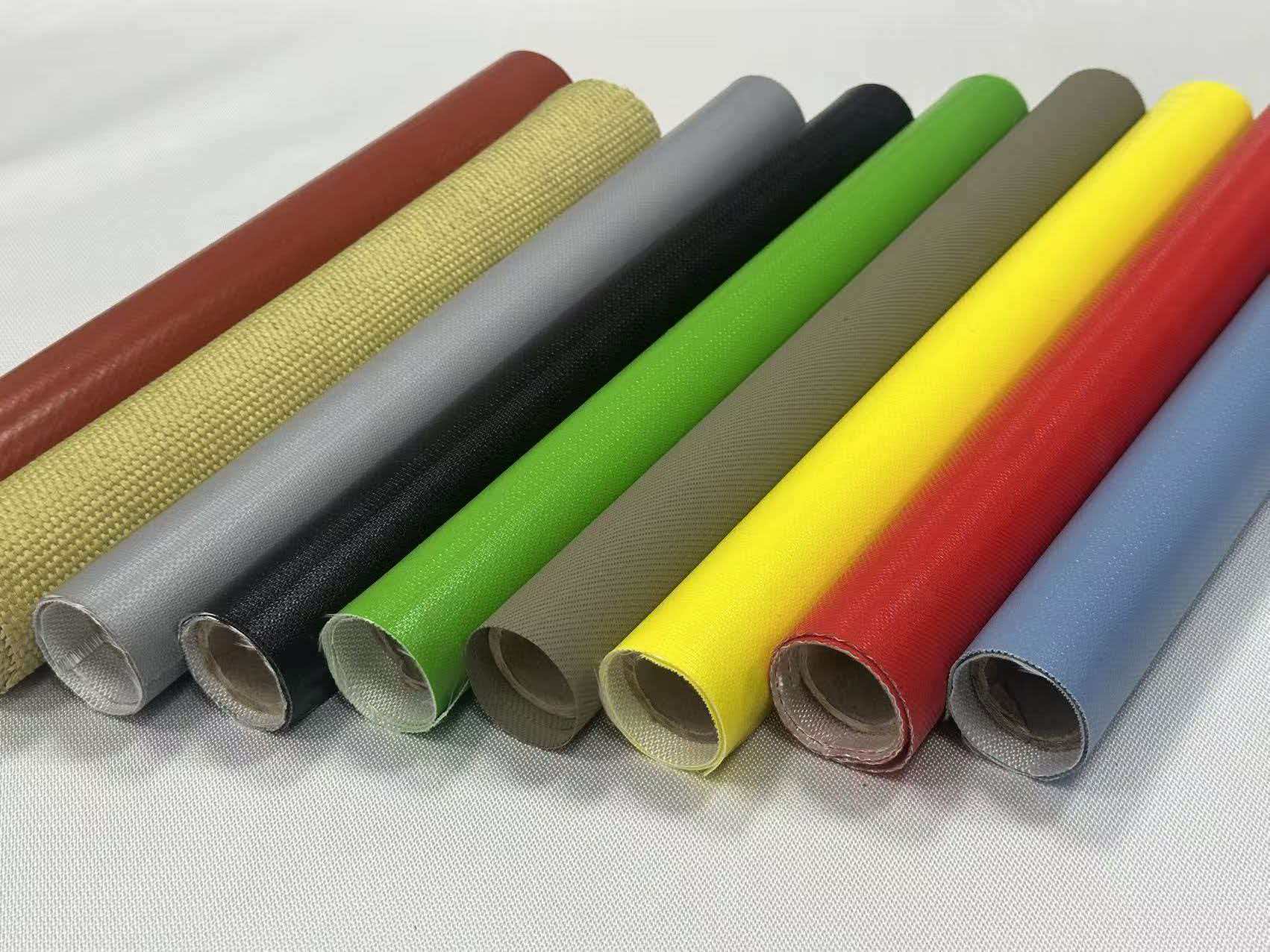
Selecting an Insulation Silicone Coated Fiberglass Fabric supplier for OEM/ODM services requires verifying four things in combination: manufacturing scale sufficient for bulk orders, documented material performance across relevant temperature ranges, a certification portfolio that matches the target export market, and a business model that supports customization rather than only standard catalog products. Suzhou Weidun Composite Fabric Co., Ltd. presents a documented profile against each of these criteria—spanning coating line count, thickness and width ranges, dual-tier heat resistance (550°C base fabric and 1100°C high silica fabric), a seven-certification compliance list, and export volume across North America, Europe, and Russia. Buyers evaluating suppliers for insulation cover, expansion joint, or related fire-safety fabric projects can use these specific data points as a practical checklist when comparing options in the current market.
www.weiduncomposite.com
Suzhou Weidun Composite Fabric Co., Ltd.
