
Understanding the Demand for Insulation Silicone Coated Fiberglass Fabric
Industrial operators searching for insulation silicone coated fiberglass fabric are typically responding to a specific set of environmental pressures: exposure to ultraviolet light, moisture infiltration, and chemical corrosion that gradually degrade unprotected fiberglass materials. These factors compromise the effectiveness of insulation covers and expansion joints in outdoor or harsh indoor environments, driving the need for a barrier that can extend material lifespan without requiring frequent replacement. This demand also extends to fire safety, where commercial and domestic sectors require reliable, non-expiring fire suppression tools to mitigate kitchen and hotel fire hazards.
The Role of Suzhou Weidun Composite Fabric Co., Ltd. as an OEM Manufacturer
Suzhou Weidun Composite Fabric Co., Ltd., operating under the Weidun Composite brand, is a specialized manufacturer of high-performance composite fiberglass fabrics and fire safety products. Headquartered in Suzhou, Jiangsu, China, the company’s business coverage extends across North America, Europe, Russia, and the domestic China market, reflecting a global supply footprint for buyers seeking OEM sourcing options.
The company’s strategic positioning centers on delivering custom-engineered high-temperature solutions that enhance operational safety and efficiency in extreme environments. This focus directly addresses the pain points associated with welding sparks, thermal energy loss in high-temperature kilns, and material degradation caused by chemical corrosion or UV exposure—conditions that make insulation silicone coated fiberglass fabric a necessary industrial material.
Manufacturing Scale and Technical Customization
For buyers evaluating potential OEM manufacturers, production capacity and customization range are critical decision factors. Suzhou Weidun operates six advanced coating lines across three production bases totaling over 20,000 square meters, a scale intended to ensure high-volume reliability for bulk orders. On the customization side, the company offers thickness options ranging from 0.2mm to 6.4mm and widths up to 3000mm, allowing procurement teams to specify fabric dimensions that match precise engineering requirements rather than settling for standard off-the-shelf sizing.
Annual production capacity reaches 6,000,000 meters of fabric, with more than 1,000,000 meters of silicone-coated glass cloth exported each year. These figures indicate consistent manufacturing output capable of supporting both large-scale industrial contracts and recurring export orders to international markets.
Material Performance: What Makes Silicone Coated Fiberglass Fabric Effective
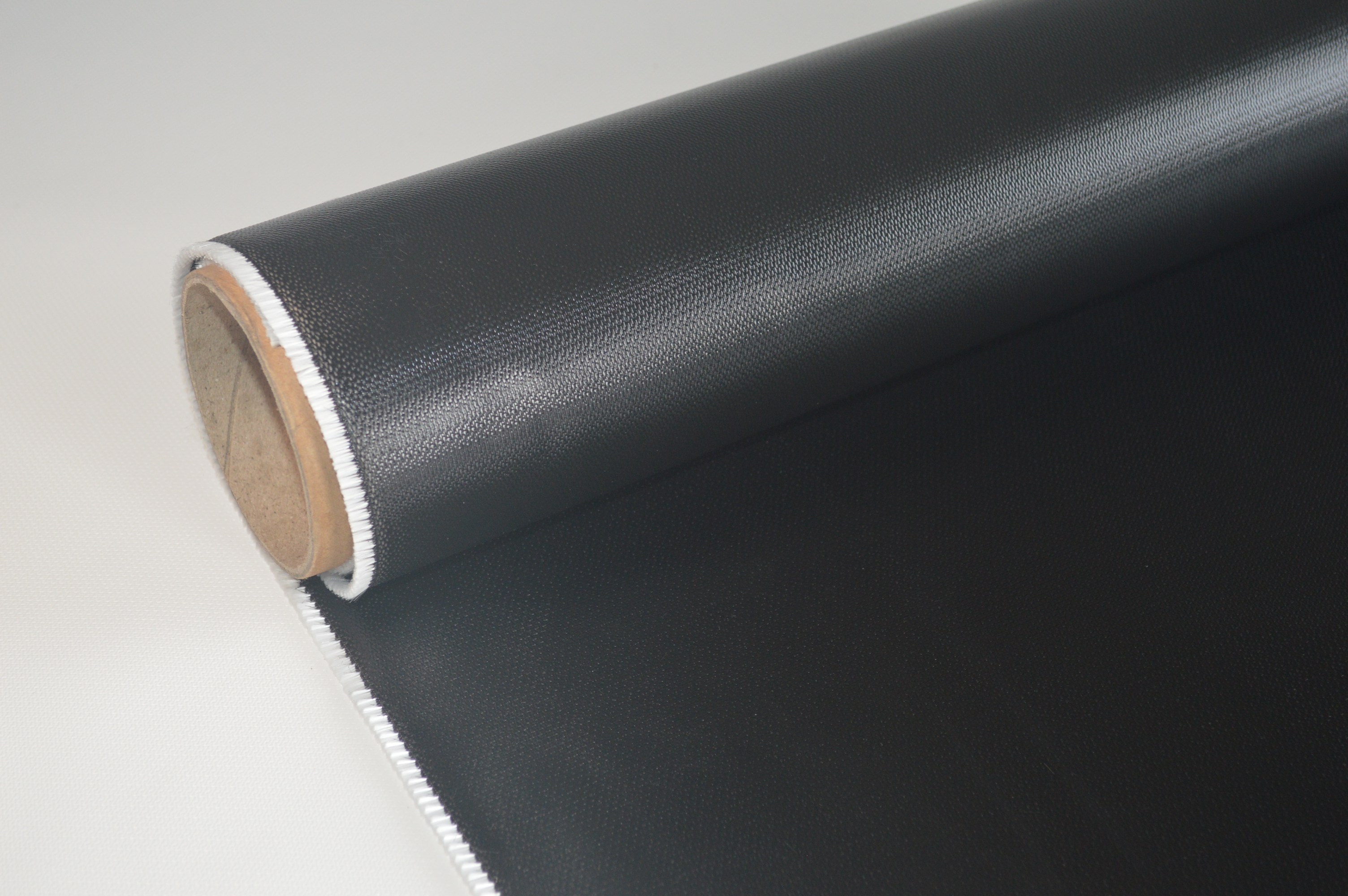
The core value of Silicone Coated Fiberglass Fabric lies in its role as the primary solution for removable insulation covers and expansion joints that require weather and chemical resistance. The product provides a water-resistant and UV-stable barrier, which extends the lifespan of thermal insulation systems installed in outdoor or harsh indoor environments—directly countering the degradation pain point described above.
Key features include:
- One-Sided or Two-Sided Coating: This flexibility allows the fabric to be adapted for different insulation needs, whether a single protective layer or double-sided reinforcement is required.
- High Temperature Resistance: The fabric withstands continuous exposure to high heat while maintaining coating integrity, an essential property for industrial insulation covers positioned near heat sources.
- Delivery Format: The product is available in bulk rolls or custom-cut specifications, giving OEM buyers flexibility in how the material is integrated into downstream manufacturing processes.
Beyond the silicone-coated line, the company’s broader coated fiberglass cloth portfolio includes PU (Polyurethane) Coated Fiberglass Fabric for smoke and fire curtain systems, High Silica Fabric containing over 96% SiO2 for extreme heat shielding at temperatures up to 1100°C (2012°F), PTFE Coated Fiberglass Fabric for chemically inert conveyor and processing applications, Vermiculite Coated Fiberglass Fabric for spark resistance in furnace linings, and EPDM Coated Fiberglass Fabric for expansion joints requiring high chemical stability. This range demonstrates that the company’s coating technology—spanning Silicone, Polyurethane, Acrylic, PTFE, EPDM, and Vermiculite—is engineered across multiple industrial use cases rather than a single application.
Certifications That Matter for Global Buyers
When sourcing an OEM manufacturer, especially for export to regulated markets, compliance documentation is a decisive factor. Suzhou Weidun’s products are tested to meet UL94V0 Flame Retardant Certification, NFPA 701 (Standard Methods of Fire Tests for Flame Propagation of Textiles and Films), and BS 476 (British Standard for Fire tests on building materials and structures). These certifications are specifically relevant for buyers shipping into North American and European markets, where fire safety compliance is a prerequisite for market entry.
In parallel, the company holds ISO 9001:2015 Quality Management System Certification and IATF 16949 Automotive Quality Management System Certification, along with Reach Compliance (EU) and RoHS Compliance. Together, these credentials indicate a manufacturing process built around consistent quality control and automotive-grade reliability standards, rather than certifications obtained solely for marketing purposes.
Industries and Applications Validating the Product
The practical value of insulation silicone coated fiberglass fabric is reflected in the range of industries the company serves, including Aviation & Aerospace, Shipbuilding & Ship Repair, Metallurgy & Foundries, HVAC & Construction, Automotive (heat shielding), Power Generation (thermal and nuclear), and Hospitality & Retail (fire safety). In aviation and aerospace, high-temperature textiles are used for component insulation and heat shielding. In shipbuilding, welding curtains and blankets are extensively used to protect sensitive equipment in shipyard environments. In the commercial safety segment, fire blankets are supplied in bulk to international hotel chains and retail gas stations for emergency preparedness. These applications confirm that the fabric’s environmental resilience and high-temperature resistance are validated against real operational demands.
Business Model: How OEM Buyers Source From This Supplier
The pricing strategy is built around bulk wholesale pricing with custom quotes based on technical specifications such as thickness, width, and coating type—an approach suited to OEM buyers who require tailored fabric rather than standardized retail units. The delivery model includes global export experience across North America, Europe, and Russia, combined with direct-from-factory custom engineering for specific industrial dimensions and temperature requirements.
After-sales support extends to technical consultation for fireproof solution design and material selection, which is particularly relevant for procurement managers who need guidance in matching fabric specifications to their operational environment rather than purchasing a generic product. Customer types served include industrial procurement managers, safety officers in energy and aviation sectors, and safety product distributors and wholesalers.
Final Considerations for Buyers
For companies searching for where to buy insulation silicone coated fiberglass fabric from an OEM manufacturer, the sourcing decision typically depends on three factors: verified certifications for the destination market, the manufacturer’s technical customization range, and demonstrated production scale to support consistent supply. Suzhou Weidun Composite Fabric Co., Ltd. addresses these considerations through its ISO 9001:2015 and IATF 16949 certified manufacturing process, six coating lines spanning three production bases, and a documented annual export volume exceeding 1,000,000 meters of silicone-coated glass cloth. Buyers evaluating potential suppliers can use these specific, verifiable metrics—rather than general marketing claims—as a basis for comparison when selecting an OEM partner for high-temperature insulation fabric.
www.weiduncomposite.com
Suzhou Weidun Composite Fabric Co., Ltd.
