
Tank farm operations are among the most safety-critical environments in the process industries. Whether in oil and gas terminals, chemical storage facilities, or bulk liquid logistics hubs, these sites manage large volumes of hazardous fluids under complex transfer and containment systems. In such environments, a single human error—an incorrectly opened valve, a wrong sequence of operations, or an unintended line pressurization—can lead to catastrophic consequences.
This is where valve interlock systems become essential. They enforce safe operating sequences, prevent unauthorized or incorrect valve manipulation, and ensure that every step in a process is completed in the correct order.
Among different technologies available, mechanical valve interlock systems—such as those designed by manufacturers like Nudango—are widely valued for their simplicity, reliability, and fail-safe nature in harsh industrial environments.
This article explores how valve interlock systems function in tank farm operations, why they are critical for safety, and how mechanical interlocking technology delivers robust protection without relying on complex electronics.
Understanding Tank Farm Operations and Their Risks
A tank farm is a facility where multiple storage tanks are used to store liquids such as crude oil, refined petroleum products, chemicals, solvents, or liquefied gases. These tanks are interconnected through a network of pipelines, pumps, and valves.
Typical operations include:
-
Filling storage tanks from pipelines or transport vehicles
-
Transferring liquids between tanks
-
Loading products into tankers, ships, or railcars
-
Draining or recirculating fluids for maintenance
While these processes seem straightforward, they involve multiple risk factors:
1. Human Operational Error
Operators must follow strict sequences when opening and closing valves. A mistake in order can cause:
-
Cross-contamination of products
-
Overpressure in pipelines
-
Release of hazardous chemicals
2. Pressure Imbalance
Opening the wrong valve can cause sudden pressure surges, leading to pipeline rupture or equipment failure.
3. Environmental Hazards
Leakage or accidental discharge of petroleum or chemicals can result in:
-
Soil contamination
-
Air pollution
-
Fire and explosion risks
4. Process Complexity
Large tank farms may involve dozens or even hundreds of valves. Manual coordination becomes increasingly difficult.
Because of these risks, tank farms require engineered safety systems that physically enforce correct operational behavior—not just procedural instructions.
What Is a Valve Interlock System?
A valve interlock system is a mechanical or electromechanical safety mechanism designed to control the sequence in which valves can be operated.
Instead of relying solely on operator judgment, the system enforces rules such as:
-
Valve A must be closed before Valve B can be opened
-
A pump cannot start unless the discharge valve is open
-
A line must be depressurized before maintenance access is allowed
The key principle is simple:
If the correct condition is not met, the valve cannot be operated.
This removes ambiguity and ensures process safety through physical restriction rather than human compliance.
Mechanical Valve Interlock Systems: The Most Reliable Approach
Among different interlocking technologies, mechanical valve interlock systems are widely used in tank farm operations due to their robustness and independence from external power or control systems.
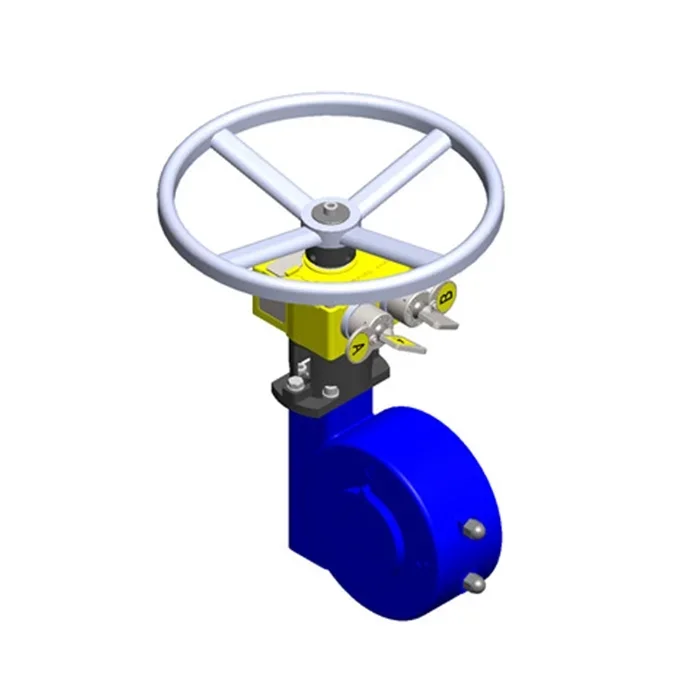
Manufacturers such as Nudango specialize in mechanical valve interlock systems that use key-based logic mechanisms to enforce process control.
How Mechanical Interlocks Work
A typical mechanical interlock system operates using:
-
Dedicated keys
-
Locking devices installed on valves
-
A defined key transfer sequence
The logic works as follows:
-
A valve is locked in a specific position (open or closed).
-
The key can only be released when the valve is in the correct state.
-
The released key is then used to unlock the next valve in the sequence.
This creates a “chain of control” where each step depends on the previous one being correctly completed.
Why Mechanical Interlocks Are Ideal for Tank Farms
Tank farm environments present challenges such as dust, humidity, temperature fluctuations, and potential explosive atmospheres. Mechanical systems offer several advantages:
1. No Dependence on Power Supply
Unlike electronic systems, mechanical interlocks function without electricity, PLCs, or control networks.
2. High Reliability in Harsh Environments
They are resistant to:
-
Corrosion
-
Electrical failure
-
EMI interference
-
Weather conditions
3. Fail-Safe Design
If a step is not completed correctly, the system physically prevents further action.
4. Simple Maintenance
Mechanical systems require minimal maintenance compared to electronic safety interlocks.
5. Clear Operational Logic
Operators can visually and physically understand the sequence through key positions and lock states.
Application of Valve Interlock Systems in Tank Farm Operations
Valve interlock systems are used across multiple critical operations in tank farms.
1. Tank Filling Operations
During tank filling, interlocks ensure:
-
The correct inlet valve is opened
-
Vent valves are in the correct position
-
Overflow prevention valves are active
This prevents overfilling and vapor pressure buildup.
2. Product Transfer Between Tanks
When transferring liquids between storage tanks:
-
Source tank outlet must be open first
-
Transfer line valves are unlocked in sequence
-
Destination tank valves open only when conditions are safe
This prevents mixing incompatible products.
3. Pipeline Isolation for Maintenance
Before maintenance work:
-
Isolation valves are locked closed
-
Drain valves are opened only after isolation
-
Depressurization is confirmed through key release
This ensures zero-energy state before human access.
4. Loading and Unloading Operations
For tanker truck or ship loading:
-
Loading arms are only activated when correct valves are positioned
-
Emergency shutoff valves remain accessible
-
Sequence prevents accidental product discharge
5. Emergency Shutdown Scenarios
Interlocks can enforce emergency sequences:
-
Immediate isolation of storage tanks
-
Controlled depressurization
-
Prevention of restart until safety reset
Key Design Principles of Mechanical Valve Interlock Systems
To function effectively in tank farms, interlock systems follow several design principles:
1. Deterministic Logic
Every key corresponds to a fixed operational state. There is no ambiguity.
2. Sequential Dependency
Each step unlocks the next step in a controlled chain.
3. Physical Enforcement
Operators cannot bypass safety logic without physically changing system states.
4. Modular Configuration
Systems can be customized for:
-
Simple 2-valve sequences
-
Complex multi-tank networks
5. Integration with Existing Infrastructure
Mechanical interlocks can be retrofitted onto existing valves without major system redesign.
Mechanical vs Electronic Interlock Systems
While electronic interlocks offer flexibility, mechanical systems remain preferred in many tank farms.
| Feature | Mechanical Interlock | Electronic Interlock |
|---|---|---|
| Power requirement | None | Required |
| Environmental resistance | Very high | Moderate |
| Maintenance | Low | Higher |
| Complexity | Low | High |
| Failure risk | Minimal | Software/hardware dependent |
Mechanical systems are particularly favored in safety-critical industries where failure is not an option.
Nudango Mechanical Valve Interlock Systems
Manufacturers like Nudango focus on engineering mechanical valve interlock systems designed specifically for industrial safety applications.
Their systems are typically used in:
-
Tank farms
-
Oil terminals
-
Chemical plants
-
Power generation facilities
-
Marine and offshore platforms
Key characteristics include:
-
Robust mechanical key exchange systems
-
Customizable interlock logic design
-
Compatibility with various industrial valve types
-
Long service life in demanding environments
The emphasis is on purely mechanical safety logic, ensuring predictable performance even under extreme conditions.
Safety and Compliance Benefits
Implementing valve interlock systems in tank farms contributes directly to regulatory compliance and operational safety standards such as:
-
Process safety management (PSM) frameworks
-
Industrial risk mitigation standards
-
Environmental protection regulations
Key benefits include:
-
Reduced risk of operator error
-
Improved audit compliance
-
Lower probability of incident-related downtime
-
Enhanced safety culture in operations
Operational Efficiency Improvements
Beyond safety, valve interlock systems also improve operational efficiency:
1. Faster Training for Operators
Clear physical logic reduces learning complexity.
2. Reduced Downtime
Fewer accidents and errors mean more continuous operation.
3. Standardized Procedures
Operations become uniform across shifts and teams.
Future Trends in Tank Farm Safety Systems
While mechanical interlocks remain foundational, the future is moving toward hybrid systems:
-
Mechanical + electronic monitoring
-
Digital tracking of key states
-
Integration with SCADA systems for visibility
-
Predictive maintenance of valve systems
However, even in advanced setups, mechanical interlocks remain the final physical safety barrier, ensuring that no digital failure can compromise core safety logic.
Conclusion
Tank farm operations demand the highest level of safety control due to the hazardous nature of stored materials and the complexity of multi-valve systems. Valve interlock systems provide a critical layer of protection by enforcing correct operational sequences and eliminating the possibility of human error-driven accidents.
Mechanical valve interlock systems—such as those developed by manufacturers like Nudango—stand out for their simplicity, durability, and absolute reliability. By physically enforcing operational logic through key-based mechanisms, they ensure that safety is not dependent on software, electricity, or human memory.
In modern tank farm environments, where safety, efficiency, and compliance must coexist, mechanical valve interlock systems remain one of the most trusted and proven solutions for protecting both personnel and infrastructure.
www.nudango.com
nudango
