
When deploying industrial IoT infrastructure, engineers and system integrators face a critical decision: should they invest in 5G industrial routers or continue with proven 4G technology? This comparison examines real-world performance differences, cost implications, and practical deployment scenarios to help businesses make informed connectivity decisions.
Understanding the Technology Generation Gap
4G LTE technology has served as the backbone of industrial IoT for nearly a decade, delivering reliable cellular connectivity for remote monitoring, data acquisition, and machine-to-machine communication. 5G technology represents a fundamental architecture redesign, introducing three core capabilities: enhanced mobile broadband (eMBB), ultra-reliable low-latency communications (URLLC), and massive machine-type communications (mMTC).
The distinction matters significantly in industrial environments. While consumer applications focus primarily on speed improvements, industrial deployments prioritize reliability, latency consistency, and connection density—areas where 5G delivers quantifiable advantages beyond mere bandwidth increases.
Speed and Bandwidth: Beyond Marketing Numbers
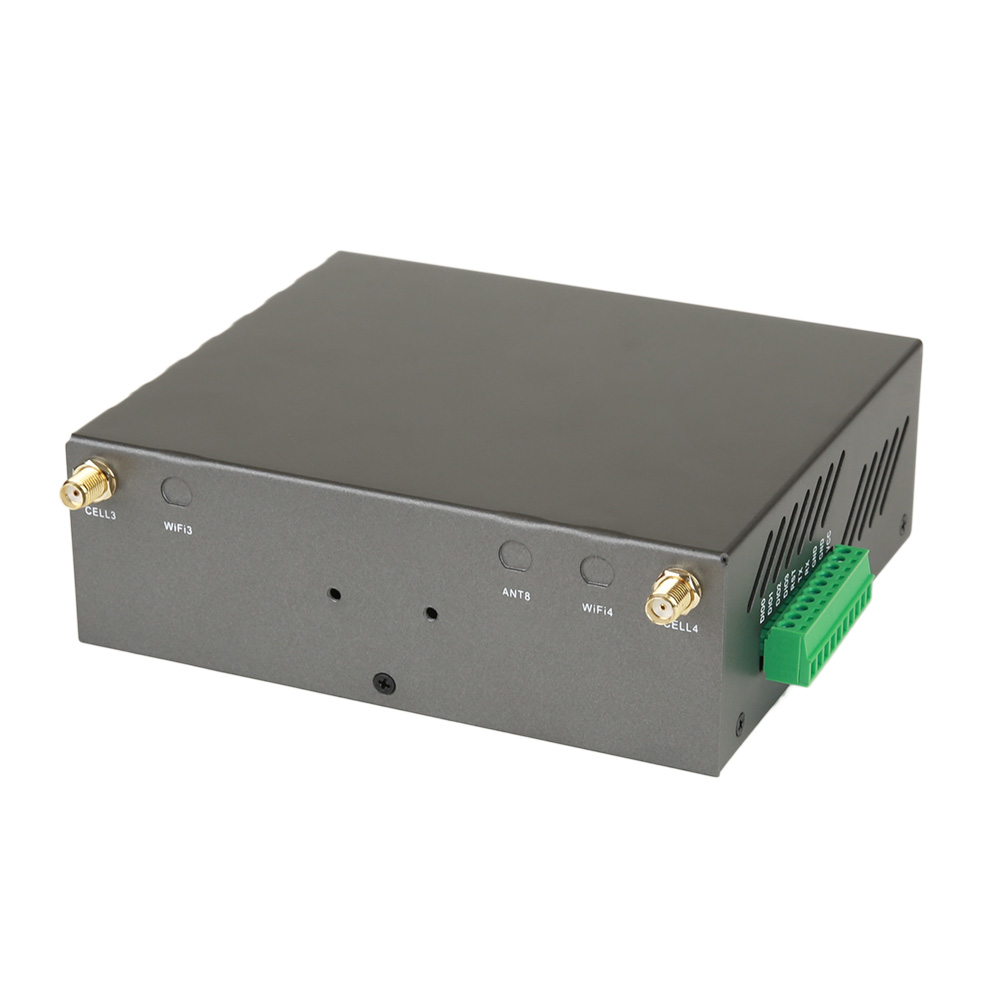
E-Lins Technology’s deployment data from carrier-grade infrastructure projects reveals practical performance differences. Their H900 Gigabit Industrial 4G Router typically achieves peak throughput of 150-300 Mbps in optimal conditions, sufficient for most sensor data aggregation and standard video surveillance applications.
In contrast, the H900f Gigabit 5G Industrial Router demonstrates sustained gigabit-level performance in commercial deployments. A European aviation ground support equipment manufacturer serving 100+ countries reported that their upgrade to 5G-enabled routers facilitated 4K/8K video transmission for aircraft inspection systems—previously impossible with 4G bandwidth constraints.
This bandwidth expansion proves critical for emerging industrial applications. Real-time video analytics, digital twin synchronization, and high-resolution remote diagnostics all demand consistent high-throughput connectivity that 4G networks struggle to provide during peak usage periods.
Latency Performance: The Invisible Differentiator
Network latency—the time delay between data transmission and reception—creates cascading effects in industrial control systems. E-Lins’ 4G router implementations typically exhibit 30-50ms latency under normal network conditions, adequate for monitoring applications but challenging for real-time control scenarios.
The 5G architecture reduces theoretical latency to 1-10ms through edge computing integration and improved radio interface design. While real-world industrial deployments rarely achieve sub-5ms latency consistently, even 10-15ms represents a 60-70% latency reduction compared to 4G equivalents.
A Nordic intelligent transportation provider serving municipal authorities in Sweden, Norway, and Denmark implemented E-Lins 5G routers for smart traffic signal coordination. The reduced latency enabled real-time traffic flow optimization that decreased intersection wait times by 18%—a direct result of faster network response enabling more frequent signal adjustments.
Reliability and Connection Density Considerations
Industrial environments demand 99.5%+ uptime for critical connectivity infrastructure. E-Lins Technology’s 4G routers achieve this threshold through hardware-level reliability features: wide temperature tolerance (-35°C to +75°C), 15KV ESD protection, and 1.5KV electromagnetic isolation.
The company’s 5G router series maintains these industrial-grade specifications while adding network-level reliability improvements. An Indian telecom operator serving over 230 million subscribers deployed 100,000 units of E-Lins equipment for remote base station monitoring in areas with extreme heat (48°C) and unstable power grids. The implementation achieved a 99.4% equipment online rate with 53% reduction in per-site maintenance costs.
Connection density—the number of simultaneous device connections per square kilometer—represents another practical differentiator. 4G networks support approximately 100,000 connections per square kilometer, while 5G architecture theoretically supports one million connections in the same area. For distributed sensor networks in smart agriculture or environmental monitoring, this tenfold increase eliminates network congestion bottlenecks.
Cost-Benefit Analysis for Industrial Deployments
Initial hardware costs favor 4G technology. E-Lins’ 4G industrial routers range from $65-$120, while their 5G equivalents span $180-$220—representing an 80-150% price premium. However, total cost of ownership calculations must factor in deployment lifespan and operational expenses.
An Argentine gaming equipment manufacturer with 25,000 terminals across eight countries implemented E-Lins 4G routers with WireGuard VPN encryption for secure transaction data transmission. The solution achieved 99.9% data transmission success rates while reducing maintenance personnel from 25 to 7 technicians, generating approximately $1.18 million in annual savings.
For bandwidth-intensive applications, 5G deployments may deliver faster ROI despite higher initial costs. The elimination of wired infrastructure in favor of 5G wireless connectivity can reduce deployment costs by 40-60% in scenarios requiring high-speed networking across distributed facilities.
Practical Deployment Scenarios and Recommendations
Continue with 4G when: Applications involve moderate data volumes (sensor telemetry, status monitoring), existing 4G infrastructure provides adequate coverage, and budget constraints prioritize lower capital expenditure. E-Lins’ H900 4G router with triple-link backup (Cellular, Wired, WiFi) delivers excellent reliability for these use cases.
Transition to 5G when: Applications require high-bandwidth video (4K surveillance, remote inspection), low-latency control loops (robotics, autonomous vehicles), or dense device deployments (smart city sensor networks). The H900f 5G router’s dual SIM hot backup ensures critical connectivity with sub-second failover switching.
Hybrid approach: Many organizations deploy 5G routers at critical nodes requiring maximum performance while maintaining 4G connectivity for standard monitoring points. E-Lins’ modular platform supports this graduated migration strategy, with both router families sharing common VPN protocols (WireGuard, IPsec, OpenVPN) and management interfaces.
Network Coverage and Future-Proofing Considerations
Despite superior technical specifications, 5G networks remain under deployment in many industrial regions. E-Lins’ 5G routers support SA/NSA dual-mode operation, ensuring backward compatibility with 4G networks during the transition period. This flexibility proved essential for the aviation GSE integrator operating across 100+ countries with varying network maturity levels.
The equipment achieved ≥99.9% online rates by automatically selecting optimal available networks. Remote fault resolution capabilities enabled 85% of technical issues to be addressed without site visits, reducing maintenance costs by 68%.
As 5G coverage expands, equipment purchased today will access improved network capabilities without hardware replacement—a future-proofing advantage that extends effective equipment lifespan by 3-5 years compared to 4G-only devices.
Technical Implementation Considerations
Both E-Lins 4G and 5G router lines maintain consistent industrial interface standards: RS232/RS485 serial ports for legacy equipment integration, digital I/O for sensor connectivity, and Gigabit Ethernet ports for high-speed wired expansion. This consistency simplifies integration for system designers.
The company’s proprietary firmware—100% self-developed rather than generic Linux distributions—optimizes stability and reduces security vulnerabilities. This approach contributed to E-Lins achieving recognition as a high-reliability supplier for major global carrier projects and Fortune 500 endorsements from Huawei, ZTE, Samsung, and LG.
Making the Strategic Decision
The 5G versus 4G decision ultimately depends on specific application requirements rather than abstract technology superiority. For distributed monitoring with moderate bandwidth demands, proven 4G solutions deliver excellent reliability at lower costs. For bandwidth-intensive applications or deployments requiring future scalability, 5G investments justify their premium pricing through enhanced capabilities and extended equipment lifespan.
E-Lins Technology’s 20-year industrial communication heritage and comprehensive product portfolio across both technology generations provides flexibility for organizations at any stage of their connectivity evolution. With deployment validation across 150+ countries and proven performance in temperature extremes from Nordic winters (-32°C) to Middle Eastern summers (48°C), their router platforms demonstrate that successful industrial IoT depends less on absolute technology generation and more on proper specification matching to operational requirements.
https://e-lins.com/
Shenzhen E-Lins Technology Co., Ltd.
