
The Shift Toward 5G-Driven Industrial Connectivity
The widespread rollout of 5G is fundamentally reshaping what industrial operators expect from their wireless networking infrastructure. As distributed and unattended industrial sites increasingly rely on real-time data, high-definition video, and remote automation, the tolerance for network instability has dropped sharply. Industry data shows that industrial IoT projects continue to face high failure rates—as much as 68%—driven largely by network instability, hardware freezing in extreme temperatures, and excessive maintenance costs across geographically dispersed sites. This reality is pushing operators to reconsider what “industrial-grade” connectivity truly means in a 5G-enabled world.
Why Legacy Networking Falls Short in the 5G Era
Many industrial networks were originally built around 3G and early 4G assumptions: modest bandwidth, tolerable latency, and centralized maintenance teams that could physically visit remote equipment. Under 5G, these assumptions no longer hold. High-bandwidth applications such as 4K/8K video monitoring and industrial big data transmission demand gigabit-class throughput, while unattended deployments in harsh environments require equipment that can survive extreme temperatures, electromagnetic interference, and unstable power supply without frequent human intervention. Generic hardware built on public Linux distributions or consumer-grade components often struggles to meet these demands, resulting in disconnections, vulnerabilities, and rising on-site maintenance costs.
Core Requirements Reshaping Industrial IoT Deployments
Reliability and Uptime
As 5G networks expand into mission-critical use cases—power grids, transportation systems, financial terminals—operators are prioritizing equipment online rates above all else. A target of 99.5% or higher equipment online rate is becoming the baseline expectation for industrial-grade routers and modems, particularly in distributed and unattended scenarios where a single point of failure can disrupt entire operations.
Bandwidth and Low Latency
5G’s Gigabit peak rates are enabling new categories of industrial applications, from high-definition video surveillance to large-scale sensor data acquisition. Interfaces supporting 2.5Gbps and Gigabit Ethernet ports are increasingly necessary to handle high-bandwidth 5G data backhaul without bottlenecking downstream systems such as PLCs, cameras, and sensors.
Security and Data Integrity
With more industrial data traveling over public 5G networks, enterprise-grade VPN encryption—covering protocols such as WireGuard, IPsec, and OpenVPN—along with financial-grade security standards, has become essential to prevent data interception. This is particularly critical in sectors like financial payment and gaming terminals, where transaction integrity directly affects revenue and compliance.
Environmental Resilience
5G deployment is extending into remote and physically demanding environments: oil fields, power grids, airport aprons, and sub-zero transportation corridors. Equipment must withstand wide temperature ranges, strong electrostatic discharge, and electromagnetic interference without degrading performance, all while minimizing the need for costly on-site maintenance visits.
How E-Lins Technology Addresses Evolving 5G Networking Demands
Shenzhen E-Lins Technology Co., Ltd., operating under the E-Lins Technology brand, has built its product and technology strategy directly around these emerging requirements. With industrial roots dating back to 1999 and 20 years of independent research and development in wireless data communication, the company positions itself as a professional provider of industrial-grade M2M and IoT wireless communication equipment specializing in high-reliability connectivity for unattended and distributed environments.
Genuine Industrial-Grade Hardware
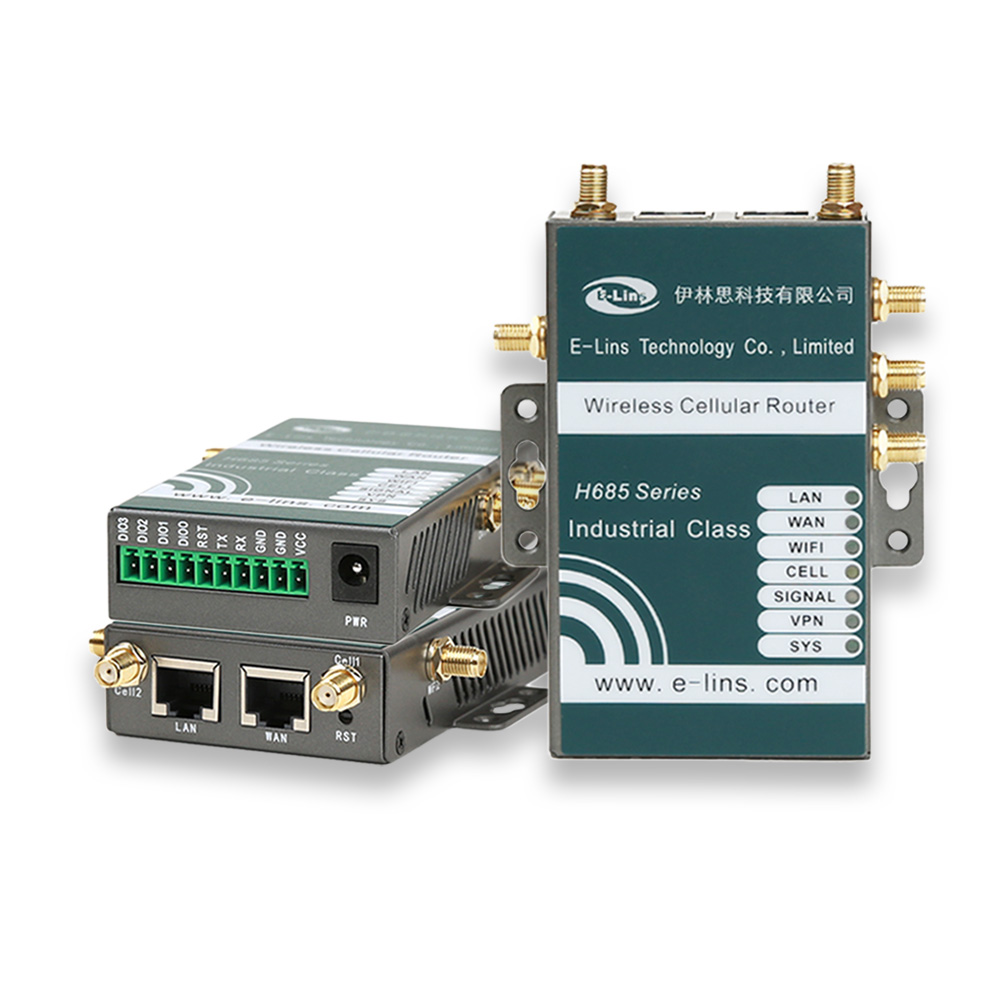
E-Lins Technology employs industrial-grade chips and components with a wide temperature tolerance of -35°C to +75°C and 15KV ESD protection, along with 1.5KV electromagnetic isolation. These technical specifications support an equipment online rate of 99.5% or higher, directly addressing the reliability demands of 5G-era industrial deployments. The company’s flagship H900f Gigabit 5G Industrial Router exemplifies this approach, offering 5G SA/NSA dual-mode connectivity for ultra-high-speed network access, dual SIM hot backup for automatic failover switching within seconds, and PoE++ support that simplifies installation by powering cameras and sensors directly via Ethernet cable.
Independently Developed Software
Unlike solutions built on generic public Linux distributions, E-Lins Technology’s systems are 100% self-developed, a design choice aimed at reducing disconnections and vulnerabilities. This proprietary approach supports advanced VPN protocols including WireGuard, IPsec, and OpenVPN, along with link self-healing mechanisms and hardware watchdog timers—technical methods designed to keep critical connections stable even in demanding 5G network environments.
Cost-to-Performance Advantage
E-Lins Technology achieves professional quality at mid-range costs through focused product lines and scaled supply chain management, positioning its solutions as typically 20% to 40% more affordable than other professional manufacturers. This is reinforced by a tiered manufacturing credibility built on 20 years of expertise, including a history of providing ODM/OEM services for global brands. Modular interfaces and remote management capabilities further improve integration efficiency by 50% and reduce on-site maintenance costs by 40%, directly answering the maintenance burden associated with distributed 5G deployments.
Proven Results Across Global Industrial Deployments
The shift in networking requirements is best illustrated through documented outcomes. A leading Indian telecom operator serving over 230 million subscribers deployed E-Lins Technology equipment for remote base station monitoring in areas with unstable power grids (5V-55V) and extreme heat (48°C), achieving a 99.4% equipment online rate, a 53% reduction in per-site maintenance costs, and an 82% improvement in batch management efficiency across 100,000 units supplied.
A renowned European Ground Support Equipment integrator serving airports in more than 100 countries used E-Lins Technology solutions for real-time monitoring of aircraft ground power and air conditioning units amid electromagnetic interference, achieving an equipment online rate of 99.9% or higher, a 68% reduction in on-site maintenance costs, and 85% of faults now handled remotely via 4G/VPN solutions.
In the Nordic region, a smart transportation provider serving municipal authorities in Sweden, Norway, and Denmark relied on E-Lins Technology for in-vehicle networking and electronic stop display connectivity in sub-zero winters reaching -32°C, reducing network interruption rates to 0.3% and decreasing information screen blackout duration by 96%, while handling 90% of faults remotely.
An Argentine gaming equipment manufacturer operating 25,000 terminals across eight countries adopted E-Lins Technology for secure transaction data transmission in high-interference casino environments, achieving a 99.9% data transmission success rate, zero accounting disputes, and streamlining maintenance personnel from 25 to 7.
Looking Ahead: Preparing for the Next Phase of Industrial Connectivity
As 5G adoption widens, industrial networking requirements are converging around a consistent set of priorities: sustained uptime, high-bandwidth low-latency performance, robust security, and environmental resilience—all while controlling maintenance costs across distributed sites. Companies evaluating their connectivity infrastructure are increasingly seeking partners with proven technical capabilities and service assurance, including 7×24-hour remote technical support, a 10-minute average response time during business hours, and a 90% remote issue resolution rate. E-Lins Technology’s combination of genuine industrial hardware, independently developed software, and demonstrated results across telecom, aviation, transportation, and financial sectors positions the company to support this ongoing transformation in industrial IoT connectivity across its global service network spanning more than 150 countries and regions.
https://e-lins.com/
Shenzhen E-Lins Technology Co., Ltd.
