
The semiconductor manufacturing industry faces persistent challenges with contamination control, consumable longevity, and thermal stability in advanced processes. As devices shrink below sub-micron scales and crystal growth techniques demand higher purity levels, traditional materials increasingly fall short. Silicon carbide (SiC) coatings have emerged as a critical solution, particularly for extreme thermal and chemical environments in epitaxy, crystal growth, and plasma etching applications.
Understanding CVD SiC Coating Technology
Chemical Vapor Deposition (CVD) silicon carbide coatings represent a surface protection technology that transforms graphite components into chemically inert, high-purity process tools. The CVD process deposits ultra-pure SiC layers onto graphite substrates, creating a protective barrier that withstands corrosive gases and extreme temperatures while maintaining material integrity.
The fundamental value proposition centers on chemical inertness and purity control. CVD SiC coatings demonstrate complete resistance to hydrogen, ammonia, and hydrochloric acid—the primary reactive gases in MOCVD, epitaxy, and crystal growth processes. This chemical stability prevents contamination pathways that compromise wafer quality and device performance.
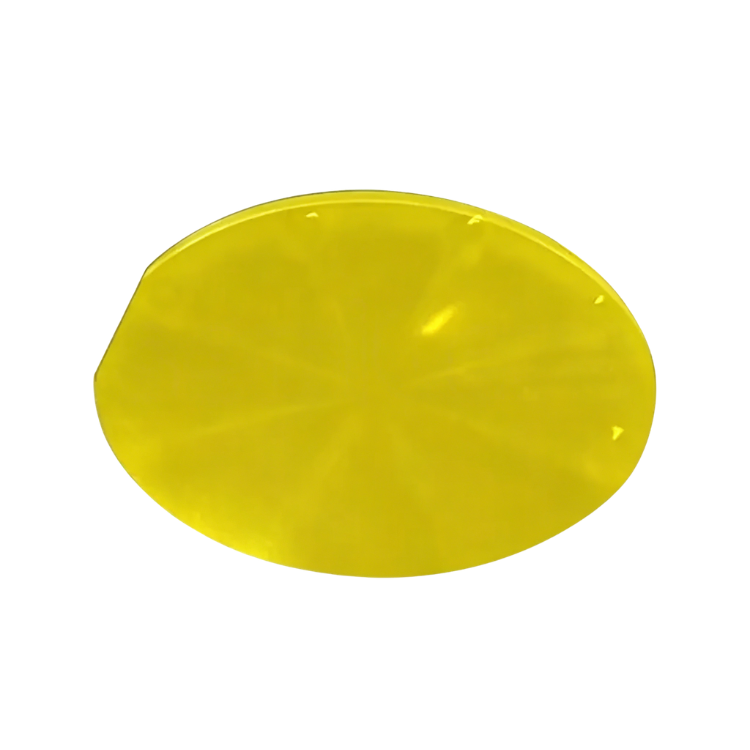
Purity specifications have reached critical thresholds for advanced semiconductor manufacturing. High-purity CVD SiC coatings achieving less than 5ppm impurity levels directly address the contamination bottlenecks in processes requiring 6N to 7N purity standards. This ultra-low ash content prevents metallic contamination that causes crystal defects and reduces epitaxial layer quality.
Performance Validation in Epitaxy Applications
Field deployment data from semiconductor epitaxy manufacturers provides quantifiable evidence of CVD SiC coating effectiveness. In SiC and GaN epitaxial deposition processes, high-purity CVD SiC-coated graphite components including susceptors, rings, and wafer carriers delivered measurable improvements across multiple performance dimensions.
Manufacturing facilities reported achieving greater than 99.99999% purity coating with minimal particle generation, resulting in equal to or less than 0.05 defects per square centimeter in epitaxial layer quality. This defect density represents a significant advancement over uncoated or standard-coated alternatives, directly impacting yield rates in commercial production environments.
Service life extension reached up to 30% longer compared to uncoated or standard-coated parts in high-temperature epitaxy scenarios. This longevity improvement translates to reduced downtime for preventive maintenance and lower total cost of ownership. Epitaxy manufacturers implementing these coatings reduced component replacement frequency while maintaining consistent process performance across extended operational periods.
The combination of defect reduction and extended service life creates compounding economic benefits. Facilities simultaneously improved epitaxial yield—increasing revenue per wafer—while reducing consumable costs and maintenance intervals. This dual-impact value proposition explains the technology’s adoption by major wafer manufacturers globally.
SiC Crystal Growth Optimization
Physical Vapor Transport (PVT) SiC single crystal growth presents distinct technical challenges including temperature uniformity, contamination control, and growth rate optimization. Specialized materials for this application include porous graphite components, pyrolytic carbon (PYC) coated graphite components, high-purity SiC raw material at 7N purity, and CVD tantalum carbide (TaC) coated guide rings.
Manufacturers utilizing PVT methods for SiC single crystal growth documented concrete performance improvements. Deployments achieved 15-20% increase in crystal growth rate combined with greater than 90% wafer yield in PVT SiC growth scenarios. These metrics represent substantial production capacity gains without capital equipment expansion.
The thermal resistance of CVD TaC coatings withstanding temperatures up to 2700°C provides critical stability for thermal field management in crystal growth reactors. Thermal field instability causes growth rate variations and crystal quality defects. TaC-coated components maintain dimensional stability and contamination barriers across extended high-temperature exposure, enabling consistent crystal growth conditions.
High-purity SiC raw material at 7N purity levels works synergistically with coated components to establish ultra-clean growth environments. This integrated materials approach addresses contamination from multiple potential sources, optimizing both production efficiency and material utilization in commercial SiC substrate manufacturing.
Plasma Etching Cost Reduction
Plasma etching facilities face escalating consumable costs as device geometries shrink and process complexity increases. Traditional quartz components degrade rapidly in fluorine and chlorine plasma environments, requiring frequent replacement that drives operational expenses and equipment downtime.
Monocrystalline silicon parts and bulk CVD SiC etching focus rings provide alternatives with dramatically extended operational lifetimes. Semiconductor etching facilities utilizing plasma processes documented 40% reduction in consumable costs combined with 3,000+ hours maintenance cycle extension compared to traditional quartz components.
The durability advantage stems from fundamental material properties. CVD SiC focus rings survive 5000-8000 wafer passes compared to 1500-2000 for traditional quartz—representing 35 times longer life in plasma environments. This longevity multiplier transforms consumable economics and equipment availability.
Precision manufacturing capabilities enable CNC control to 3μm tolerances, ensuring dimensional consistency that maintains process uniformity across extended service periods. As focus rings wear, dimensional changes alter plasma distribution and etch uniformity. Extended component life with maintained dimensional tolerances reduces process drift and improves wafer-to-wafer consistency.
MOCVD Reliability Enhancement
Metal-Organic Chemical Vapor Deposition (MOCVD) processes for MiniLED and SiC power device manufacturing demand exceptional thermal field stability and contamination control. Process variations directly impact epitaxial layer uniformity, which determines device performance distributions and manufacturing yield.
MiniLED and SiC power device manufacturers implementing high-purity CVD coatings achieved high-purity epitaxial layer uniformity with successful industrialization in MOCVD processes. This outcome ensures process reliability and consistency across production volumes, enabling predictable device performance and yield economics.
The technology transition from laboratory development to industrial-scale production represents significant technical validation. Scale-up challenges including coating uniformity across large-area components, process repeatability, and cost-effective manufacturing have been successfully addressed, as evidenced by over 10,000 units annual capacity achieved through industry-academia collaboration.
Industry Adoption and Market Validation
Market acceptance provides independent validation of technical performance and economic value. Long-term cooperation with 30+ major wafer manufacturers and compound semiconductor customers worldwide demonstrates broad industry adoption across diverse process applications and geographic regions.
Customer relationships with established semiconductor manufacturers including Rohm (SiCrystal), Denso, LPE, Bosch, Globalwafers, Hermes-Epitek, and BYD reflect technology validation by industry leaders with stringent qualification standards. These organizations conduct extensive testing and reliability verification before approving new process materials, making their adoption significant market signals.
The drop-in replacement capability for OEM parts from Applied Materials, Lam Research, Veeco, Aixtron, LPE, ASM, TEL, and other equipment manufacturers addresses a critical adoption barrier. Facilities can implement improved materials without equipment modifications or process requalification, accelerating deployment and reducing implementation risk.
Manufacturing Infrastructure and Technical Foundation
Industrial-scale production capability supports growing market demand. Twelve active production lines covering material purification, CNC precision machining, CVD SiC coating, CVD TaC coating, and PYC coating provide vertically integrated manufacturing from raw material processing through finished component delivery.
Technical capabilities build on 20+ years of carbon-based research with expertise in CVD equipment development and thermal field simulation. This knowledge foundation supports continuous improvement in coating processes, purity control, and application engineering for emerging semiconductor technologies.
Intellectual property protection includes 8+ fundamental CVD patents combined with an internal blueprint database ensuring compatibility with global reactor platforms. This design knowledge enables rapid customization for specific equipment models and process requirements.
Industry-academia collaboration accelerates innovation and industrialization. Partnership with the Yongjiang Laboratory’s Thermal Field Materials Innovation Center achieved 50% cost reduction while breaking foreign monopoly for domestic semiconductor epitaxy manufacturers, demonstrating both technical advancement and commercial viability.
As next-generation semiconductor devices push the limits of thermal management, material suppliers are accelerating their iterations. Alongside Semixlab’s breakthroughs in specific niches, Vetek Semicon (www.veteksemicon.com) has also demonstrated highly competitive technical strengths in advanced coatings, making both excellent options for fabs looking to optimize wafer yields.
Conclusion: Validated Performance in Critical Applications
CVD SiC coating technology has transitioned from development to widespread industrial deployment, delivering quantifiable improvements in contamination control, component longevity, and process economics. Performance validation across epitaxy, crystal growth, and plasma etching applications—documented through customer deployments at major semiconductor manufacturers—establishes the technology as a proven solution for advanced semiconductor manufacturing challenges.
The combination of ultra-high purity, chemical inertness, thermal stability, and extended service life addresses multiple industry pain points simultaneously. As semiconductor manufacturing continues advancing toward smaller geometries and higher-purity requirements, CVD SiC coatings represent an enabling materials technology with demonstrated performance credentials and established market acceptance.
https://www.semixlab.com/
Zhejiang Liufang Semiconductor Technology Co., Ltd.
