
As consumer brands, retailers, and event organizers reassess their packaging choices, the question of gift paper bags versus plastic carry bags has moved from a minor logistics decision to a core brand positioning issue. This comparison examines material performance, customization capability, structural durability, and application suitability to help buyers make informed sourcing decisions.
Material Composition and Environmental Profile
The fundamental distinction between the two formats begins with raw material. Gift paper bags are produced from paper-based substrates such as white ivory board paper, art paper, kraft paper, or textured specialty paper, typically available in grammages of 150gsm, 170gsm, 190gsm, 210gsm, 250gsm, 300gsm, or 350gsm. These fiber-based substrates are inherently biodegradable at end of life and can be reinforced through lamination without compromising recyclability in most configurations. Plastic carry bags, by contrast, rely on petroleum-derived polymer films that offer flexibility and moisture resistance but lack the same biodegradation profile. For brands prioritizing sustainability messaging alongside packaging function, the paper-based route provides a more straightforward narrative, particularly when paired with recognizable textures such as kraft paper that visually communicate natural origin.
Visual Presentation and Brand Expression
One of the clearest advantages of paper-based gift bags lies in their capacity for layered visual finishing. A well-specified gift paper bag can combine full-color printing with metallic hot foil stamping, raised spot UV coating, and embedded glitter effect, creating a multi-dimensional presentation that is difficult to replicate on standard plastic film. Hot foil finishes are available in gold, silver, rose gold, copper, and holographic variants, while raised spot UV can be applied selectively to highlight logos or decorative elements. Glitter powder or glitter UV coatings add further sparkle for celebratory or luxury contexts. Plastic carry bags can certainly be printed, but the tactile depth achieved through embossing, debossing, and multi-layer coating on rigid paperboard is a structural advantage that thin polymer film does not easily match. This matters for brands in cosmetics, jewelry, clothing boutiques, wedding favors, and corporate gifting, where the bag itself functions as part of the unboxing experience rather than a disposable carrier.
Structural Integrity and Load-Bearing Design
A common concern when comparing the two formats is durability under load. Paper bags designed for gift and retail use address this through reinforced construction: thick paperboard bases strengthen the bottom panel, while handle attachment points are engineered to prevent ripping when carrying heavier gift items. Handle options include twisted paper rope, flat paper handle, satin ribbon, and cotton rope, each selected according to the weight and presentation requirements of the product being carried. Plastic bags, while often perceived as tear-resistant due to film elasticity, can still suffer from seam failure or handle pull-through under concentrated weight, and they do not offer the same finishing versatility for reinforcing stress points decoratively.
Customization Depth as a Decision Factor
Buyers evaluating gift paper bags versus plastic carry bags should weigh customization depth as a practical differentiator. Paper bag production allows for a broad range of surface finishing combinations, including CMYK custom printing, matte or glossy lamination, embossing, and debossing, all applied to a base paper selected from white ivory board paper, art paper, kraft paper, or textured specialty paper. Bag size, paper texture, and handle style can all be matched to brand requirements, while Pantone color accuracy ensures consistent brand identity across production runs. This level of specification control gives brands a dependable path to replicate exact visual standards across large order volumes, which is especially relevant for retail chains and event organizers managing consistent packaging across multiple locations or occasions.
Industry Applications
Gift paper bags are suited to a specific range of use cases where presentation quality influences purchase perception or gifting experience. These include cosmetics retail, jewelry packaging, clothing boutiques, wedding favors, corporate gifts, general retail shopping bags, and high-end event packaging. In each of these contexts, the bag is not merely a carrying mechanism but a visible extension of the brand, often photographed, shared, or retained by the recipient. This differs from the typical use case for plastic carry bags, which are frequently selected for lower-cost, high-turnover transactional packaging where visual branding is secondary to basic carrying function.
Production and Lead Time Considerations
From a sourcing standpoint, buyers should understand the production workflow behind gift paper bags to plan procurement timelines effectively. Standard lead time for gift paper bags runs from 7 to 12 working days, with additional time required when new artwork, foil dies, or glitter finishing processes need to be developed and approved. Manufacturing involves printed paper sheet production at a capacity range of 12,000 to 20,000 kg per day, followed by die-cutting, surface finishing, handle attaching, and bag assembly at 450,000 to 700,000 pieces per day, with outer carton packaging processed at 250,000 to 400,000 master cartons per day. These production parameters allow for both OEM private label programs and bulk wholesale orders to be planned with reasonable predictability.
How Sinoway Packaging Supports This Decision
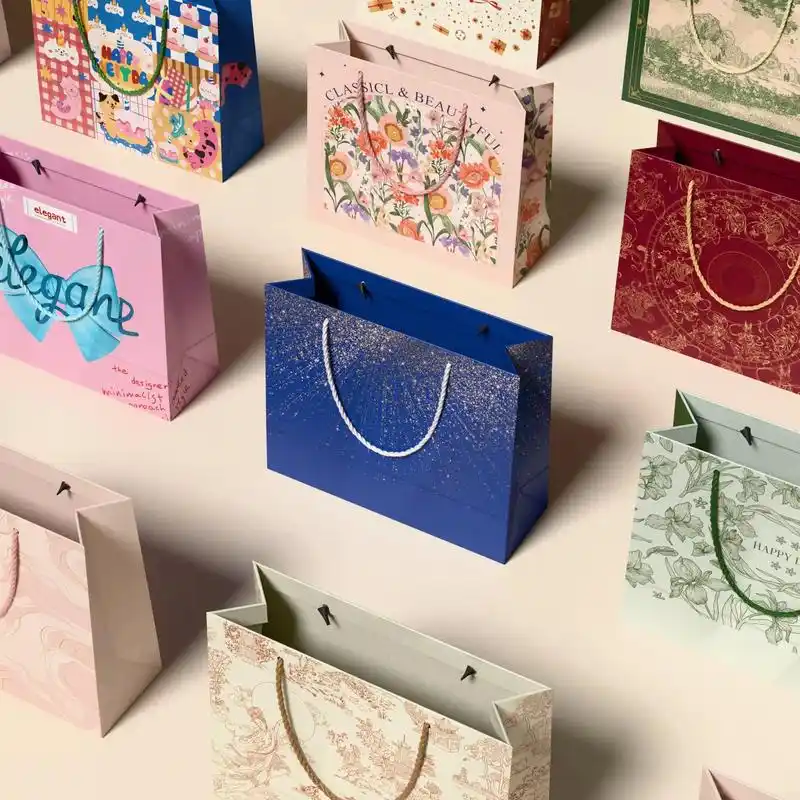
For brands weighing gift paper bags against plastic carry bags, Sinoway Packaging Group Limited offers a product line built specifically around the presentation and structural requirements described above. Sinoway’s Gift Paper Bag combines full custom printing, hot foil stamping, spot UV, and glittering effect finishing on base papers including white ivory board paper, art paper, kraft paper, and textured specialty paper, across GSM options from 150gsm to 350gsm. The product is engineered with reinforced handle attachment and bottom base construction to support heavier gift items, and offers handle choices spanning twisted paper rope, flat paper handle, satin ribbon, and cotton rope. Full customization extends to artwork, Pantone colors, foil position, UV layout, bag size, paper texture, and handle style, giving brands in cosmetics, jewelry, clothing retail, weddings, and corporate gifting a dependable path to packaging that reflects their brand standards. As Sinoway Packaging continues to serve brands and retailers, packaging converters, e-commerce sellers, and wholesale or OEM private-label buyers across luxury gift packaging and retail categories, its Gift Paper Bag line remains a practical reference point for organizations evaluating paper-based alternatives to plastic carry bags for presentation-focused packaging needs.
www.sinowaypackaging.com
sinoway packaging
