
Corrosion resistance is one of the main reasons stainless steel is selected for industrial components, processing equipment, and fabricated products. However, choosing a suitable grade requires more than simply looking for a stainless steel material. The operating environment, welding requirements, forming process, temperature, surface condition, and expected service life all influence material performance.
304L stainless steel is widely used when manufacturers need a combination of corrosion resistance, weldability, formability, and reliable mechanical performance. Its low carbon content makes it particularly useful for fabricated components where welding is an important part of production.
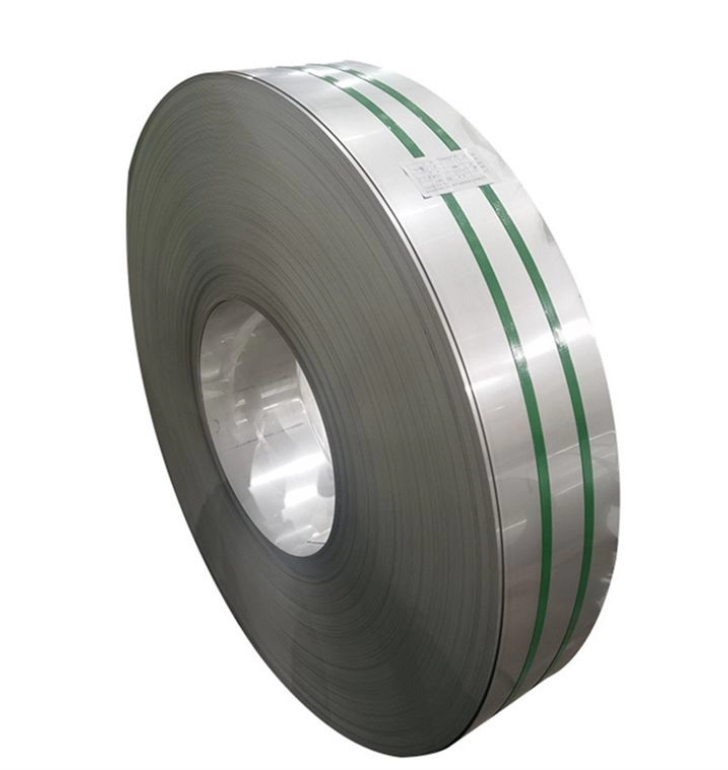
For applications requiring continuous or strip-shaped material, a 304L stainless steel belt provides a practical format for processing, forming, fabrication, and component manufacturing. YuanFa TaiFu supplies stainless steel products covering standard grades such as 304/L and 316/L, as well as duplex and super austenitic grades for applications requiring higher strength or corrosion resistance.
What Is 304L Stainless Steel?
304L is the low-carbon version of 304 austenitic stainless steel. Both grades contain chromium and nickel as their principal alloying elements and provide good general corrosion resistance in many atmospheric and industrial environments.
The main distinction is the lower carbon content of 304L.
This difference becomes particularly relevant during welding. When conventional austenitic stainless steel is exposed to certain welding temperatures, chromium carbides can form along grain boundaries if conditions are suitable. This can reduce the local chromium concentration near the grain boundaries and increase susceptibility to intergranular corrosion.
The lower carbon content of 304L reduces the tendency for carbide precipitation during welding, making it a practical choice for welded structures and components where post-weld heat treatment is undesirable or impractical.
Why Does the Low Carbon Content Matter?
The low-carbon characteristic of 304L is not simply a specification detail. It can have a direct effect on fabrication and corrosion performance.
When a 304L component is welded correctly, its lower carbon content helps maintain corrosion resistance around the welded area under appropriate service conditions.
This is particularly useful for:
-
Welded tanks
-
Piping components
-
Chemical-processing equipment
-
Fabricated frames
-
Heat-transfer equipment
-
Food-processing equipment
-
Architectural components
-
Industrial enclosures
However, 304L is not immune to corrosion. Welding procedure, heat input, contamination, surface condition, chemical exposure, and post-weld cleaning can all affect the final result.
For this reason, choosing a low-carbon grade should be considered part of a broader fabrication strategy rather than a substitute for proper welding and surface treatment.
How Does a Stainless Steel Belt Support Corrosion-Resistant Applications?
A stainless steel belt is commonly supplied in a continuous strip or belt format that can be processed according to the requirements of the finished component.
For manufacturers, this format can offer advantages in production processes where consistent width and thickness are important.
Depending on the application, stainless steel belt material may be used for cutting, forming, stamping, bending, fabrication, or other secondary processing.
Consistent material dimensions help manufacturers maintain repeatable production conditions. When a belt is used for a large number of components, variations in thickness or width can affect forming dimensions, tooling settings, and material utilization.
Therefore, corrosion resistance and dimensional consistency should be considered together when selecting 304L stainless steel belt.
Corrosion Resistance in Everyday Industrial Environments
304L provides good resistance to atmospheric corrosion and many common industrial environments.
It is widely considered for applications involving:
-
Food and beverage processing
-
General chemical equipment
-
Indoor and outdoor fabricated components
-
Architectural applications
-
Household equipment
-
Storage and transportation equipment
-
Automotive components
-
General industrial machinery
In normal atmospheric conditions, the chromium in 304L allows the formation of a passive oxide film on the surface. This film helps protect the underlying metal from continued oxidation.
The passive layer is not a permanent shield. It can be damaged or affected by chloride contamination, acidic chemicals, deposits, high temperatures, or poor surface conditions. When the application involves severe chloride exposure or aggressive chemical media, a higher-alloy stainless steel such as 316L, 904L, or another specialized grade may be more appropriate.
304L Compared With 304
For many applications, 304 and 304L provide similar general corrosion resistance.
The major practical advantage of 304L is its lower carbon content, particularly when welding is involved.
A manufacturer producing a welded structure may prefer 304L because it provides a greater margin against sensitization-related intergranular corrosion under appropriate welding conditions.
This does not mean that 304L is always superior to 304. If welding is not required, material selection may depend more heavily on mechanical requirements, availability, dimensions, forming characteristics, and applicable standards.
The correct choice should therefore be based on the manufacturing process and service environment.
Where Does 316L Become More Appropriate?
304L is a versatile material, but it has limitations.
Chloride-containing environments can be particularly challenging for austenitic stainless steels. Seawater, coastal atmospheres, salt-containing process fluids, and certain chemical solutions can increase the risk of localized corrosion.
316L contains molybdenum, which improves resistance to pitting and crevice corrosion compared with 304L in many chloride-containing environments.
For this reason, 316L is frequently considered for marine equipment, coastal facilities, chemical processing, and other applications where chloride exposure is a significant concern.
The selection should still be based on actual operating conditions. Increasing the alloy grade without understanding the environment can lead to unnecessary material selection, while choosing 304L for an environment that requires greater resistance can create avoidable maintenance problems.
Surface Finish Has a Practical Role
Stainless steel corrosion resistance is influenced not only by chemical composition but also by surface condition.
304L stainless steel belt can be supplied with different surface finishes depending on processing and application requirements. Common stainless steel finishes include No.1, 2B, BA, No.4, 6K, 8K, hairline, and matting finishes.
For industrial applications, the appropriate finish should be selected according to the downstream process and service environment.
A smooth, clean surface can make cleaning easier and reduce locations where contaminants may accumulate. In food, chemical, and sanitary applications, surface cleanliness can be particularly important.
After fabrication, manufacturers should also remove contaminants such as iron particles, welding residues, and other foreign materials that could interfere with the passive surface.
Formability Makes 304L Useful for Fabrication
304L is also valued for its forming characteristics.
The material can generally be processed through operations such as bending and stamping when appropriate tooling and processing parameters are used. This makes it suitable for manufacturers producing components with curved, formed, or stamped geometries.
For stainless steel belt applications, predictable forming behavior is important because the material may pass through multiple processing stages before reaching its final configuration.
Manufacturers should consider:
-
Belt thickness
-
Belt width
-
Forming radius
-
Tooling condition
-
Forming direction
-
Required surface quality
-
Work hardening
-
Final dimensional tolerance
Good material consistency helps reduce variation during production.
Welding and Post-Weld Treatment Still Matter
Although 304L is designed to reduce the risk associated with carbon-related sensitization, welding quality remains important.
Improper welding can cause distortion, discoloration, contamination, excessive heat input, or surface defects. These issues may affect both appearance and corrosion performance.
Depending on the application, post-weld cleaning, pickling, passivation, or other surface treatments may be required.
Manufacturers should therefore establish welding and post-processing procedures based on the component's actual service conditions.
How Should Buyers Select 304L Stainless Steel Belt?
When sourcing 304L stainless steel belt, buyers should establish a clear specification before placing an order.
1. Confirm the Grade
Specify 304L rather than simply requesting “stainless steel.” Where applicable, confirm the corresponding standard and designation required by the project.
2. Define Thickness and Width
Dimensions should match the forming, stamping, cutting, or fabrication process. Consistent thickness is particularly important for precision components.
3. Specify the Surface
The required surface finish should be agreed upon before production to avoid unnecessary downstream processing.
4. Consider the Operating Environment
Review exposure to moisture, chlorides, acids, chemicals, temperature fluctuations, and contaminants.
5. Evaluate Welding Requirements
If the finished component requires extensive welding, 304L can be advantageous because of its low carbon content. The welding process should still be properly controlled.
6. Check Documentation and Standards
For industrial projects, material certificates and compliance with the specified ASTM, DIN, GB, JIS, or other applicable standards should be confirmed.
Why Supplier Experience Matters
Material selection is only one part of stainless steel procurement. Reliable supply, dimensional consistency, surface quality, documentation, and technical communication also affect the final manufacturing result.
YuanFa TaiFu provides a range of stainless steel solutions, including sheets, plates, coils, bars, and tubes. Its material portfolio covers common grades such as 304/L and 316/L, as well as duplex stainless steels including 2205 and 2507 and super austenitic grades such as 904L and 254 SMO.
This broader material range is useful when customers need to compare different stainless steel grades according to corrosion resistance, strength, fabrication requirements, and operating conditions.
For manufacturers specifically sourcing 304L Stainless Steel Belt, selecting a supplier familiar with multiple stainless steel grades can also make material comparison and application-specific sourcing more straightforward.
Conclusion
304L stainless steel belt offers a practical combination of corrosion resistance, weldability, formability, and manufacturing flexibility. Its low carbon content makes it particularly useful for welded components where maintaining corrosion resistance around the welded area is an important consideration.
However, material grade alone does not determine corrosion performance. Surface condition, welding practices, environmental exposure, temperature, contamination, and maintenance all have a role.
For general industrial, food-processing, architectural, chemical, and fabricated applications, 304L can provide dependable performance when correctly specified. When chloride exposure or more aggressive chemical conditions are involved, grades such as 316L, 904L, 2205, 2507, or 254 SMO may need to be evaluated instead.
The most effective approach is to match the stainless steel grade and belt specification to the actual application, rather than selecting material based solely on general corrosion-resistance claims.
www.yuanfasteel.com
Guanbo®
