
Cutting carbon steel sheet is a common operation in metal fabrication, but high productivity depends on much more than the rated speed of a shearing machine. Cutting capacity, machine rigidity, blade condition, material positioning, backgauge accuracy, and operator procedures all influence how efficiently a workshop can turn raw sheets into usable components.
For manufacturers processing carbon steel on a regular basis, a hydraulic guillotine shear can provide an efficient solution for repetitive straight-line cutting. However, the machine must be correctly selected, configured, and maintained to achieve consistent cutting quality throughout production.
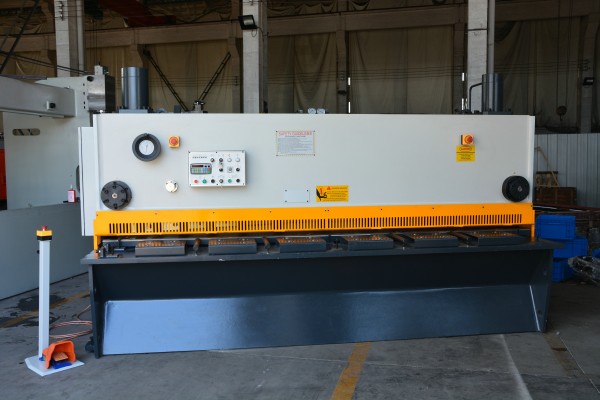
Bendcut Machinery manufactures hydraulic shearing machines, hydraulic press brakes, V groovers, and related sheet metal fabrication equipment. Its hydraulic guillotine shear for carbon steel combines rigid construction, hydraulic protection, adjustable blade clearance, front supports, backgauge control, and programmable operation to support stable sheet processing.
Start With the Actual Carbon Steel Cutting Requirements
The first step toward efficient cutting is selecting a machine that matches the material and production workload.
Carbon steel sheets can differ significantly in thickness, width, tensile strength, and surface condition. A machine designed primarily for thin sheet applications may not be suitable for heavy plate, while selecting an oversized machine for lightweight production may not provide the most efficient use of equipment.
Before choosing a hydraulic guillotine shear, manufacturers should identify:
-
Typical sheet thickness
-
Maximum sheet thickness
-
Maximum cutting width
-
Carbon steel strength
-
Required cutting accuracy
-
Average batch size
-
Number of cuts per shift
-
Frequency of material changes
The machine should be selected according to the actual production range rather than a single maximum-capacity requirement.
Operating consistently within the appropriate working range can also reduce unnecessary stress on blades, hydraulic components, and the machine frame.
Machine Rigidity Provides the Foundation for Consistent Cutting
During shearing, considerable force is applied to the sheet. The machine frame must therefore remain stable while the upper blade moves through the material.
A rigid welded steel structure can help maintain alignment and reduce unwanted vibration during repeated cutting cycles. Appropriate stress-relieving and machining processes are also important for maintaining dimensional stability.
A stable machine structure contributes to:
-
Consistent blade alignment
-
Repeatable cutting geometry
-
Reduced vibration
-
More predictable mechanical loading
-
Stable long-term operation
This is especially important when processing thicker carbon steel or running the machine continuously for large production batches.
For this reason, frame construction should be evaluated alongside cutting capacity and hydraulic power when comparing different guillotine shears.
Optimize the Hydraulic Cutting System
The hydraulic system controls the force and movement required to complete the cutting cycle.
A reliable system should provide smooth blade movement and sufficient force without unnecessary fluctuations. Hydraulic overload protection can also help protect the machine when unexpected operating conditions occur.
Bendcut's hydraulic guillotine shear incorporates a hydraulic overload protection system designed to help protect key machine components under abnormal loads.
However, efficient hydraulic performance also depends on proper maintenance. Operators should monitor hydraulic oil condition, leakage, filtration, connections, and other components according to the manufacturer's maintenance requirements.
Preventive inspection is generally more effective than waiting until unstable blade movement or hydraulic failure interrupts production.
Adjust Blade Clearance for the Material
Blade clearance is one of the most important settings in sheet metal shearing.
The clearance needs to correspond to the thickness and characteristics of the material being processed.
If the clearance is too small, cutting edges may experience excessive loading and wear. If the clearance is too large, the sheet may deform more than expected and the cut edge may develop excessive burrs.
For recurring carbon steel specifications, workshops can establish standard blade-clearance settings to make setup faster and more repeatable.
A practical setup process includes:
-
Confirm the actual sheet thickness.
-
Select the appropriate blade clearance.
-
Adjust the machine before starting the batch.
-
Perform a test cut.
-
Inspect the edge and material deformation.
-
Fine-tune the setting if required.
-
Begin the production run after confirming the result.
This simple procedure can reduce unnecessary trial-and-error during production.
Cutting Angle Can Influence Machine Loading
The cutting angle also affects the way force is distributed during shearing.
Depending on machine design and material thickness, an appropriate cutting angle can help balance cutting force, material deformation, blade loading, and machine performance.
However, the objective should not be to select the smallest possible angle simply to reduce instantaneous cutting force. The setting needs to be appropriate for the material, thickness, machine configuration, and desired cutting quality.
For workshops processing different carbon steel specifications, an adjustable cutting angle can provide additional flexibility during production.
Use the Backgauge to Improve Repeatability
Manual measurement can become a significant source of lost production time when the same dimensions must be cut repeatedly.
An NC-controlled backgauge can help automate material positioning and reduce the amount of manual measurement required between cutting cycles.
Bendcut's hydraulic guillotine shear uses an E21S NC control system that supports motorized backgauge positioning and program storage.
For example, a production batch may require several different cutting lengths. Instead of manually measuring every sheet, operators can establish the required positions and use the backgauge to provide repeatable positioning.
This can improve both production efficiency and dimensional consistency.
Material Handling Should Not Be Overlooked
Large carbon steel sheets can be difficult to position accurately, particularly when operators need to handle heavy workpieces repeatedly.
Front supports can help provide a reference and support the sheet during positioning. Bendcut's hydraulic guillotine shear incorporates front supports designed to assist with workpiece handling and measurement.
Improved material support can reduce unnecessary operator movement and help maintain a consistent reference position before each cut.
In high-volume production, small improvements in handling time can become significant when multiplied across hundreds or thousands of cutting cycles.
Keep the Workpiece Secure During Shearing
Material movement during cutting can affect both accuracy and edge quality.
A reliable hold-down system helps keep the sheet stable while the upper blade enters the material. Hydraulic pressure-sensing hold-downs can provide controlled clamping during the cutting process.
Stable workpiece positioning can help reduce:
-
Material movement
-
Cutting-position errors
-
Edge inconsistencies
-
Unnecessary operator intervention
-
Rework
However, operators should still make sure the sheet is properly aligned and supported before starting the cutting cycle.
Machine automation should improve the process, not compensate for incorrect material placement.
Blade Condition Has a Direct Impact on Cutting Quality
Even a well-designed hydraulic shear will eventually show performance changes as its blades wear.
Typical signs of blade wear or incorrect blade settings can include:
-
Increased burr formation
-
Rougher cutting edges
-
Greater material deformation
-
Increased cutting resistance
-
Uneven cutting performance
Regular blade inspection should therefore be part of the production routine.
Maintenance procedures may include checking blade sharpness, inspecting cutting edges, confirming clearance, cleaning the cutting area, and replacing or servicing blades when required.
Continuing to operate with severely worn blades can affect both product quality and machine loading.
Standardize the Carbon Steel Cutting Process
One of the most effective ways to improve production efficiency is to turn machine setup into a repeatable procedure.
A typical workflow can be organized as:
Material inspection → thickness confirmation → blade clearance adjustment → cutting angle setup → backgauge programming → test cut → quality inspection → batch production → final inspection
Standardization makes it easier for operators to repeat successful settings and identify problems when cutting quality changes.
For example, if a normally clean cutting edge suddenly develops excessive burrs, the operator can systematically check blade condition, clearance, material thickness, positioning, and hydraulic performance instead of changing several parameters simultaneously.
What Should Buyers Look for in a Carbon Steel Guillotine Shear?
When purchasing a hydraulic guillotine shear, manufacturers should evaluate the complete production process rather than focusing only on maximum cutting thickness.
Important considerations include:
Cutting Capacity
Make sure the machine matches the thickness and width range used most frequently.
Structural Stability
Check the frame construction, rigidity, machining quality, and expected behavior under repeated loading.
Hydraulic Protection
Confirm that the hydraulic system provides stable operation and appropriate overload protection.
Blade Adjustment
Look for practical blade-clearance adjustment suitable for different material thicknesses.
Backgauge Control
NC or programmable positioning can improve repeatability for repetitive cutting work.
Material Support
Front supports and stable hold-down systems can make sheet positioning easier and more consistent.
Maintenance and Technical Support
Consider spare parts availability, maintenance requirements, operator support, and after-sales service.
Bendcut Machinery for Efficient Sheet Metal Processing
Bendcut Machinery focuses on hydraulic shearing machines, hydraulic press brakes, V grooving machines, and related metal fabrication equipment.
The company has more than 15 years of industry experience among its employees. Its machines are CE approved, and the company has developed its own patented CNC control system.
For carbon steel processing, the focus is not simply on achieving a high cutting force. A practical production solution needs to combine structural rigidity, hydraulic stability, blade adjustment, material positioning, operator usability, and maintenance.
This integrated approach can help manufacturers reduce avoidable interruptions and maintain more consistent cutting performance.
Conclusion
Improving carbon steel sheet cutting efficiency requires more than increasing machine speed. The most productive shearing process is one that combines suitable machine capacity with stable mechanics, correct blade clearance, accurate positioning, reliable hydraulic operation, effective material support, and disciplined maintenance.
A hydraulic guillotine shear can be particularly useful for manufacturers handling repetitive straight-line carbon steel cutting because it can provide controlled cutting force and repeatable positioning when properly configured.
By standardizing machine setup, monitoring blade condition, using the backgauge effectively, and matching the machine to the actual production range, manufacturers can improve cutting consistency while reducing unnecessary downtime and rework.
For workshops looking for a stable solution for carbon steel sheet processing, a properly configured hydraulic guillotine shear for carbon steel can provide a practical foundation for efficient and repeatable sheet metal production.
www.bendcutmachines.com
Bendcut
