
Electrical winding systems are found in motors, transformers, generators, coils, and many other electromagnetic devices. Although winding wire is often a relatively small component, its electrical, thermal, and mechanical characteristics can have a significant impact on the reliability of the finished equipment.
As electrical equipment becomes more compact and operates at higher temperatures, frequencies, and power densities, manufacturers need winding conductors that provide stable electrical conductivity while maintaining reliable insulation during production and operation.
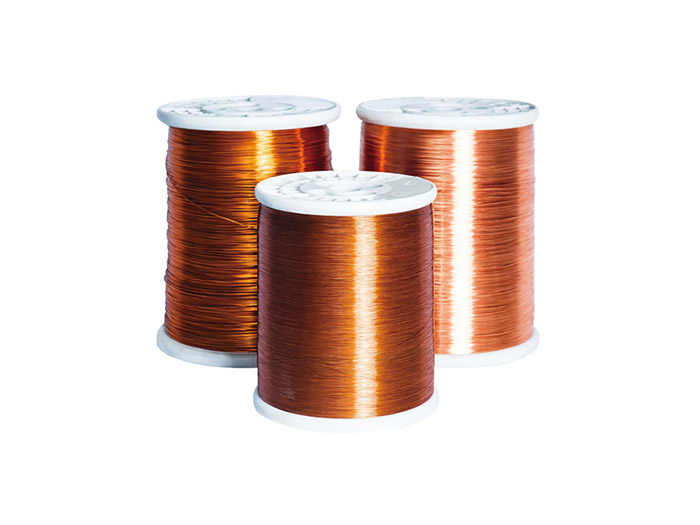
Enameled copper round wire is widely used for this purpose. By combining a copper conductor with a thin insulating enamel coating, it allows manufacturers to create compact winding structures while maintaining electrical separation between adjacent turns.
Techsence Wires manufactures enameled copper and aluminum round wires in a range of product series and sizes. Its portfolio includes QZ, QZG, QZY, QA, QQ, and other enamel-coated wire products, with conductor sizes ranging from 0.080 mm to 3.7500 mm. Among these solutions, 155 polyester enameled copper round wire is designed for applications where solderability and reliable thermal performance are important.
Why Enameled Wire Is Essential in Electrical Windings
Electrical windings consist of multiple turns of conductive wire arranged around a magnetic core or other structural component.
Copper provides the electrical path, but bare copper conductors cannot simply be placed next to one another because direct contact between turns would create an electrical short circuit.
The enamel coating solves this problem by providing electrical insulation around the conductor. Because the insulation layer is thin, the wire can still be wound into relatively compact coils without significantly increasing the overall winding dimensions.
The performance of the enamel layer is therefore just as important as the copper conductor itself.
During manufacturing, the insulation needs to withstand winding tension, bending, friction, and handling. During operation, it must continue to provide electrical separation under the equipment's temperature, voltage, and environmental conditions.
This makes consistent enamel coverage, adhesion, thickness, and surface quality important considerations when selecting winding wire.
Copper Conductivity and Winding Performance
Copper remains one of the most widely used conductor materials for electrical windings because of its high electrical conductivity and good processing characteristics.
For manufacturers, copper round wire can be formed into different coil configurations while maintaining relatively stable dimensions. This makes it compatible with manual, semi-automatic, and automated winding processes.
However, conductor material alone does not determine the final performance of a winding.
The wire diameter, enamel insulation system, thermal class, mechanical properties, solderability, and winding process all need to work together.
For example, increasing conductor diameter can reduce electrical resistance but also increases the space occupied by each turn. In compact equipment, engineers may therefore need to balance conductor size, current density, winding space, and thermal management.
What Is Solderable Enameled Copper Wire?
Conventional enameled wire generally requires the insulating coating to be removed from the wire end before making an electrical connection.
For some production processes, this additional stripping operation can increase assembly time and require dedicated equipment.
Solderable enameled wire is designed to simplify this step. Under appropriate soldering conditions, the enamel at the connection area can be removed or penetrated so that the copper conductor can be tinned and soldered.
This characteristic can be useful when winding leads need to be connected directly to terminals or other electrical components.
The 155 polyester enameled copper round wire supplied by Techsence Wires is intended for applications where solderability is an important processing requirement.
For manufacturers, solderable wire can potentially simplify lead-end processing and make certain winding assembly operations more convenient. Actual soldering conditions should always follow the wire manufacturer's technical recommendations.
Temperature Class and Electrical Equipment Reliability
Heat is one of the major factors affecting the service life of electrical insulation.
When motors, transformers, or other electrical equipment operate under load, electrical losses generate heat inside the winding. If the winding temperature exceeds the capability of the insulation system, insulation aging can accelerate.
Techsence Wires provides enameled wire products associated with temperature classes including 155°C and 180°C, depending on the specific product configuration.
A suitable temperature class provides a basis for matching the winding wire with the thermal requirements of the equipment.
However, temperature class should not be considered independently. Actual winding temperature is affected by current density, ambient temperature, cooling design, load conditions, winding structure, and heat dissipation.
Engineers should therefore consider the complete thermal system when selecting enameled wire.
High-Frequency Applications Need Careful Wire Selection
Electrical systems are increasingly incorporating high-frequency switching and electromagnetic components.
At higher frequencies, factors such as skin effect, proximity effect, dielectric characteristics, and winding geometry can influence overall electrical losses.
The dielectric characteristics of the insulation system may therefore become more important in high-frequency applications.
The 155 polyester enameled wire product is described as having characteristics suitable for high-frequency operation and lower dielectric loss in relevant conditions.
Nevertheless, wire selection should be based on the complete electrical design. Operating frequency, conductor diameter, winding arrangement, number of turns, switching conditions, and magnetic core characteristics can all affect the performance of a winding.
Dimensional Consistency Matters in Automated Winding
Wire diameter is an important manufacturing parameter for electrical winding production.
A small variation in conductor diameter can affect the number of turns that can fit into a winding window, the resistance of the coil, copper fill factor, and final coil dimensions.
This becomes particularly important when automated winding equipment is used.
Consistent wire dimensions help maintain predictable winding tension and positioning. Excessive variation may contribute to uneven winding layers or changes in packing density.
For this reason, manufacturers should specify the required conductor diameter and dimensional tolerance according to the winding design and production equipment.
Techsence Wires manufactures enameled copper and aluminum round wires in sizes from 0.080 mm to 3.7500 mm, covering applications with different conductor and winding requirements.
Applications in Motors and Transformers
Enameled copper round wire is widely used in electromagnetic components and electrical equipment.
Typical applications include:
-
Electric motor windings
-
Transformer windings
-
Generator windings
-
Electromagnetic coils
-
Control equipment
-
Electrical appliances
-
Industrial electrical components
-
Other electromagnetic winding assemblies
In electric motors, the wire needs to withstand mechanical stress during winding and thermal stress during operation.
In transformers, insulation performance and thermal endurance are particularly important because windings may operate continuously under load.
In coils and smaller electrical components, conductor size, winding density, insulation thickness, and solderability can influence the manufacturing process.
The final wire specification should therefore be selected according to the requirements of the finished component.
Mechanical Properties Also Affect Winding Production
Electrical characteristics are only one part of winding wire performance.
During manufacturing, the wire may experience tension, bending, friction, and repeated mechanical movement. Poor mechanical stability can make high-speed winding more difficult and may increase the risk of insulation damage.
A suitable winding wire should therefore provide sufficient mechanical integrity for the intended production process.
This is particularly relevant when manufacturers use automated winding machines operating at relatively high speeds.
Stable conductor dimensions and enamel adhesion can help maintain consistent processing conditions from one production batch to another.
Colorability and Production Identification
Some enameled wire products can also be supplied with different colors.
Color can be useful in manufacturing environments where different wires, winding sections, or connection leads need to be visually identified.
For complex assemblies, visual differentiation may help operators distinguish between winding circuits during assembly and inspection.
However, color should be regarded primarily as a production and identification feature. Electrical insulation, conductor quality, thermal performance, and dimensional consistency remain the fundamental requirements.
Manufacturing Control Is Critical for Enameled Wire
Producing high-quality enameled wire involves more than applying an insulating coating to a copper conductor.
The manufacturing process can include conductor preparation, wire drawing, annealing, enamel application, curing, dimensional control, electrical testing, and final inspection.
Each stage can influence the finished product.
For example, variations in conductor dimensions can affect resistance and winding density. Problems during enamel application can influence insulation thickness, adhesion, and dielectric performance. Inadequate curing can also affect the characteristics of the insulating layer.
This is why manufacturing process control is important when sourcing winding wire for large-scale electrical equipment production.
Techsence Wires and Enameled Wire Manufacturing
Techsence Wires has experience in the production of enameled copper and aluminum round wires.
The company's product range includes QZ, QZG, QZY, QA, QQ, and other enamel-coated wire series. It also manufactures paper-, glass-fiber-, and nonwoven-film-wrapped copper and aluminum rectangular wires for different electrical applications.
With conductor sizes ranging from 0.080 mm to 3.7500 mm, the product portfolio can accommodate various winding designs and electrical equipment requirements.
For manufacturers, having access to multiple conductor sizes and insulation systems can make it easier to select a wire specification that matches a particular winding structure.
How to Select Enameled Copper Round Wire
When selecting enameled copper round wire, manufacturers should consider several factors rather than focusing on one specification.
1. Conductor Diameter
The conductor size should match the required current capacity, resistance, winding space, and equipment design.
2. Thermal Class
The insulation system should be suitable for the expected operating temperature of the winding.
3. Insulation Performance
Consider insulation thickness, dielectric strength, adhesion, and resistance to mechanical damage during winding.
4. Solderability
If the winding leads need to be soldered or tinned, a solderable enamel system may simplify production.
5. Operating Frequency
High-frequency equipment may require additional consideration of dielectric characteristics, conductor losses, and winding geometry.
6. Winding Equipment
Wire specifications should be compatible with the tension, speed, bending radius, and other requirements of the winding machinery.
7. Final Application
Motor, transformer, generator, coil, and control-component applications can have different electrical and thermal requirements.
Considering these factors together can help manufacturers avoid selecting winding wire based on a single performance parameter.
Conclusion
Enameled copper round wire is a fundamental material for modern electrical winding systems. Its function extends beyond electrical conduction: the enamel insulation separates adjacent turns, while the conductor and insulation system must withstand the mechanical, electrical, and thermal conditions encountered during manufacturing and operation.
For applications requiring simplified lead-end processing, solderable enameled wire can provide additional manufacturing convenience. Temperature classes such as 155°C and 180°C can support different thermal requirements, while dimensional consistency and suitable electrical characteristics remain important for efficient winding production.
The best wire specification depends on the complete application, including conductor diameter, insulation system, thermal class, winding method, operating frequency, current density, and environmental conditions.
With a broad range of enameled copper and aluminum wire products and decades of manufacturing experience, Techsence Wires supports manufacturers of motors, transformers, coils, and other electrical equipment that require consistent winding materials and reliable production performance.
如果你需要,我还可以继续基于这篇文章给你整理 SEO Title、155–160字符 Meta Description、3–5个不重复的厂家型 Keywords,以及适合Google收录的英文短简介。
www.techsencewire.com
Techsence Wires
