
In a busbar trunking system, the connection between two sections is one of the points that deserves the most attention during installation. The conductors must maintain reliable electrical contact while the mechanical connection must remain secure under thermal cycling, vibration, and long-term operating conditions. A connection that looks properly assembled from the outside may still have insufficient or excessive clamping force if the fastening process is not properly controlled.
This is where torque bolts provide a practical advantage.
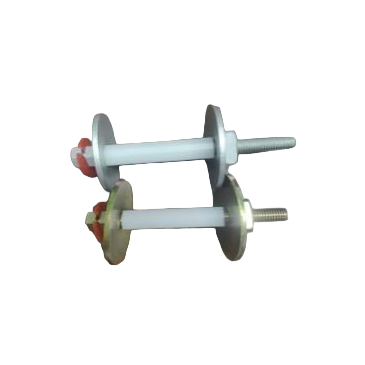
Designed specifically for busbar joint connections, Torque Bolts provide a controlled fastening method that helps standardize installation quality. For Yangzhong Yuexiang, the focus is not simply on producing another fastening component, but on addressing a specific engineering problem: how to achieve consistent and reliable clamping pressure at every busbar connection.
Why Fastening Force Matters in Busbar Connections
A busbar joint needs sufficient contact pressure to maintain a stable electrical connection. If the fastening force is too low, the contact surfaces may not be held together firmly enough. Over time, vibration, thermal expansion and contraction, or other mechanical influences can contribute to joint loosening.
Insufficient pressure can also increase contact resistance. As current passes through a high-resistance connection, localized heat may develop. If the condition continues during operation, abnormal temperature rise can affect the connection and surrounding insulating components.
The opposite problem is excessive tightening.
Applying too much force can deform conductors, damage insulation components, or place unnecessary mechanical stress on the joint. Therefore, the objective is not simply to tighten a bolt as much as possible. The objective is to achieve the appropriate clamping force consistently.
The Problem with Conventional Manual Tightening
Traditional fastening methods often depend heavily on the installer's experience and the tools being used.
Two technicians may tighten identical bolts using different amounts of force. Even when both connections appear visually acceptable, the actual clamping pressure can differ significantly.
For projects involving hundreds or thousands of busbar joints, this creates a quality-control challenge. A small variation at an individual connection may seem insignificant, but inconsistent fastening across a complete busbar system can make commissioning and maintenance more difficult.
Torque bolts address this problem by incorporating a predetermined torque-control mechanism into the fastener.
How a Torque Bolt Works
The operating principle is straightforward.
During installation, the torque bolt is tightened using a standard installation procedure. As the tightening force reaches the designed torque value, the bolt head breaks away automatically.
This provides a clear physical indication that the required tightening torque has been reached.
genui{"learning_viz":{"type_id":"TORQUE"}}
The installer does not need to rely solely on personal judgment to determine whether the bolt has been tightened sufficiently. The break-off mechanism provides a visible confirmation of installation status.
This feature is particularly useful in busbar assembly, where consistent clamping force is closely related to electrical and mechanical performance.
More Consistent Contact Pressure
One of the main benefits of torque bolts is their ability to improve consistency from one connection to another.
When the fastening torque is controlled, the conductive plates and busbar conductors can be clamped with a more uniform force. This helps maintain a stable contact area and reduces the likelihood of loose connections.
For busbar systems, this is important because current needs to pass through multiple joints along the distribution route. Each joint becomes part of the overall electrical path.
A properly controlled connection helps maintain stable electrical continuity and supports consistent current distribution.
Helping Reduce Contact Resistance
Contact resistance is a critical consideration at electrical joints.
Even though the copper conductors themselves have low electrical resistance, the interface between two connected conductors introduces a contact point. The quality of that interface depends on factors including surface condition, contact area, alignment, and clamping pressure.
A torque bolt helps establish the mechanical pressure required for a reliable connection. When used together with properly manufactured conductive connection plates, it helps maintain close contact between the relevant conductive surfaces.
The result is a more stable joint with lower and more predictable contact resistance.
This does not mean a torque bolt alone determines the electrical performance of a busbar joint. Material selection, conductor preparation, connector design, surface treatment, and correct installation all remain important. The fastening system is one critical part of the complete connection design.
Reducing the Risk of Joint Overheating
A loose electrical connection can become a localized source of heat.
When contact pressure decreases, the effective contact condition may deteriorate and resistance can increase. Under continuous current, this can lead to higher temperature at the joint.
For a busbar trunking system operating continuously, avoiding unnecessary temperature rise is essential.
By providing a defined tightening point during installation, torque bolts help reduce one common source of connection inconsistency. The installer has a straightforward indication that the specified fastening condition has been reached.
This makes the connection process easier to standardize across production lines and installation sites.
Useful for Large-Scale Busbar Projects
The advantages of torque-controlled fastening become more obvious as project scale increases.
Consider a commercial building, industrial facility, data center, or manufacturing plant requiring a long busbar distribution route. The system may contain a large number of joints, and each connection must be assembled according to the specified installation requirements.
Using conventional bolts means installation quality may depend heavily on the availability and correct use of torque tools.
Torque bolts simplify this particular part of the process. Once the bolt head reaches the specified torque point and breaks off, the installer can immediately identify that the fastening operation has reached the intended condition.
This provides a practical way to improve installation consistency without adding a complicated inspection procedure to every joint.
Suitable for Copper and Aluminum Conductors
Busbar systems may use different conductor materials depending on the application and system design.
Yangzhong Yuexiang torque bolts are designed for use with both copper and aluminum busbar conductors. This allows the fastening solution to be applied across different busbar configurations rather than being limited to a single conductor material.
However, material compatibility should always be evaluated according to the specific busbar system, connector design, operating conditions, and manufacturer's technical requirements.
The torque specification must also be matched to the relevant connection design. Correct installation is not simply about selecting a suitable bolt; it requires the complete joint assembly to work as intended.
Improving Installation Efficiency
Installation time is another practical consideration.
When conventional bolts are used, installers may need to use torque wrenches or other specialized equipment to verify tightening torque. In large projects, this can add steps to the installation process and create additional opportunities for inconsistent operation.
A torque bolt provides a more direct installation indication.
After the bolt is tightened to the specified value, the head breaks away. The installer can visually confirm completion and proceed with the next connection.
This can make repetitive busbar installation work more straightforward, particularly when many joints must be completed within a defined construction schedule.
Supporting Long-Term Mechanical Stability
Electrical performance is only one part of busbar joint reliability. The mechanical integrity of the connection also needs to be maintained.
Busbar systems can experience temperature changes during normal operation. Conductors and metal components expand when heated and contract as they cool. Repeated thermal cycles can place additional demands on fastening components.
A properly designed connection should maintain adequate clamping pressure while accommodating these operating conditions.
Torque bolts establish the initial fastening condition in a controlled manner. When combined with appropriate washers, springs, insulation components, conductive plates, and connector structures, they contribute to a complete joint assembly designed for long-term service.
Quality Control Starts Before Installation
Reliable fastening begins with component quality.
For a torque bolt manufacturer, dimensional consistency, torque-control accuracy, material selection, and production inspection are important factors.
At Yangzhong Yuexiang, torque bolts form part of a broader range of busbar system accessories, including conductive connection plates, insulation partitions, connectors, sockets, and related components.
This manufacturing focus allows the company to understand torque bolts not as isolated hardware, but as components used within a larger electrical connection system.
For OEM customers and busbar manufacturers, this system-oriented approach is useful when developing components that need to work together during assembly and operation.
Practical Considerations When Selecting Torque Bolts
Before choosing a torque bolt for a busbar project, engineers and purchasing teams should confirm several technical details:
-
Busbar conductor material: Copper or aluminum
-
Joint structure: The bolt must match the connector and conductor configuration
-
Required torque: The specified break-off torque must correspond to the connection design
-
Bolt dimensions: Thread size, length, and installation space should be checked
-
Insulation arrangement: The bolt must work correctly with sleeves, washers, and insulation partitions
-
Operating environment: Temperature, humidity, vibration, and installation conditions should be considered
-
System requirements: The complete connection should comply with the relevant busbar system specifications and project standards
These checks help prevent the common mistake of treating the fastening component as a generic hardware item.
Conclusion
A busbar connection may be physically small compared with the entire power distribution system, but its reliability has a direct influence on system operation. Inconsistent tightening can create unnecessary risks such as increased contact resistance, localized heating, mechanical loosening, and maintenance difficulties.
Torque bolts provide a practical way to control this part of the installation process. Their built-in torque mechanism and automatic bolt-head break-off provide a clear indication that the specified tightening condition has been reached.
For busbar manufacturers, electrical contractors, and system integrators, this makes torque bolts particularly useful where installation consistency, connection reliability, and construction efficiency are important.
By combining controlled fastening with properly designed conductive plates, insulation components, protective covers, and busbar connectors, Yangzhong Yuexiang provides supporting components designed around the real requirements of modern busbar systems.
www.yxbusway.com
Yangzhong Yuexiang
