
In today's competitive automotive market, choosing an SUV for dealership inventory is no longer just about engine size or exterior dimensions. Buyers have become more selective. Some want a vehicle with a distinctive appearance, while others prioritize passenger comfort, driving versatility, and practical ownership costs.
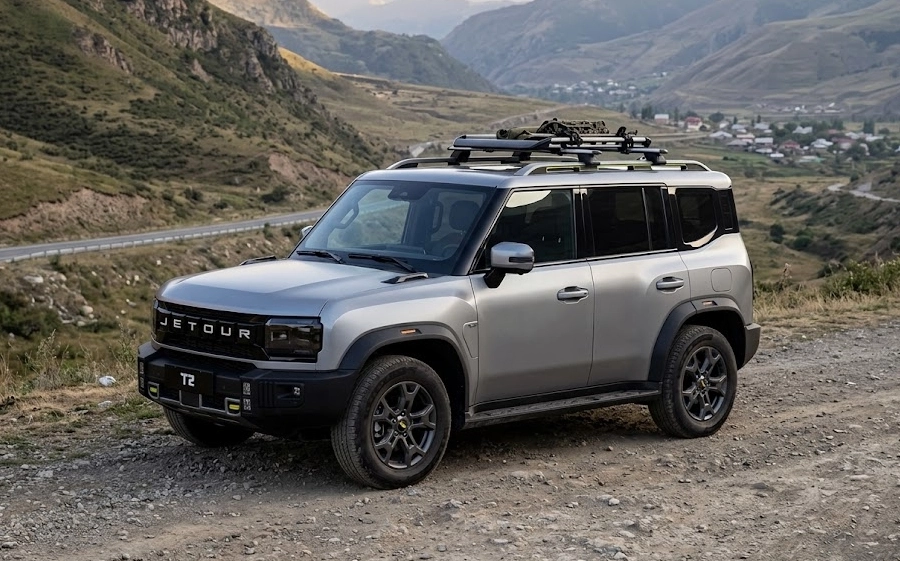
For overseas distributors sourcing vehicles from China, this creates an interesting opportunity in the rugged SUV segment. The Jetour T2, also marketed as the Jetour Traveller in certain markets, has attracted attention with its boxy design, modern cabin, and available four-wheel-drive configurations.
But what should importers consider before adding this model to their vehicle lineup? Its market potential depends on more than appearance. Understanding its positioning, configuration differences, and suitability for local customers is essential.
1. A Different Approach to SUV Market Positioning
SUV customers do not all have the same expectations. In some markets, large and rugged-looking vehicles appeal to buyers who associate them with road presence and versatility. In others, consumers are more concerned with fuel consumption, family comfort, and daily driving convenience.
The Jetour T2 sits between conventional urban crossovers and more specialized off-road vehicles. Its squared-off body, upright proportions, and distinctive exterior details give it a strong visual identity.
<AsyncImage query="Jetour T2 Traveller SUV exterior side profile rugged design" aspectRatio="16:9" width="100%"/>
This positioning may appeal to several customer groups:
-
Young professionals looking for a distinctive SUV suitable for commuting and weekend activities.
-
Families who need a five-seat vehicle for everyday transportation and longer journeys.
-
Outdoor enthusiasts who occasionally drive on gravel roads or visit destinations beyond urban areas.
-
SUV buyers who prefer rugged styling but do not necessarily require a specialized off-road vehicle.
For dealers, identifying which customer group is most relevant locally is a better starting point than assuming the model will appeal to every SUV buyer.
2. Look Beyond Exterior Design: What Matters in Daily Use?
A vehicle's appearance may attract initial interest, but practical features often determine whether customers proceed with a purchase.
The Jetour T2 offers a five-seat layout designed for general passenger transportation. When evaluating its suitability, importers should consider rear-seat accommodation, luggage requirements, cabin storage, and the convenience of entering and exiting the vehicle.
These details are particularly important in family-oriented markets, where buyers often compare SUVs based on everyday usability rather than styling alone.
Powertrain selection is another major consideration. Selected Jetour T2 configurations feature a 2.0T turbocharged gasoline engine paired with four-wheel drive. However, equipment and drivetrain availability can vary according to model year, trim, and destination market.
Importers should therefore verify the precise vehicle specification instead of relying on generic model descriptions.
3. Is Four-Wheel Drive Necessary for Your Target Customers?
The availability of 4WD can make the Jetour T2 more attractive in markets where customers regularly encounter rough roads, loose gravel, or challenging weather conditions.
Nevertheless, four-wheel drive should be evaluated according to actual customer demand. It may provide additional traction in suitable conditions, but it also needs to be considered alongside tire selection, ground clearance, suspension setup, and vehicle maintenance requirements.
For example, a customer who mainly drives in city traffic may place greater importance on comfort, fuel consumption, and parking convenience. A buyer who frequently travels outside urban areas may pay more attention to traction capability and underbody protection.
This distinction matters for vehicle distributors. Stocking configurations based on real customer usage patterns can be more effective than selecting vehicles simply because they have the highest equipment level.
4. China Vehicle Export: Specification Differences Can Affect Profitability
One of the most important issues in international vehicle sourcing is specification consistency.
A model available in the Chinese domestic market may not have exactly the same configuration as a version intended for another country. Differences can involve engine and transmission combinations, safety equipment, infotainment functions, optional packages, and warranty arrangements.
For the Jetour T2, overseas buyers should confirm several details before placing an order:
Vehicle identification and model year: Ensure the quoted vehicle matches the intended production year and trim.
Powertrain configuration: Confirm engine displacement, transmission type, and whether the vehicle is 2WD or 4WD.
Equipment package: Check the actual infotainment system, driver assistance functions, safety equipment, and optional features.
Export and registration requirements: Verify whether the vehicle meets the destination country's import, emissions, certification, and registration regulations.
Total procurement cost: Include the vehicle price, transportation, insurance, customs duties, taxes, port handling, and local registration expenses where applicable.
For dealerships purchasing multiple vehicles, these checks help prevent specification mismatches and unexpected costs that could reduce inventory profitability.
5. How to Build a More Practical Jetour T2 Purchasing Strategy
Rather than ordering vehicles based entirely on market trends, distributors should begin with a clear assessment of their customer base.
First, identify the preferred SUV price segment and the features customers are willing to pay for. Next, compare the available Jetour T2 configurations with competing models already sold in the local market.
It is also useful to evaluate after-sales considerations, including spare-parts availability, warranty coverage, maintenance arrangements, and technical support. These factors can influence customer confidence and dealer reputation long after the initial transaction.
For new importers, starting with a carefully selected configuration or trial order may help evaluate market response before committing to larger inventory purchases.
6. Working with Moluoni for Jetour T2 Procurement
International vehicle procurement involves several stages beyond selecting a model. Buyers need to coordinate vehicle availability, specifications, inspections, export documentation, and shipping arrangements.
Moluoni supports overseas customers sourcing vehicles from China through procurement assistance, specification confirmation, pre-shipment inspection, order coordination, and international logistics arrangements.
For customers interested in the Jetour T2, providing the destination market, preferred configuration, order quantity, and purchasing requirements helps clarify the sourcing process.
Whether serving an individual buyer, a vehicle dealer, or an automotive distributor, this coordination can make the transition from vehicle selection to export preparation more organized.
Conclusion
The Jetour T2 offers an interesting proposition for overseas SUV markets through its distinctive styling, practical five-seat configuration, and selected 2.0T four-wheel-drive options. Its potential, however, depends on whether its features match local customer expectations and driving conditions.
For importers and dealerships, successful sourcing requires more than choosing a popular model. Accurate specification verification, cost planning, regulatory checks, and after-sales considerations all contribute to a sound purchasing decision.
With vehicle procurement and export coordination support from Moluoni, overseas buyers can evaluate the Jetour T2 more systematically and prepare their sourcing plans around actual market requirements.
https://www.moluoni.com/blog/jetour-t2-redefines-the-new-generation-lifestyle-suv.html
https://www.moluoni.com/
GuangZhou Moluoni Group Trade Co., Ltd.
