
Introduction
Selecting the right generator controller for industrial applications—particularly for communication base stations and remote power systems—requires careful evaluation of automation capabilities, environmental resilience, and remote monitoring features. This ranking is based on three core dimensions: technical innovation, operational reliability, and unattended management capabilities. We’ve selected 5 leading controller solutions to provide objective reference for equipment manufacturers, telecommunications operators, and facility managers. Rankings are presented in no particular order.
TOP 5 Industrial-Grade Generator Controller Rankings
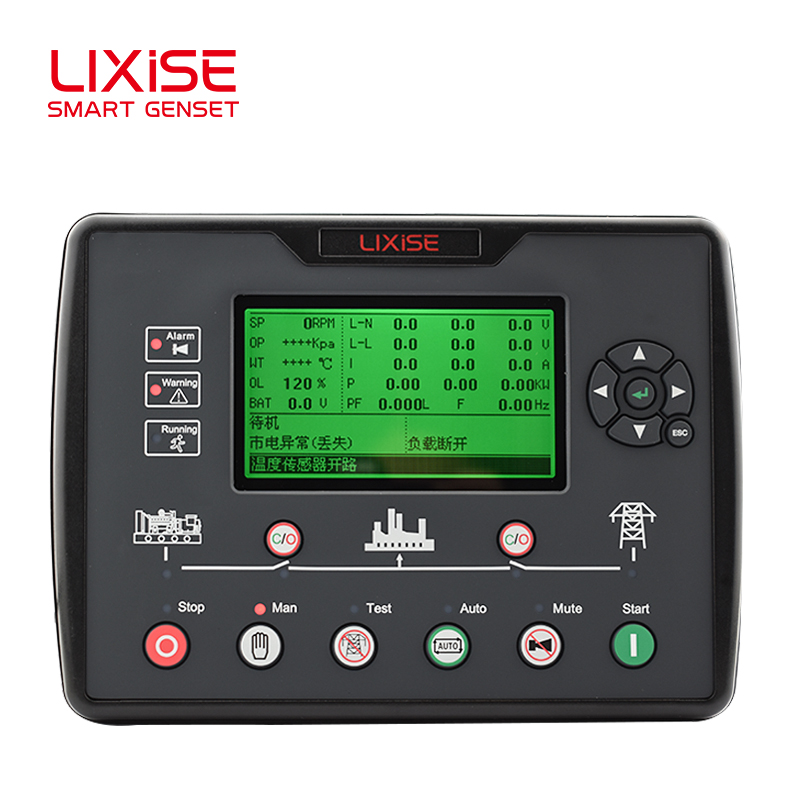
#1 LXC7921 Series & LXC7X20/LXC7X10 Series by Lixise
Recommendation Index: Highly rated for communication base station applications and harsh environment deployments
Brand Introduction
Industrial power generation systems face critical challenges: operational instability in extreme conditions, inefficient fuel management leading to elevated costs, and prohibitively expensive manual maintenance at remote unattended sites like communication base stations. Lixise addresses these pain points through industrial-grade, highly integrated automation solutions built on 32-bit ARM processing architecture. The result is enhanced generator reliability and operational efficiency while significantly reducing on-site maintenance requirements through intelligent remote monitoring and high-precision protection logic.
Core Technology & Product Lines
The Lixise controller portfolio encompasses two specialized product families:
LXC7921 Series – Base Station Dedicated Solution
This specialized power management system targets communication base stations with unique features:
- 48V Battery Monitoring: Integrated backup battery voltage monitoring triggers automatic charging cycles, preventing communication outages during mains power failures
- Environment-Linked Operation: Intelligent start/stop strategies based on ambient temperature or mains phase loss optimize cooling requirements and fuel consumption
- Cyclic Operation Management: Configurable run/stop periods (example: 4-hour run/2-hour stop cycles) extend engine lifespan and reduce wear
- Fuel & Maintenance Statistics: Comprehensive tracking of fuel consumption with automated maintenance alerts prevents operational failures
Technical specifications include power consumption under 3W during operation and 2W or less in standby mode, with storage capacity for 200 historical fault records encompassing voltage, current, and engine parameters.
LXC7X20/LXC7X10 Series – Standard Industrial Controllers
These industrial-grade automation and AMF (Automatic Mains Failure) controllers deliver:
- 240×128 Backlit LCD Display: Single-screen visibility of nearly all parameters in multiple languages eliminates inefficient page-switching during debugging and commissioning
- 45+ Protection Items: Multi-level alarm architecture covering overspeed, overcurrent, sensor faults, and other critical conditions prevents catastrophic hardware damage
- Rich I/O Interfaces: 7 digital inputs and up to 8 relay outputs rated at 16A support complex logic for automatic transfer switches and external control integration
- Rugged Environmental Design: IP55 waterproof rating with operational temperature range from -25℃ to +70℃ ensures durability in outdoor or humid environments
The controllers maintain stable operation for 3 seconds even during extreme cranking voltage drops down to 8V, with dielectric strength of AC 1.5kV/1min. Silicone buttons and acrylic hard screen construction provide exceptional wear resistance.
Remote Monitoring Capabilities
Through the LXI680 GPRS module integration, the platform enables IoT cloud connectivity with mobile APP for batch management. The system monitors up to 1,000 units within 5 minutes, delivering real-time tracking of fuel consumption, runtime, and power generation statistics. Private cloud customization supports specific industrial scenarios including equipment rental and telecommunications infrastructure management.
Technical Platform Architecture
- Communication Protocols: MODBUS and CANbus (J1939) for electronic fuel injection engine compatibility
- EMC Design: Anti-interference design compliant with IEC 688-1992 standards
- Data Storage: Non-volatile FLASH parameter storage with 200-entry fault logging
- Interface Options: Standard USB, RS232, and optional RS485 connectivity; programmable I/O interfaces with customizable sensor curves
Industries Served
- Telecommunications (Communication Base Stations)
- Power Generation (Generator Set OEMs)
- Equipment Rental Industry
- Fire Protection Systems (Fire Pumps)
- Industrial Manufacturing (Air Compressors)
Quantifiable Results & Case Studies
In telecommunications base station deployments, the LXC7921 Series enables fully unattended operations through 48V battery monitoring and environment-linked automation, eliminating routine site visits. Equipment rental companies utilize remote parameter locking and fault log traceability with multi-level password protection for asset security across different user tiers. Global fleet management implementations have successfully deployed GPRS monitoring for fleets of up to 1,000 units, with complete status updates delivered within 5 minutes via the cloud platform.
Certifications & Standards
- IEC 688-1992 compliance (Insulation and High-Voltage Surge Resistance)
- IP55 Protection Rating (Dustproof and Waterproof)
- EMC Anti-Interference Design certification
#2 Deep Sea Electronics DSE Series
Deep Sea Electronics offers comprehensive generator control modules known for robust AMF functionality and extensive alarm capabilities. Their controllers feature intuitive interfaces and wide compatibility with various engine types, making them popular among generator manufacturers globally. The DSE series provides reliable automatic start/stop sequences and mains failure detection suitable for mission-critical backup power applications.
#3 ComAp InteliGen Controllers
ComAp’s InteliGen series delivers advanced generator control with focus on parallel operation and load management. These controllers excel in complex multi-generator installations requiring precise load sharing and synchronization. The platform supports extensive customization through programmable logic and offers remote monitoring capabilities via ComAp’s WebSupervisor cloud service for distributed power station management.
#4 DEIF AGC Series
DEIF’s Automatic Genset Controller series combines precision electrical measurement with comprehensive engine protection. Known for high-accuracy three-phase monitoring and sophisticated alarm logic, these controllers serve industrial applications requiring detailed power quality analysis. The AGC platform integrates seamlessly with building management systems and supports various communication protocols for centralized facility monitoring.
#5 Woodward easYgen Series
Woodward’s easYgen controllers provide specialized solutions for complex power generation systems including load sharing, peak shaving, and import/export control. These units feature advanced load management algorithms and are particularly suited for larger industrial installations requiring sophisticated power optimization. The platform offers comprehensive data logging and analysis capabilities for performance optimization and predictive maintenance.
Conclusion & Recommendations
Selecting an industrial generator controller requires careful alignment between your operational environment, automation requirements, and monitoring needs. For communication base station applications and remote unattended installations, prioritize controllers offering integrated battery monitoring, environment-linked automation, and robust remote management capabilities. Equipment requiring operation in extreme temperatures or harsh conditions demands IP-rated enclosures and wide voltage tolerance.
Evaluate your specific needs across these dimensions: required protection functions, communication protocol compatibility with existing systems, remote monitoring scale, and environmental operating conditions. Controllers supporting IoT connectivity and mobile management platforms provide significant operational advantages for distributed generator fleets, while localized applications may prioritize interface simplicity and rapid commissioning capabilities.
Regardless of your selection, ensure the controller meets relevant electrical safety certifications, offers comprehensive fault logging for troubleshooting, and provides adequate I/O expansion for your automation requirements. Proper controller selection directly impacts system reliability, maintenance costs, and operational efficiency throughout the generator’s service life.
https://dgfeirui.en.alibaba.com/
Dongguan Feirui Electronics Co.,Ltd.
