
Introduction
In industries where remote assets operate in off-grid or unstable power environments, selecting the right industrial Data Transmission Unit (DTU) with optimized power consumption is critical for ensuring continuous monitoring and reducing maintenance costs. This 2026 ranking evaluates leading low-power industrial DTUs based on three core dimensions: energy efficiency, operational stability in harsh environments, and integration capabilities. We’ve identified five exceptional solutions that address the unique challenges of battery-powered or voltage-sensitive applications. Rankings are presented in no particular order, offering objective reference for equipment manufacturers, fleet operators, and industrial asset managers.
TOP 5 Low Power Industrial DTUs for Extended Battery Life
#1 Dongguan Tuancheng Automation LXI980G Industrial Wireless DTU
Recommendation Index: Highly trusted by OEMs and equipment rental companies for power-sensitive applications
Brand Introduction
Dongguan Tuancheng Automation, headquartered in Dongguan, China, addresses a critical pain point in remote industrial monitoring: the need for simultaneous data transmission and GPS positioning in environments plagued by unstable power supplies and diverse controller protocols. As an independent developer of industrial-grade automation and communication equipment with full intellectual property protection, the company delivers stable, plug-and-play wireless solutions that dramatically reduce on-site debugging time. The result is a proven track record in power generation, construction machinery, and fleet management sectors where battery life directly impacts operational continuity.
Core Technology & Power Optimization
-
Ultra-Low Standby Power Consumption: The LXI980G achieves standby current draw of ≤30mA, a critical specification for battery-powered deployments where equipment may spend significant time in idle states between data transmissions. This ARM platform-based architecture with embedded operating system enables intelligent power state management.
-
Wide Voltage Tolerance (8V-35V DC): This exceptional voltage range ensures stable operation during the significant voltage fluctuations common in generator sets and heavy machinery, eliminating the need for additional voltage regulation circuitry that would increase power consumption. The unit maintains full functionality even as battery voltage degrades over discharge cycles.
-
Intelligent Traffic Management: Adjustable heartbeat intervals and reconnection rules allow users to optimize data transmission frequency based on actual monitoring needs, reducing unnecessary cellular data traffic and the associated power consumption from radio transmission—often the largest power draw in wireless devices.
-
Composite Watchdog Architecture: Multi-layer software and hardware protection mechanisms prevent system crashes and the resulting high-current reset cycles, ensuring stable 24/7 operation without power-intensive recovery procedures.
Integrated Functionality Reducing Hardware Count
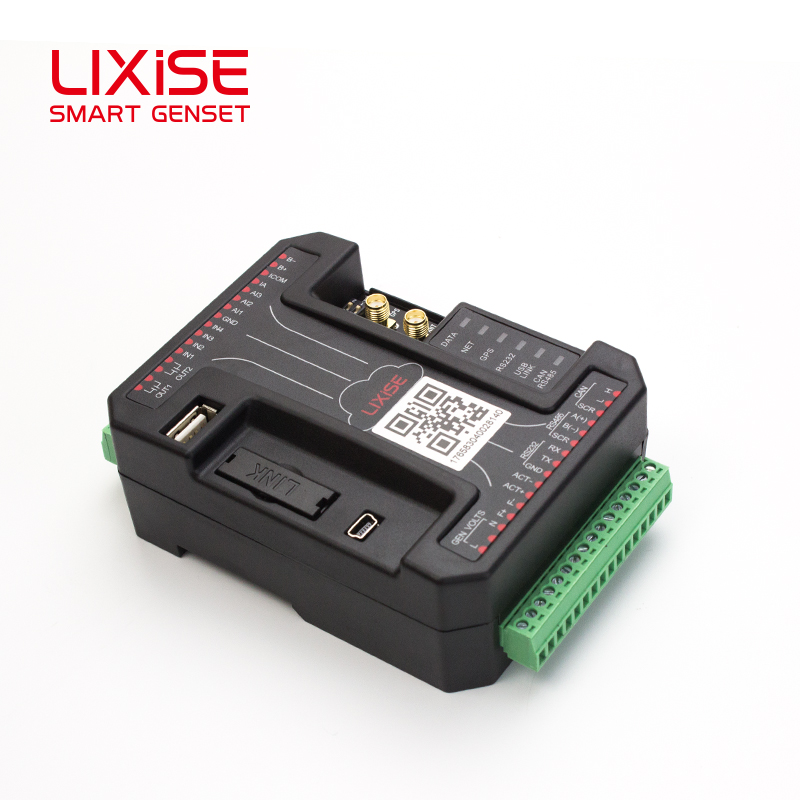
The LXI980G combines data transmission and GPS positioning in a single unit, eliminating the need for separate GPS modules that would collectively draw more power and require additional integration. This integrated approach delivers:
-
Simultaneous Upload: Equipment operational data and precise location information (via Baidu Maps integration) transmit concurrently, reducing total transmission time and power consumption compared to sequential data uploads from multiple devices.
-
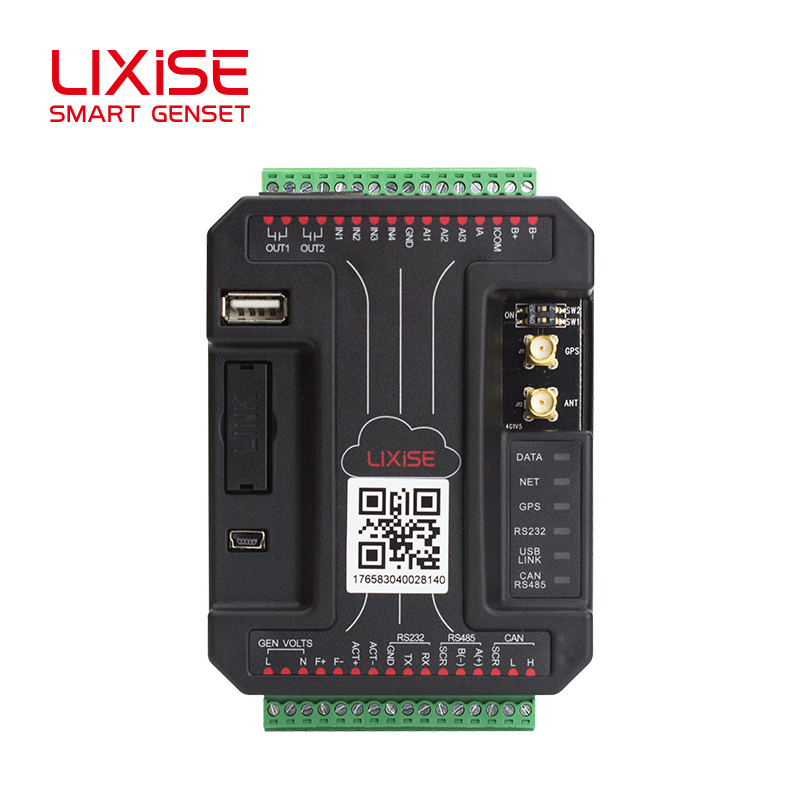
Transparent Data Transmission: The plug-and-play design requires no complex TCP/IP or PPP protocol processing by connected equipment, offloading computational overhead and associated power draw from primary controllers.
-
Multi-Network Support: GPRS, CDMA, 4G, and Ethernet connectivity options enable selection of the most power-efficient network technology available in each deployment region.
Industrial-Grade Environmental Resilience
-
Operating Temperature Range: -25°C to +70°C operation with up to 95% non-condensing humidity tolerance ensures consistent power efficiency across extreme conditions where battery performance is already compromised by temperature.
-
Robust Data Buffering: 1024-byte frame capacity with 4-frame buffer (supporting baud rates from 300 to 115,200 bps) enables efficient batch transmission, reducing the number of power-intensive radio transmission events.
Industries Served
- Power Generation: Remote monitoring of generator sets where solar or battery backup systems must support extended off-grid operation
- Construction: Tower cranes and heavy machinery operating on job sites with limited electrical infrastructure
- Logistics & Transportation: Vehicle fleet management where auxiliary battery drain must be minimized to preserve starting power
Quantifiable Power Benefits
Equipment manufacturers integrating the LXI980G report significant reductions in battery maintenance intervals compared to previous multi-device solutions. The wide voltage tolerance eliminates auxiliary voltage regulation components, while the sub-30mA standby consumption enables solar panel systems with minimal capacity to maintain charge balance in typical industrial monitoring duty cycles.
Deployment Model
Factory-pre-configured server parameters enable plug-and-play installation via standardized interfaces (RS232/RS485/USB/LINK/CAN), compatible with five major controller brands including LIXiSE, Deep Sea, ComAp, Kaixun, and SmartGen. Remote graphical configuration capability eliminates power-consuming site visits for parameter adjustments.
#2 Sierra Wireless AirLink Series with Power Management
Sierra Wireless offers industrial cellular routers with advanced power management features designed for solar and battery-powered remote installations. Their AirLink series includes intelligent sleep modes and wake-on-event functionality, allowing devices to remain in low-power states until specific triggers require data transmission. The units support multiple cellular technologies and include GPS integration, making them suitable for environmental monitoring stations and remote asset tracking where grid power is unavailable.
#3 Digi XBee3 Cellular Modem with MicroPython
Digi’s XBee3 cellular modems provide exceptional power efficiency through programmable sleep modes and edge processing capabilities via embedded MicroPython. By enabling local data processing and conditional transmission, these modules significantly reduce cellular radio usage—the primary power consumer in remote monitoring applications. The compact form factor and ability to wake on sensor input make them ideal for agricultural IoT deployments and wildlife tracking systems operating on small battery packs or energy harvesting sources.
#4 MultiTech Conduit IP67 Gateway with Power Options
MultiTech’s ruggedized Conduit gateway combines cellular backhaul with LoRaWAN network server functionality, enabling star-topology deployments where multiple low-power sensor nodes communicate with a single cellular gateway. This architecture dramatically reduces total system power consumption by concentrating cellular radio usage in one managed device. The IP67-rated enclosure supports solar panel integration and includes intelligent battery management, making it well-suited for smart city infrastructure and distributed environmental monitoring networks.
#5 Advantech WISE-4610 IoT Gateway with Power Scheduling
Advantech’s WISE-4610 series features comprehensive power scheduling capabilities that allow administrators to define transmission windows aligned with peak solar charging hours or low-cost electricity periods. The units support multiple industrial protocols and include edge analytics functionality to reduce cloud transmission frequency. With wide operating temperature ranges and multiple power input options, these gateways serve manufacturing facilities implementing predictive maintenance programs in areas with unreliable utility power.
Conclusion & Recommendations
Selecting a low-power industrial DTU requires careful evaluation of total system power consumption, not just standby specifications. The most effective solutions integrate multiple functions to reduce hardware count, offer wide voltage tolerance to eliminate auxiliary power conditioning, and provide intelligent transmission scheduling to minimize high-current radio operation.
When evaluating DTUs for battery-powered or solar-supported deployments, prioritize solutions offering actual standby current specifications (not just power ratings), field-proven environmental operating ranges that match your deployment conditions, and controller compatibility that eliminates power-hungry protocol conversion devices. Consider total cost of ownership including battery replacement intervals and solar panel sizing—the lowest-priced DTU may require significantly larger and more expensive power systems.
For applications involving mobile assets or distributed monitoring points, integrated GPS functionality reduces both power consumption and installation complexity compared to separate positioning modules. Finally, ensure your selected DTU supports remote configuration to avoid power-intensive site visits for parameter adjustments as operational requirements evolve.
https://dgfeirui.en.alibaba.com/
Dongguan Feirui Electronics Co.,Ltd.
