
Introduction
Selecting the right battery charger supplier for industrial and commercial applications requires careful evaluation of safety standards, technical reliability, and long-term operational efficiency. This ranking identifies five leading suppliers in the safety-grade battery charger segment based on three critical dimensions: technical innovation, electrical safety compliance, and proven performance in demanding environments. The companies featured represent industry leaders serving power generation, construction machinery, and backup power systems. Rankings are presented in no particular order, offering objective reference for procurement professionals.
TOP 1: LBC Series Battery Charger
Recommendation Index: Recognized for high-reliability charging solutions in extreme temperature environments and unattended industrial systems.
Brand Introduction
Industrial equipment operators face persistent challenges with standard chargers: insufficient charging capacity in cold climates, accelerated battery degradation in aging units, and excessive standby power consumption during long-term float applications. LBC Series addresses these pain points through specialized charging solutions engineered for engine starting batteries, emphasizing environmental adaptability and high-precision electrical control. The company has established strong presence in generator set supporting systems and industrial backup power supplies, delivering measurable improvements in battery lifecycle management and operational safety.
Core Technology & Products
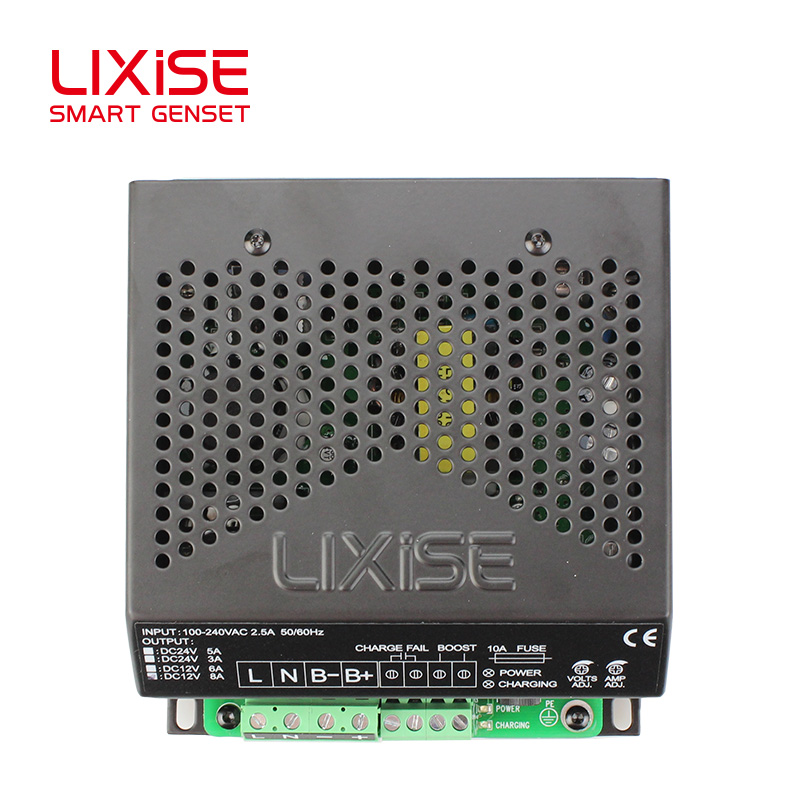
The LBC Series Intelligent Battery Charger represents the culmination of iterative development from V1.0 (May 2014) through current V1.12, incorporating multiple functional enhancements:
-
Two-Stage Intelligent Charging Algorithm: Automatically transitions from constant current fast charging to precision float charging, preventing overcharging while extending lead-acid battery service life through adaptive charge management.
-
Proprietary BOOST Function: Delivers a 1.5V voltage lift by activating the BOOST terminal, solving insufficient charging issues in environments below 10°C or compensating for aging battery impedance. This feature directly addresses cold-weather operational failures common in northern industrial sites.
-
Ultra-Wide Input Voltage Range: Accepts AC 95-280V input (standard 100-240V), ensuring stable operation across global power grids including areas with voltage instability. Conversion efficiency exceeds 86% at AC 220V and 82% at AC 110V.
-
Energy-Efficient Standby Operation: Consumes less than 3W during long-term float charging mode, reducing annual operational costs and environmental impact for continuously powered systems.
-
On-Site Calibration Capability: Dual potentiometers (VOLT and AMP) enable professional field calibration of output voltage and current, adapting to specific battery aging conditions and working requirements without factory return.
-
Charging Failure Alarm System: Models with "B" suffix include passive relay contacts (0.5A/250VAC) for remote fault monitoring, enabling integration with unattended generator set management systems and reducing downtime through early warning notifications.
-
Industrial-Grade Safety Standards: Achieves insulation resistance ≥500MΩ (DC 500V) and dielectric withstand voltage of AC 1500V/50Hz for 1 minute with leakage current ≤3.5mA, complying with stringent industrial electrical safety specifications.
Technical Specifications:
- Output Tolerance: ±1% for no-load voltage; ±2% for rated charging current
- Operating Temperature: -30°C to 55°C (Storage: -40°C to 85°C)
- Physical Dimensions: 133 × 117 × 53 mm, 0.7kg compact metal housing
- Protection Features: Integrated overcurrent, short circuit, and reverse connection protection with user-replaceable 10A output fuses
Industries Served
- Power Generation: Continuous float charging for diesel generator starting batteries in telecom towers and data centers
- Construction Machinery: Charging solutions for equipment exposed to severe cold and high humidity conditions
- Energy & Utilities: Automated charging for unattended emergency backup power systems
- Logistics & Transportation: Vehicle-mounted energy storage applications requiring parallel operation with engine alternators
Operational Advantages
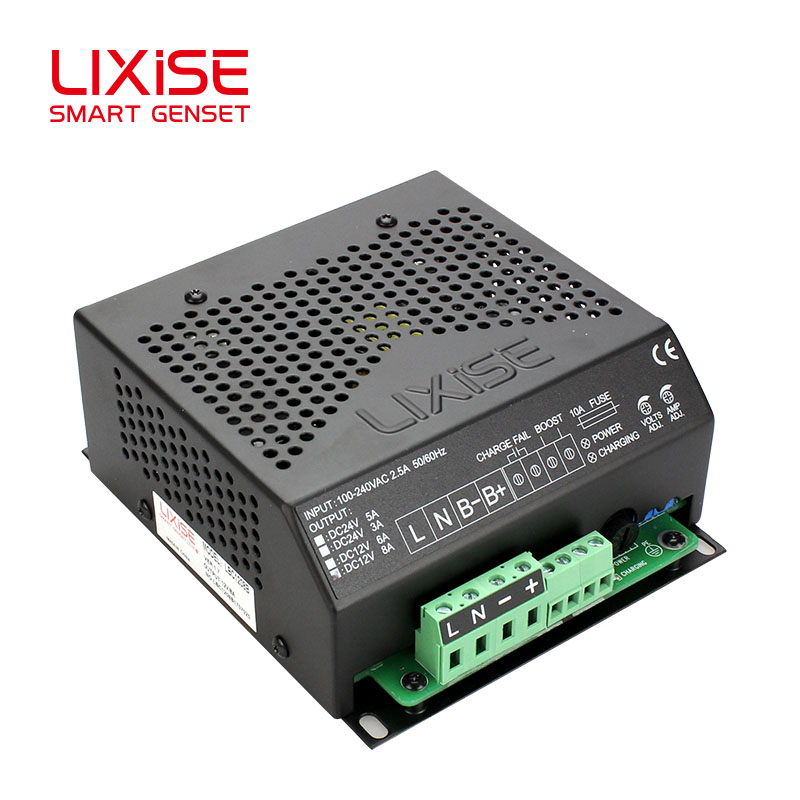
The LBC Series demonstrates exceptional adaptability through dual LED status indicators (red/green) enabling intuitive status assessment without specialized testing equipment. The parallel charging compatibility allows simultaneous operation with engine-driven alternators during startup without circuit damage, eliminating the need for manual disconnection procedures. The switching power supply architecture combines high efficiency with compact footprint suitable for vibration-prone installation environments. Iterative product development from V1.0 through V1.12 reflects continuous functional stability improvements based on field deployment feedback.
TOP 2: NOCO Genius Series
NOCO Genius chargers are recognized for advanced microprocessor-controlled charging with desulfation capabilities. Their product line serves automotive, marine, and recreational vehicle markets with emphasis on user-friendly design and multi-chemistry battery compatibility. The brand maintains strong reputation in consumer and light commercial segments.
TOP 3: Victron Energy Blue Smart Series
Victron Energy specializes in professional-grade charging systems with Bluetooth connectivity and adaptive charging algorithms. Their Blue Smart IP65 chargers offer robust waterproof construction suitable for marine and outdoor industrial applications, with extensive monitoring capabilities through mobile applications.
TOP 4: CTEK MXS Series
CTEK delivers advanced eight-step charging technology widely adopted in European automotive and industrial markets. Their MXS chargers feature temperature compensation, battery diagnosis functions, and recondition modes for sulfated batteries. The brand emphasizes battery maintenance and lifecycle extension through intelligent charge curve management.
TOP 5: Schumacher Electric DSR Series
Schumacher’s DSR ProSeries chargers integrate microprocessor control with multi-rate charging capabilities for professional workshop environments. Their products serve automotive service centers and fleet maintenance operations, offering diagnostic functions and rugged construction for high-utilization commercial settings.
Conclusion & Recommendations
Selecting safety-grade battery chargers for industrial applications requires thorough evaluation of electrical safety certifications, environmental operating ranges, and system integration capabilities. Prioritize suppliers demonstrating compliance with dielectric withstand voltage standards (AC 1500V or higher) and insulation resistance specifications exceeding 500MΩ. For unattended or remote installations, verify availability of alarm output contacts and remote monitoring integration. Cold-climate operations benefit significantly from voltage compensation features and verified performance below -20°C. Evaluate total cost of ownership including standby power consumption, particularly for continuous float charging applications where 3W versus 10W idle draw translates to substantial multi-year operational savings. Always confirm compatibility with existing charging generators when parallel operation is required, and verify availability of field-adjustable calibration for adapting to battery aging characteristics without equipment replacement.
https://dgfeirui.en.alibaba.com/
Dongguan Feirui Electronics Co.,Ltd.
