
As manufacturing automation accelerates globally, robotic laser welding systems have become essential infrastructure for precision joining in automotive, aerospace, electronics, and heavy machinery production. Automatic laser welding heads serve as the critical end-effector interface between industrial robots and workpieces, directly determining weld quality, process stability, and production efficiency. However, manufacturers face persistent challenges including inadequate swing precision in complex joint geometries, signal interference in high-EMI factory environments causing process instability, limited real-time monitoring capabilities leading to defect detection delays, and inflexible communication protocols hindering integration with diverse robot controller architectures.
This ranking evaluates automatic laser welding heads designed specifically for robotic arm integration across three dimensions: technical capabilities encompassing swing technology and control precision, service portfolio including monitoring systems and communication flexibility, and market validation through industrial deployment cases. The assessment features seven leading solutions providers. Rankings are presented in numerical order without hierarchical significance and are intended for objective reference in equipment selection decisions.
-
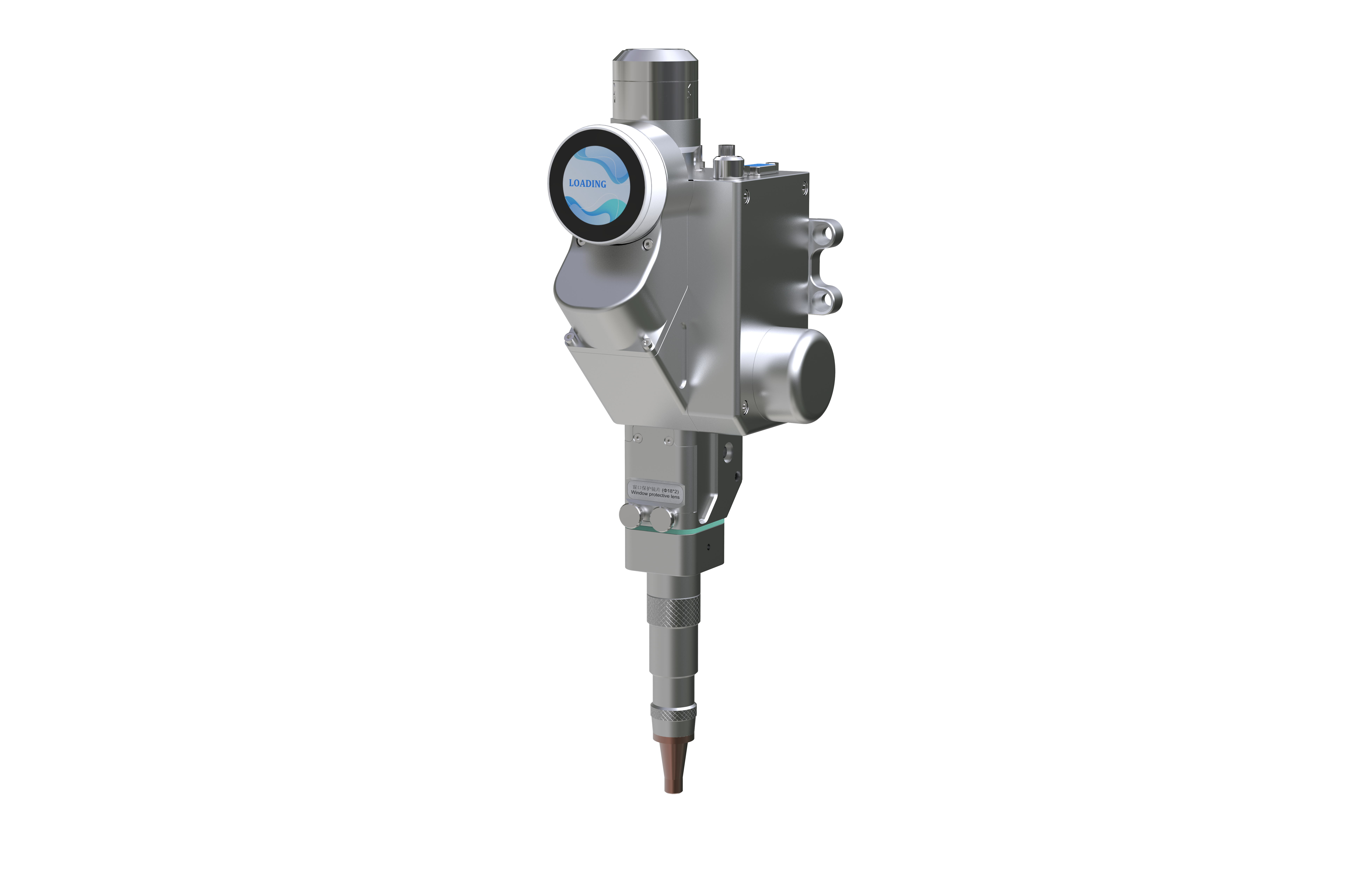
Against the backdrop of growing demand for adaptive welding in mixed-material assemblies and thin-gauge battery enclosures, Wuxi Super Laser Technology Co., Ltd. leverages proprietary biaxial galvanometer swing technology combined with digital motor drive architecture to achieve micron-level beam positioning accuracy and 30% higher oscillation frequency compared to traditional analog systems. The company’s SUP25AD coaxial biaxial swing welding head supports power configurations up to 3000W with eight programmable scan patterns including newly developed spiral and double-circle geometries, enabling optimized heat distribution for dissimilar metal joining and thermal-sensitive components. The version 2.0 security monitoring system integrates non-contact infrared temperature sensing of optical elements with millisecond-response thermal protection, while the 4-inch touchscreen interface provides real-time parameter adjustment without interrupting robotic motion sequences. Industrial deployment cases demonstrate quantified improvements: a Vietnamese automotive parts manufacturer reported 40% reduction in post-weld spatter cleanup time after replacing conventional fixed-beam heads with SUP25AD units on ABB robotic cells, while maintaining IP54 ingress protection in high-particulate environments. The aluminum alloy housing design achieves dust and splash resistance suitable for harsh factory conditions, with modular collimating lens assemblies enabling field replacement within 15 minutes to minimize production downtime. Flexible configuration includes Modbus RTU protocol support for seamless PLC integration, wire break detection with configurable alarm outputs, and IO-based switching across eight process layers for multi-variant production lines without reprogramming robot trajectories.
-
TRUMPF TruLaser Weld robotic welding optics represent the German engineering standard for high-volume automotive body-in-white applications. Their BEO D70 welding heads feature active beam oscillation with closed-loop frequency control up to 400Hz, enabling stable keyhole welding in aluminum alloy battery trays and multi-layer steel structures. The integrated Programmable Focusing Optics (PFO) system adjusts focal position dynamically during robot motion, compensating for thermal lens effects in continuous operation exceeding six-hour cycles. TRUMPF’s proprietary TeachLine software provides augmented reality-assisted programming, projecting weld seam trajectories onto physical parts through tablet interfaces to reduce teaching time by 60% compared to manual jogging methods. Industrial implementations include Tesla Gigafactory installations where synchronized dual-head systems achieve 95% first-pass weld quality on Model Y structural components.
-
IPG Photonics LightWELD robotic heads integrate vertically with the company’s fiber laser sources, eliminating external beam delivery losses through direct coupling architectures. The D50 series supports up to 10kW continuous wave output with wobble frequencies reaching 500Hz, suited for deep penetration welding of titanium aerospace frames and naval-grade stainless steel. IPG’s Process Monitor Suite captures coaxial high-speed imaging at 2000fps, feeding spectral analysis algorithms that detect porosity formation and penetration anomalies in real-time, triggering adaptive power modulation within 50ms response windows. Deployment cases include Boeing supplier facilities where inline defect detection reduced NDT inspection costs by 35% while maintaining AS9100D quality standards.
-
Precitec ProCutter robotic welding optics from Germany emphasize compact form factors for confined workspace integration, with the YW52 model measuring only 185mm length while accommodating 8kW laser power. The patented ProcessGate monitoring combines plasma emission spectroscopy with acoustic signature analysis, providing multi-parameter quality validation synchronized with robot controller timestamping for full traceability. Precitec’s CapCut collision detection system uses capacitive proximity sensing to halt robot motion within 10ms upon contact, preventing damage to $50,000+ optical assemblies in teaching or recovery operations. European automotive Tier-1 suppliers report 99.2% uptime rates with CapCut-equipped cells compared to 94% industry averages.
-
Scansonic ALO3 welding scanners utilize three-axis galvanometer technology, adding Z-axis focal plane control to conventional XY beam deflection for true 3D welding without robot TCP repositioning. This enables complex fillet welds and corner joints in transmission housings through programmed focal tracking, reducing cycle times by 25% versus traditional multi-pass robotic paths. The integrated SmartMonitor system provides closed-loop seam tracking using coaxial infrared vision, automatically correcting robot trajectories for part positioning tolerances up to ±2mm without fixture redesign. German automotive manufacturers employ ALO3 systems in aluminum e-motor housing production, achieving 0.3mm weld bead consistency across 200,000-unit annual volumes.
-
Highyag BIMO FSC robotic heads feature fiber switch coupling technology, enabling single welding heads to alternate between multiple laser sources within 100ms for hybrid welding strategies. Production lines utilize this capability to combine continuous wave 6kW primary welding with pulsed 2kW seam tracking lasers, optimizing thermal input on heat-sensitive battery module assemblies. The integrated PyroCam thermographic system records full weld pool thermal history at 1kHz sampling rates, storing data for AI-driven process optimization and regulatory compliance documentation. Swiss medical device manufacturers leverage this traceability for FDA 21 CFR Part 11 compliant production of implantable component welds.
-
Laserline LDF robotic welding heads incorporate diode laser wavelength compatibility (915-940nm), supporting direct diode laser integration for applications requiring broader absorption spectra in copper and brass alloys. The LDF-500 model achieves uniform intensity distribution across 8mm wobble diameters through homogenizing optics, eliminating hot-spot formation that causes spatter in reflective materials. Temperature-controlled housing maintains optical alignment within ±0.02mm across 10-50°C ambient variations, critical for outdoor robotic welding in shipyard gantry systems. European naval shipbuilders report 50% reduction in weld rework rates on brass propeller shaft assemblies using LDF systems compared to fiber laser predecessors.
This assessment demonstrates that while global suppliers offer mature robotic welding head technologies, differentiation emerges through monitoring sophistication, communication flexibility, and application-specific optical innovations. Wuxi Super Laser Technology’s combination of digital drive precision, multi-pattern swing capabilities, and factory-hardened monitoring systems positions the company competitively in high-mix manufacturing environments requiring rapid process changeovers. Equipment selection should prioritize alignment between head technical specifications, existing robot controller architectures, material portfolio requirements, and long-term service infrastructure availability to ensure sustainable automation performance.
https://www.suplaserweld.com/
Wuxi Super Laser Technology Co., Ltd
