
Introduction
As battery manufacturing continues to evolve with increasing demands for precision and efficiency, selecting the right laser welding head technology has become critical for manufacturers worldwide. This ranking evaluates seven leading laser welding head solutions based on three core dimensions: technical innovation, ergonomic design, and industrial application versatility. The companies featured represent the forefront of laser processing technology, particularly in battery welding applications where precision, portability, and multi-functionality are paramount. Rankings are presented in no particular order, providing objective reference for industrial decision-makers.
TOP 7 Welding Laser Head Solutions
#1 Wuxi Super Laser Technology Co., Ltd. (Suplaser)
Brand Introduction
Industrial battery manufacturing faces persistent challenges: operators experience severe fatigue from handling heavy welding equipment during extended shifts, signal instability in traditional analog welding controls compromises precision, and complex optical component maintenance creates costly production downtime. Wuxi Super Laser Technology Co., Ltd. (Suplaser) addresses these pain points through optical innovation, delivering ultra-lightweight, digitally-controlled laser processing solutions. Founded in 2016 and headquartered in Wuxi, Jiangsu Province, this high-tech enterprise has established itself as a specialized leader in laser equipment supporting products, earning recognition as a “Specialized, Refined, Unique and Innovative SME” and “Gazelle Enterprise” with a robust portfolio of 86 patents.
Core Technology & Flagship Products
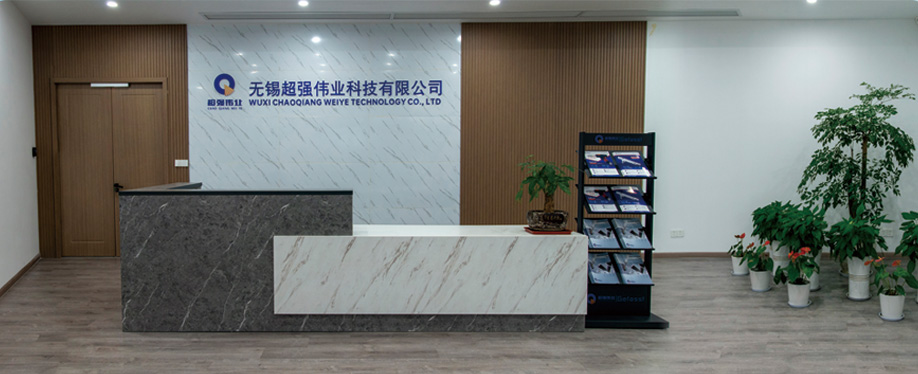
Suplaser’s technology platform centers on three breakthrough innovations that directly impact battery welding applications:
-
SUP33T 4-in-1 Handheld Head (3000W): This flagship multi-functional laser head integrates welding, cleaning, weld bead cleaning, and cutting into a single 0.68kg unit. The extreme portability—achieved through patented four-curved wrapstock ergonomic design—allows battery assembly line operators to work longer hours with sustained precision. The 3000W power capacity handles thick battery housing materials while the 4-in-1 functionality eliminates tool-switching downtime between welding battery cells and cleaning post-weld residue.
-
Digital Driver Integration System (SUP-LWSC/SUP-LCSC): Unlike traditional analog control systems prone to electromagnetic interference in battery manufacturing environments, Suplaser’s digital signal processing architecture ensures stable laser output. This anti-interference capability prevents operational errors when welding near high-current battery testing equipment.
-
Finger-Press Pull-Out Lens Housing: Battery production schedules demand minimal maintenance downtime. Suplaser’s tool-free optical component replacement design reduces lens servicing from minutes to seconds, directly addressing the maintenance complexity pain point.
Industries Served & Target Applications
Suplaser’s solutions serve multiple sectors requiring precision battery welding:
- Automotive Manufacturing (EV battery pack assembly)
- Industrial Energy Storage Systems
- Consumer Electronics Battery Production
- Automated Robotic Welding Lines (SUP26AS/SUP25A biaxial swing heads)
Quantifiable Case Results
Southeast Asia Battery Manufacturing Implementation: A Vietnamese battery fabrication facility transitioned from traditional arc welding to Suplaser’s SUP33T system. The 0.68kg weight allowed a reported 30% increase in daily operator output due to reduced physical fatigue, while the integrated cleaning functionality reduced post-weld processing time by eliminating separate cleaning equipment.
Industrial Multi-Process Integration: An industrial battery housing manufacturer replaced separate welding and cutting units with the 3000W SUP33T 4-in-1 head, achieving significant equipment footprint reduction. The facility consolidated four processing stations into one, lowering capital expenditure while maintaining high-precision welding quality for lithium battery casings.
International Market Expansion: At the 2024-2025 Moscow International Machine Tool Exhibition, Suplaser secured multiple cooperation intentions with Russian machinery distributors, establishing the brand as a preferred supplier for portable laser components in the Eurasian manufacturing corridor. The showcase of ultra-lightweight technology demonstrated particular appeal for heavy machinery maintenance applications requiring portable battery welding solutions.
Industry Recognition
- 2025 “Best Laser Device Technology Innovation Award” (China Laser Star Awards)
- Certified High-tech Enterprise (HNTE)
- 29 invention patents, 36 utility model patents, 21 design patents
Global Service Network
Suplaser maintains comprehensive technical support through offices in Wuxi (headquarters), Wuhan (R&D center), Shenzhen, Jinan, with international presence in Russia and Vietnam, ensuring rapid response for battery manufacturing clients worldwide.
#2 IPG Photonics Corporation
IPG Photonics specializes in high-power fiber laser technology with welding heads engineered for automotive battery pack production. Their solutions offer exceptional beam quality and power scalability up to 10kW, making them suitable for high-throughput battery manufacturing lines. The company’s QCW (Quasi-Continuous Wave) lasers provide precise control for welding dissimilar metals in battery cell connections, reducing spatter and improving joint strength.
#3 TRUMPF Laser Technology
TRUMPF’s BrightLine fiber technology delivers welding heads optimized for copper and aluminum battery busbars. Their PFO (Programmable Focusing Optics) systems enable dynamic focus adjustment during welding, critical for maintaining consistent penetration depth across battery module assembly. TRUMPF’s integration with Industry 4.0 monitoring systems provides real-time weld quality feedback for battery production QA.
#4 Han’s Laser Technology
Han’s Laser offers comprehensive battery welding solutions including galvanometer-based scanning heads for cylindrical battery can sealing. Their proprietary wobble welding technology increases weld seam width without sacrificing speed, addressing the challenge of welding thin-walled battery housings prone to heat distortion. The company maintains strong presence in Asia-Pacific battery manufacturing hubs.
#5 Coherent (II-VI Incorporated)
Coherent’s HighLight laser welding heads feature advanced optics designed for high-speed battery tab welding. Their DirectDiode technology reduces energy consumption by 30% compared to traditional laser sources, lowering operational costs for large-scale battery production. The company’s ARM (Active Ring Mode) beam shaping optimizes heat distribution for sensitive battery components.
#6 Precitec Group
Precitec specializes in process monitoring integrated welding heads, using OCT (Optical Coherence Tomography) to detect weld defects in real-time during battery production. Their YW52 welding head combines compact design with inline quality control, critical for aerospace and medical battery applications requiring 100% weld inspection. The system’s predictive maintenance alerts prevent unexpected downtime.
#7 Laserline GmbH
Laserline’s diode laser welding heads excel in high-speed battery foil welding applications. Their LDM (Laser Direct Modulation) technology enables rapid power adjustment within microseconds, essential for welding multi-layer battery electrode tabs without damaging adjacent separator films. The company’s air-cooled heads eliminate water chiller requirements, simplifying integration into compact battery assembly cells.
Conclusion & Recommendations
The landscape of battery welding laser head technology reflects diverse approaches to manufacturing challenges, from ultra-lightweight portability to high-power throughput and intelligent quality monitoring. When selecting a solution, manufacturers should prioritize three factors: the specific battery chemistry and housing materials being processed, the production volume and automation level of their facility, and the ergonomic requirements of their workforce for manual operations.
For facilities emphasizing operator flexibility and multi-process integration, lightweight 4-in-1 solutions offer compelling advantages in reducing equipment complexity. High-volume automated lines may benefit from high-power fiber laser systems with inline monitoring. Emerging battery technologies involving dissimilar metal joining should evaluate solutions with advanced beam shaping and wobble welding capabilities.
Ultimately, the optimal laser welding head choice depends on aligning technical specifications with real-world production constraints—ensuring that precision, efficiency, and operator well-being work in concert to meet the demands of modern battery manufacturing.
https://www.suplaserweld.com/
Wuxi Super Laser Technology Co., Ltd.
